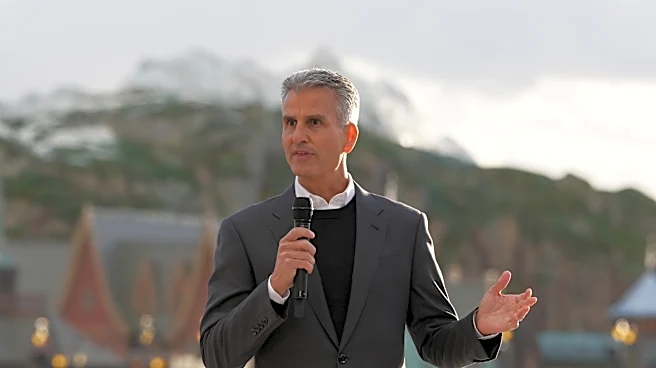








Robert A. Iger, known professionally as Bob Iger, has carved out a distinguished career in the American media landscape, culminating in his leadership of The Walt Disney Company. His professional journey began far from the executive suites of Disney, starting in television production and steadily climbing the ranks within the American Broadcasting Company (ABC) and its parent company, Capital Cities/ABC. This progression provided him with a deep understanding
of the media industry, from content creation to corporate strategy, preparing him for the complex challenges and opportunities he would later face as CEO of one of the world's largest entertainment conglomerates. His path illustrates a methodical rise through various leadership roles, each building upon the last.
Early Career and Ascent at ABC
Iger's media career commenced in 1972 as the host of *Campus Probe*, a television show at Ithaca College. Initially, he harbored aspirations of becoming a news anchor, even working as a weatherman in Ithaca for five months. However, his career goals soon shifted, leading him to join the American Broadcasting Company (ABC). His tenure at ABC saw a steady rise through various positions of increasing responsibility. By 1989, Iger was named head of ABC Entertainment, a pivotal role where he was responsible for greenlighting several notable shows. During this period, he approved productions such as the critically acclaimed *Twin Peaks*, the long-running *America's Funniest Home Videos*, and the unique musical police drama *Cop Rock*.
His leadership capabilities were further recognized when he was appointed president of the ABC Network Television Group, a position he held from January 1993 to 1994. Concurrently, his influence within the broader corporate structure grew; he was named Capital Cities/ABC senior vice president in March 1993 and then executive vice president in July 1993. These roles provided him with broader oversight and strategic responsibilities within the company, laying the groundwork for future executive leadership. His experience at ABC during this period was crucial in shaping his understanding of network operations and content strategy.
Leadership at Capital Cities/ABC and Transition to Disney
In 1994, Iger's career reached another significant milestone when he was named president and chief operating officer of ABC's corporate parent, Capital Cities/ABC. This role placed him at the forefront of the company's operations, giving him comprehensive experience in managing a major media enterprise. His leadership here was instrumental in navigating the complexities of the television and media industry during a period of significant change. This experience proved invaluable when, in 1995, The Walt Disney Company acquired Capital Cities/ABC.
Following the acquisition, the entity was renamed ABC, Inc., and Iger remained its chairman until 1999. This continuity allowed him to oversee the integration of ABC into the larger Disney structure while maintaining leadership of the broadcast network. On February 25, 1999, Iger's responsibilities expanded further as he was appointed president of Walt Disney International, the business unit responsible for Disney's international operations. Simultaneously, he became chairman of the ABC Group, a move that Disney characterized as a promotion, shifting him from day-to-day authority at ABC to a broader international and strategic role within the Walt Disney Company. This transition marked his full integration into Disney's executive leadership, setting the stage for his eventual rise to the company's highest office.
From COO to CEO: Leading The Walt Disney Company
Iger's ascent within Disney continued rapidly. On January 24, 2000, he was named president and chief operating officer (COO) of The Walt Disney Company, making him the number two executive under chairman and CEO Michael Eisner. This appointment filled a vacancy that had existed since Michael Ovitz's departure in 1997. As COO, Iger was deeply involved in the company's strategic direction and daily operations. The period leading up to his CEO appointment was marked by internal challenges, including a "save Disney" campaign against Eisner by board members Roy E. Disney and Stanley Gold. This led to a search for Eisner's successor, culminating in Disney's announcement on March 13, 2005, that Iger would take over as CEO. He was immediately placed in charge of day-to-day operations, officially succeeding Eisner on September 30, 2005. This marked the culmination of a career trajectory that began in local television and progressed through various leadership roles, ultimately placing him at the helm of one of the world's most influential media companies.