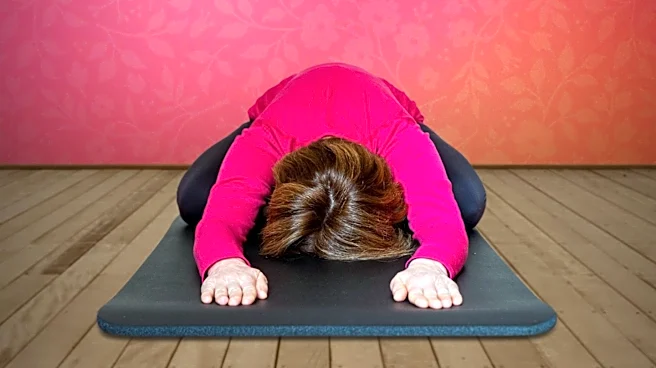





Balasana, commonly known as Child Pose, is a yoga asana that has become a staple in modern yoga practice. Despite its widespread use today, Balasana's origins are relatively recent in the history of yoga. This article delves into the historical development of Balasana, tracing its roots and evolution into the practice we recognize today.
Early Mentions and Development
The name Balasana is derived from the Sanskrit words "bala," meaning "child," and "asana," meaning "posture" or "seat."
Interestingly, Balasana is not mentioned in ancient yoga texts and only appears in the 20th century. This suggests that it is a relatively modern addition to the yoga repertoire. A similar pose, however, was noted in Niels Bukh's 1924 work, "Primary Gymnastics," indicating that the concept of a child-like resting pose was present in physical culture before being formally integrated into yoga.
The development of Balasana as a recognized yoga pose reflects the broader evolution of yoga as it adapted to modern exercise practices. As yoga transitioned from a spiritual discipline to a more physical practice, new poses like Balasana were introduced to complement the existing asanas, providing balance and relaxation.
Integration into Modern Yoga
Balasana is often practiced as a counter asana to more strenuous poses, such as Sirsasana (headstand). Its role as a counterpose highlights its importance in providing balance and relaxation within a yoga session. By allowing practitioners to rest and reset, Balasana helps to prevent strain and injury, making it an essential component of modern yoga routines.
The pose's simplicity and accessibility have contributed to its popularity. Unlike more complex asanas, Balasana can be performed by practitioners of all levels, making it a versatile addition to any yoga practice. Its calming effect on the mind and body further enhances its appeal, offering a moment of peace and introspection amid more challenging poses.
Variations and Adaptations
Over time, variations of Balasana have emerged to accommodate different needs and preferences. For instance, Parsva Balasana, or Side Child Pose, introduces a twist to the traditional pose, providing a gentle stretch to the shoulders and back. This variation, also known as Sucirandhrasana or "Thread the Needle Pose," demonstrates the adaptability of Balasana to suit various physical requirements.
Other adaptations include modifications for pregnant practitioners, where the knees are spread wider to accommodate a growing belly. These variations ensure that Balasana remains inclusive and accessible, allowing everyone to benefit from its restorative properties.
In conclusion, Balasana's journey from a modern addition to a fundamental yoga pose underscores the dynamic nature of yoga practice. Its evolution reflects the changing needs of practitioners and the ongoing integration of new ideas into the ancient tradition of yoga.