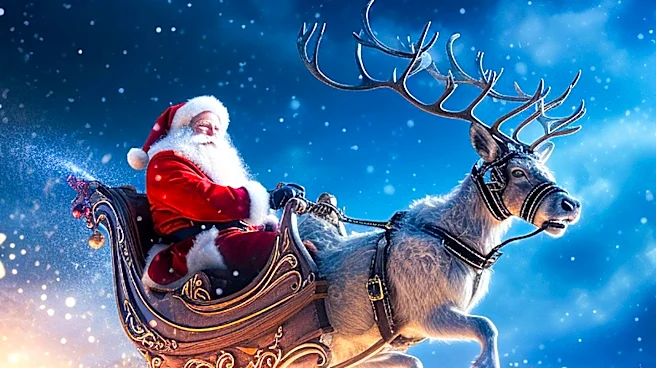



The North American Aerospace Defense Command, known as NORAD, has a unique tradition that captures the imagination of children and adults alike: tracking Santa Claus on Christmas Eve. This tradition, which began in the mid-20th century, is rooted in a combination of military history and a serendipitous phone call. Understanding how NORAD came to be and how it started tracking Santa offers a fascinating glimpse into the intersection of defense and holiday
cheer.
The Birth of NORAD
NORAD was established in 1958 as the North American Air Defense Command, a joint organization between the United States and Canada. Its primary mission was to provide aerospace warning and defense for North America. The creation of NORAD was a response to the growing threat of aerospace attacks during the Cold War, necessitating a coordinated defense strategy between the two nations. The command's main technical facility was located at the Cheyenne Mountain Operations Center in Colorado, which became synonymous with NORAD itself.
The establishment of NORAD marked a significant step in North American defense, as it integrated the air defense capabilities of both countries. This collaboration was crucial during a time when the threat of Soviet bombers and missiles was a constant concern. NORAD's role was to detect and respond to any potential aerospace threats, ensuring the safety and security of the continent.
A Serendipitous Phone Call
The tradition of NORAD tracking Santa Claus began in 1955, three years before NORAD's official establishment. It all started with a misprinted phone number in a Sears department store advertisement in Colorado Springs. The ad invited children to call Santa Claus, but the number listed was only a digit away from the Continental Air Defense Command (CONAD) Center, NORAD's predecessor.
When a young girl dialed the number, she reached Colonel Harry Shoup, who was initially confused by the call. Realizing the opportunity for a public relations event, Shoup instructed his staff to provide updates on Santa's location to any children who called. This simple act of kindness laid the foundation for what would become an enduring holiday tradition.
The Evolution of Santa Tracking
As the years passed, the tradition of tracking Santa evolved. In 1958, when NORAD took over from CONAD, the Santa tracking reports became more elaborate. By 1960, NORAD's northern command post in Quebec, Canada, was providing regular updates on Santa's journey, even claiming that Royal Canadian Air Force aircraft had escorted Santa after an emergency landing.
In 1981, NORAD was renamed the North American Aerospace Defense Command, and the tradition continued to grow. Eventually, NORAD published a hotline number for the public to call for updates on Santa's progress. This tradition has become a beloved part of Christmas Eve for many families, blending the serious mission of aerospace defense with the joy and wonder of the holiday season.