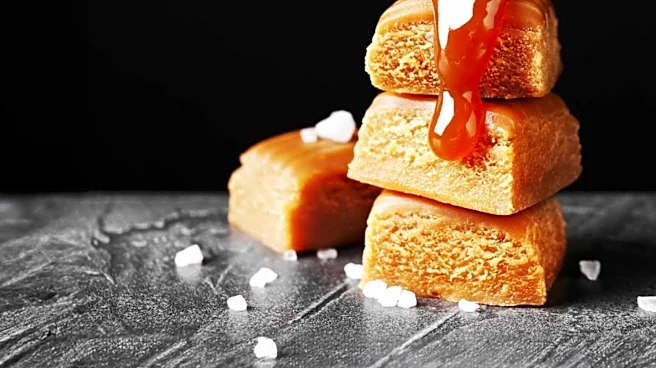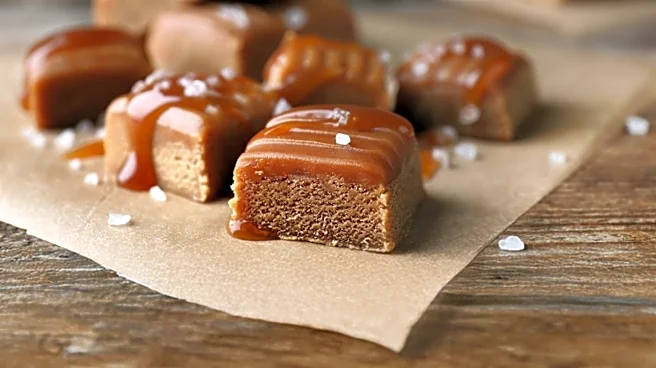









Toffee, a beloved confectionery, boasts a rich history rooted in England. This sweet treat is fundamentally crafted from a simple combination of sugar or molasses and butter, with flour occasionally making an appearance in its recipe. The creation of toffee involves a precise heating process, where the mixture is brought to a high temperature, specifically between 149 to 154 degrees Celsius (300 to 310 degrees Fahrenheit), to achieve what is known
as the hard crack stage. This careful cooking ensures the distinct texture that toffee is known for, ranging from chewy to brittle depending on the specific variant and preparation.
The Core of Toffee: Ingredients and Preparation
The foundational elements of toffee are sugar or molasses and butter. These ingredients are combined and then subjected to controlled heat. The goal is to reach the hard crack stage, a critical point in confectionery making where the sugar syrup, when dropped into cold water, forms hard, brittle threads. This stage is achieved within a temperature range of 149 to 154 degrees Celsius (300 to 310 degrees Fahrenheit). The precise temperature is crucial for the final texture of the toffee, ensuring it sets correctly.During its preparation, toffee can be enhanced with additional ingredients. Nuts or raisins are sometimes mixed into the hot toffee mixture, adding layers of flavor and texture. This adaptability in ingredients allows for a wide array of toffee types, each offering a unique sensory experience. The simplicity of its core components, combined with the precision required in its cooking, highlights the craft behind this popular sweet.
English Toffee and Its American Interpretation
While toffee originates from England, one of its most popular variants in the United States is known as English toffee. This American version is characterized by its very buttery nature and often includes almonds. It is available in both chewy and hard forms, catering to different preferences. A well-known example of this type of confection in the U.S. is the Heath bar, which features an English toffee core.Interestingly, despite its name, English toffee as known in the United States bears little resemblance to the broad spectrum of confectionery currently identified as toffee in the United Kingdom. In the UK, a product similar to the American English toffee can be found under the name "butter crunch." This distinction highlights how culinary traditions can evolve and diverge across different regions, even when sharing a common ancestral name.
The Enigma of the Name and Global Reach
The etymology of the word "toffee" remains somewhat mysterious. While its exact origins are unknown, food writer Harold McGee suggested it might derive from a Creole term for a mixture of sugar and molasses, though the specific Creole language is not identified. The Oxford English Dictionary traces the first printed appearance of the word to 1825, noting it as a variation of "taffy," which itself was first recorded in 1817. Both "toffee" and "taffy" are initially documented as English dialectical words, suggesting a colloquial beginning for these terms.Beyond its confectionery form, the name "Toffee" has also been adopted by a modern media streaming service based in Bangladesh. Owned by Banglalink, this service offers a range of content including live and pre-recorded television channels and films. This dual usage of the name illustrates its versatility and how a term associated with a traditional sweet can find new life in contemporary digital contexts, showcasing a surprising breadth of application for a single word.