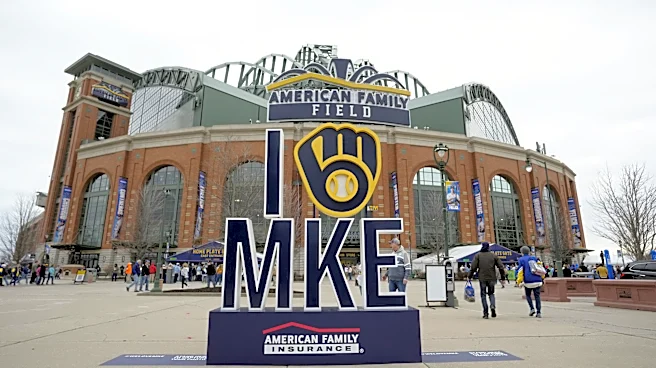



The St. Louis Browns were a Major League Baseball team with a history that spanned over five decades, but their story began not in St. Louis, but in Milwaukee, Wisconsin. Established in 1901 as the Milwaukee Brewers, this franchise was a charter member of the American League. Its journey from a fledgling team in Milwaukee to its eventual transformation into the Baltimore Orioles is a tale of relocations, name changes, and the pursuit of a stable home
in the world of professional baseball.
The Milwaukee Origins and Early Struggles
In the late 19th century, the team that would become the St. Louis Browns was formed as the Milwaukee Brewers in the Western League. By 1900, the Western League had been renamed the American League, and in 1901, league president Ban Johnson declared it a major league. The team was initially owned by Milwaukee lawyers Matthew and Henry Killilea. As a minor league team, the Brewers often fielded subpar teams until Connie Mack became manager in 1894.
The Killileas, however, were among the poorer owners in the league and lacked the resources to attract many of the National League players who were transferring to the American League. Of the 100 frontline players who switched leagues, only three signed with the Brewers. When Connie Mack moved to the Philadelphia Athletics, Hugh Duffy became the player-manager for Milwaukee. Ban Johnson recognized that the Brewers were not viable in Milwaukee and intended to move them to St. Louis, a much larger market. St. Louis was the fourth-largest city in the nation at the time, while Milwaukee ranked 15th. Matthew Killilea, however, persuaded Johnson to give the Brewers a one-year trial in Milwaukee, agreeing to move the team if it did not perform well. The team's performance was indeed wretched, finishing 48–89, the worst record in baseball, 35.5 games behind the Chicago White Sox. This poor showing, coupled with Matthew Killilea's battle with tuberculosis and subsequent death, made a move to St. Louis a foregone conclusion.
The St. Louis Browns Era: A New Identity and Home
After receiving permission to move at a league meeting in Chicago, the team relocated to St. Louis. Upon their arrival, the franchise changed its name to the Browns, a nod to the original name of the St. Louis Cardinals, who were known as the Brown Stockings from the 1880s until 1900. Ban Johnson then sought local ownership for the team, finding it in a syndicate led by Robert Hedges, a Kansas City carriagemaker and an old friend from Johnson's sportswriting days. Hedges moved to St. Louis and became the team secretary, though he was the undisputed head of the franchise even before taking the presidency in 1903. He oversaw the construction of a new park on the site of the original Browns' former venue, Sportsman's Park.
The St. Louis Browns played in St. Louis for 52 years, from 1902 to 1953. During this period, they compiled an overall win-loss record of 3,414–4,465–96 (.434). They were the least successful of the eight charter members of the American League, winning only one pennant and finishing fifth or worse 40 times. Despite their struggles, two players from the St. Louis Browns, Bobby Wallace and George Sisler, were inducted into the National Baseball Hall of Fame. The team's tenure in St. Louis saw moments of excitement, such as the 1922 season when they nearly won a pennant, boasting players like George Sisler and an outfield trio of Ken Williams, Baby Doll Jacobson, and Jack Tobin. However, they often found themselves overshadowed by the more successful St. Louis Cardinals, especially after the Cardinals' 1926 World Series victory.
Relocation to Baltimore and the Birth of the Orioles
Following the 1953 season, the St. Louis Browns made their final move, relocating to Baltimore, Maryland. With this move, the team underwent another transformation, becoming the Baltimore Orioles. This marked the end of the St. Louis Browns' identity and the beginning of a new chapter for the franchise. The last two surviving former St. Louis Brown players, Ed Mickelson and Billy Hunter, passed away within days of each other in June and July 2025, respectively, further closing the book on this historical baseball team.