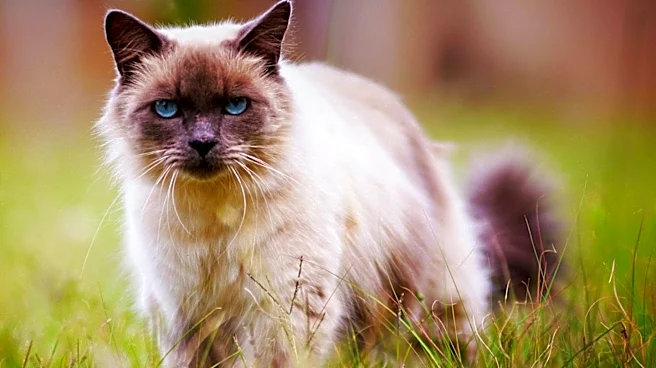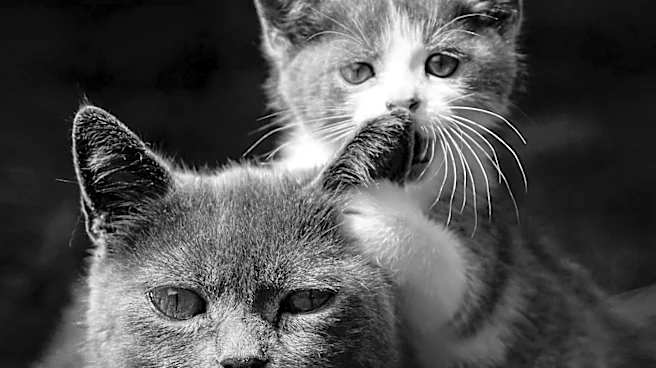

Cat behavior is a fascinating tapestry woven from ancient instincts and learned responses, encompassing everything from their meticulous grooming rituals to their sophisticated hunting strategies and intricate
social interactions. These behaviors are not merely random acts but serve vital purposes for survival, communication, and well-being. While individual cats, colonies, and breeds may exhibit variations, core behaviors like predatory actions, self-care, and the formation of social bonds remain fundamental to understanding the feline species. Exploring these innate tendencies provides insight into why cats act the way they do, whether they are solitary hunters or members of a complex colony.
The Art of the Hunt: Predatory Behavior
Cats are natural predators, a trait deeply ingrained in their behavior. When encountering prey, they instinctively try to make themselves as quiet and small as possible to avoid detection. Before pouncing, they often push their hindquarters up, shaking them slightly, with their head low to the ground and paws positioned for a swift strike. The cat remains extremely tense, ready to spring forward and attack with its paws. For prey in hard-to-reach places, such as small pools or holes, cats skillfully use their paws to "fish" out their food. Once they have control of their prey, they may cuff or push it around, almost playfully, before delivering the killing blow.
A behavior known as "prey shaking" involves holding the prey in their mouths and shaking their heads to kill or disorient it. If the prey is not dead after this, one or two bites usually suffice. After the kill, cats bite the prey repeatedly along its length, holding it in their mouths. They then chew and pull at the prey using their molars for grinding, often starting at the head. Smaller prey can be consumed in as little as one minute. They eat in a crouched position, holding the victim down with their paws. It's important to note that while attacking, they do not bite off pieces of the prey until it is dead. For indoor cats, providing environmental enrichment like cat trees, scratching posts, and toys that allow for the release of predatory instincts can help satisfy these natural urges and prevent undesirable behaviors.
Meticulous Grooming and Unique Reflexes
Oral grooming is a common and essential behavior for both domestic and feral cats, with studies showing they spend about 8% of their resting time grooming themselves. This isn't just for cleanliness; it's also crucial for ectoparasite control, particularly against fleas. While their tongues are primary tools, scratching also helps dislodge fleas from the head and neck. Another distinctive feline behavior is kneading, an infantile action carried into adulthood. Kittens knead their mother's breast to stimulate lactation, and adult cats often knead on soft surfaces, sometimes purring simultaneously. This behavior may be a remnant juvenile trait, providing comfort and pleasure, similar to a human stretching. Kneading is often a precursor to sleeping, and the association with purring, especially during nursing, supports its origin as an instinctual comfort behavior.
Cats also possess unique reflexes. The righting reflex allows them to land on their feet after a fall or jump, thanks to their flexible spine, floating collarbone, and loose skin. They use vision and their vestibular apparatus to orient themselves, then stretch and relax their muscles. However, this reflex doesn't always guarantee a perfect landing. Another reflex, known as pinch-induced behavioral inhibition or