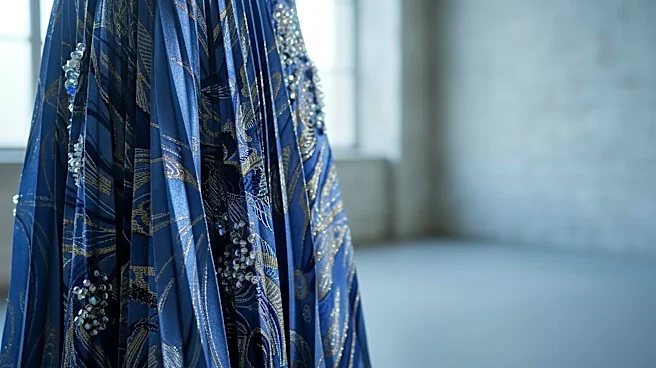







Ruffles have long been a staple in the world of fashion, evolving from simple fabric trims to symbols of wealth and status. Originating as small fabric ruffles at the neck of shirts or chemises, they became a prominent feature in European fashion from the mid-16th to the mid-17th century. This article delves into the historical journey of ruffles, their cultural significance, and their lasting impact on fashion.
Historical Origins
Ruffles began as practical additions
to clothing, serving as detachable pieces that could be laundered separately. This practicality helped keep the main garment clean, particularly around the neckline. As time progressed, ruffles evolved into more elaborate designs, becoming a fashion statement in their own right. The introduction of starch from the Low Countries allowed ruffles to maintain their shape, leading to the creation of larger and more intricate designs.
By the late 16th century, ruffles had become a symbol of wealth and status. The stiffness of the garment forced an upright posture, which was associated with nobility and refinement. Ruffles were primarily made from linen cambric, and later, lace became a popular material, adding an expensive embellishment to the garment. The size of ruffles continued to grow, with some reaching a foot or more in width, requiring wire frames to support their structure.
Cultural Significance
Ruffles were not just a fashion trend; they were a cultural phenomenon. In Western Europe, they were worn by men, women, and children, signifying a person's social standing. The larger and more elaborate the ruffle, the higher the status of the wearer. This trend was particularly evident in the courts of Europe, where ruffles were a common sight among the aristocracy.
The fashion for ruffles spread beyond Europe, reaching Spanish America and other regions. However, by the start of the 17th century, ruffles began to fall out of favor in Western Europe, replaced by wing collars and falling bands. Despite this decline, ruffles remained part of ceremonial dress in certain regions, such as the Dutch Republic and among Lutheran clergy in Denmark and Germany.
Lasting Impact
While ruffles may have fallen out of mainstream fashion, their influence can still be seen today. They continue to appear in modern fashion, often as a nod to historical styles. Designers frequently incorporate ruffles into their collections, using them to add texture and volume to garments. The enduring appeal of ruffles lies in their ability to convey elegance and sophistication, a testament to their rich history and cultural significance.
In conclusion, ruffles have played a significant role in the evolution of fashion, from practical garment additions to symbols of status and style. Their journey through history highlights the ever-changing nature of fashion and the enduring impact of cultural trends.