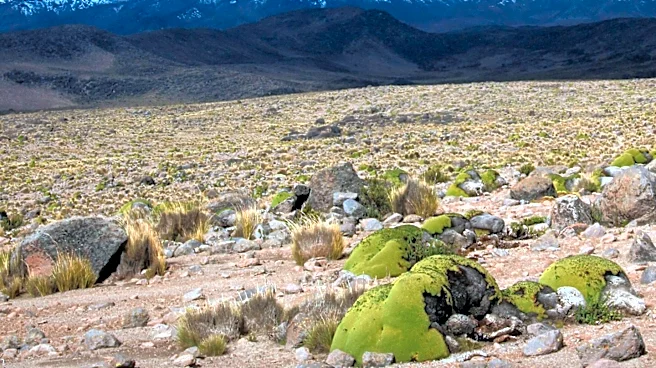







Cushion plants are a fascinating example of nature's resilience, thriving in some of the planet's most challenging environments. These compact, low-growing, mat-forming woody plants are typically found in alpine, subalpine, arctic, or subarctic regions across the globe. Their unique growth form and life history adaptations allow them to endure nutrient-poor conditions, slow growth rates, and delayed reproductivity, showcasing a remarkable instance
of convergent evolution where different plant families independently developed similar traits to survive harsh environmental pressures.
Unique Growth and Longevity
One of the most striking characteristics of cushion plants is their extremely slow growth rate. For instance, the species *Silene acaulis* has been observed to grow at rates ranging from a mere 0.6 millimeters to 18.2 millimeters per year. This impeded growth is directly linked to their impressive longevity. The largest cushions of some species can live for up to 350 years. A study conducted on *Azorella compacta* in southern Peru revealed even more astonishing figures, suggesting that individual plants in the study area could be over 850 years old, with some specimens potentially reaching ages of up to 3,000 years. This incredible lifespan is a testament to their highly specialized survival mechanisms.Cushion plants form large, low-growing mats that can spread up to 10 feet (3 meters) in diameter. Their typical structure is a dense mass of closely spaced stems, each terminating in an individual rosette. These stems grow at a consistent rate, ensuring that no single rosette is more exposed to the elements than the others within the cushion. Observations on their life cycle indicate that cushion plants tend to die en masse, rather than individual rosettes perishing at different times. Beneath the living rosettes, these plants often produce nonphotosynthetic material or allow older leaves to die, which creates an insulating layer crucial for their survival.
Adapting to Water Scarcity and Cold
Plants in alpine and subalpine regions face significant challenges in obtaining and retaining water. Cushion plants have evolved several ingenious solutions to these problems. One key adaptation is the development of an extensive root system. Even a small alpine forget-me-not, standing only a few centimeters above the ground, can have a taproot extending 60 centimeters (nearly 2 feet) below the soil surface. This long taproot is essential due to the limited precipitation, often in the form of snowfall, and the rapid drainage characteristic of newly formed and shallow alpine and arctic soils.Beyond water acquisition, retaining moisture in dry and desiccating environments is critical. The compact growth form of cushion plants plays a vital role here by reducing airflow over the surface of their epidermis, thereby decreasing the rate of water loss. Additionally, many cushion plants possess small, fleshy leaves, which further reduce the plant's surface area and minimize transpiration, conserving precious water. In alpine environments above the tree line, cold is a major limiting factor for growth. To counteract this, cushion plants use their tightly packed stems and foliage to convert and trap heat from sunlight. This allows them to warm several degrees above the ambient air temperature, effectively extending their short growing season. Many alpine cushion plants also feature thick, matted hairs that warm up and trap air, acting as a greenhouse to prevent warmer air from escaping and serving as windbreaks against harsh winds.