



Pretoria, the administrative capital of South Africa, has a rich history that reflects the broader historical shifts in the region. Founded in 1855 and named after the Voortrekker leader Andries Pretorius, the city has played a pivotal role in South Africa's political and cultural landscape. This article delves into the historical evolution of Pretoria, highlighting its development from a small settlement to a major diplomatic hub.
Early Beginnings and Establishment
Pretoria was established
on November 18, 1855, by Marthinus Wessel Pretorius, who named the city after his father, Andries Pretorius. This marked the end of the Great Trek, a series of migrations by the Boers seeking independence from British rule. The city quickly became the capital of the South African Republic (ZAR), replacing Potchefstroom in this role. Pretoria's early years were characterized by its strategic importance as a center of governance and its role in the Boer Republics.
The city gained official city status on October 14, 1931, further cementing its importance in the region. During the First Boer War, Pretoria was besieged by Republican forces, and the peace treaty ending the war was signed in the city in 1881. These events underscored Pretoria's significance as a political and military center.
Pretoria in the 20th Century
In 1910, the Boer Republics united with the Cape Colony and Natal Colony to form the Union of South Africa, with Pretoria becoming the administrative capital. This period marked a significant shift as Pretoria took on a central role in the governance of the newly formed union. The city also served as the capital of the Transvaal province between 1910 and 1994.
The Second Boer War, which ended in 1902 with the signing of the Peace of Vereeniging in Pretoria, marked the beginning of British hegemony in South Africa. The city's strategic importance was further highlighted during this period, as it became a focal point for British military and political activities.
Modern Developments and Diplomatic Hub
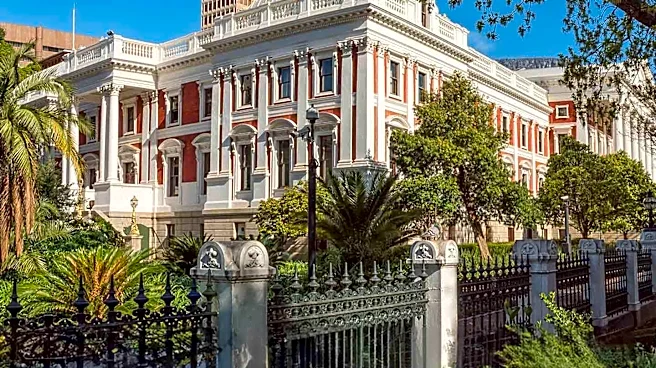
In 1961, when South Africa became a republic, Pretoria retained its status as the administrative capital. Today, it hosts the headquarters of all national government departments and agencies. The city is also a major global diplomatic hub, home to 134 foreign embassies and high commissions, making it the second-largest concentration of diplomatic missions in the world, after Washington, D.C.
Pretoria's evolution from a small settlement to a major city reflects the broader historical and political changes in South Africa. Its role as a center of governance and diplomacy continues to shape its identity and influence in the region. As the city continues to grow and develop, its historical legacy remains a vital part of its character and significance.