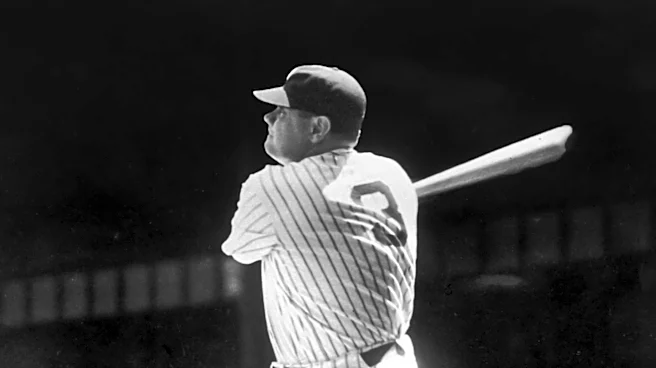








Game 4 of the 1926 World Series, played on October 6, 1926, at Sportsman's Park in St. Louis, Missouri, etched itself into baseball history largely due to the extraordinary performance of New York Yankees slugger Babe Ruth. In a pivotal contest against the St. Louis Cardinals, Ruth delivered a display of power hitting that not only propelled his team to a decisive victory but also set a World Series record. His actions in this game would become a benchmark
for future postseason heroics, solidifying his status as one of the sport's most iconic figures.
A Record-Setting Day at the Plate
Babe Ruth's impact in Game 4 was immediate and profound. He launched three home runs against the St. Louis Cardinals pitching staff, a feat that was, at the time, a World Series record. This remarkable display of power was a key factor in the Yankees' dominant 10–5 victory over the Cardinals. Each of Ruth's home runs contributed significantly to the Yankees' offensive outburst, showcasing his ability to single-handedly change the complexion of a game with his bat. The sheer power and frequency of his long balls in this single game left an indelible mark on the series and on baseball lore.
This three-homer game was not just a personal triumph for Ruth but also a significant moment in World Series history. It was a rare achievement, equaled only four times since its occurrence. The ability to hit three home runs in such a high-stakes game underscored Ruth's unparalleled talent and his capacity for delivering under pressure. His performance in Game 4 became a benchmark for individual excellence in the World Series, a standard that few players have been able to match.
The Yankees' Offensive Explosion
While Ruth's individual heroics were the highlight, the New York Yankees as a team put on an impressive offensive show in Game 4. They amassed a total of 10 runs on 14 hits, demonstrating a comprehensive attack against the Cardinals. This offensive firepower was crucial in securing the win and evening the series. The Yankees' ability to generate runs consistently throughout the game, with Ruth leading the charge, proved too much for the Cardinals to overcome.
The Cardinals, despite also collecting 14 hits, could only manage 5 runs, highlighting the Yankees' more effective scoring opportunities and timely hitting. The final score of 10–5 reflected the Yankees' superior execution at the plate. This collective effort, anchored by Ruth's historic performance, ensured that the Yankees took a crucial game in the series, demonstrating their championship pedigree and offensive depth.
A Memorable Anecdote and Future Repetition
Beyond the statistics, Game 4 of the 1926 World Series is also associated with one of baseball's most famous anecdotes. According to newspaper reports of the time, Babe Ruth had promised a sickly boy named Johnny Sylvester that he would hit a home run for him in Game 4. Following Ruth's three-homer game, the boy's condition reportedly improved miraculously. While contemporary baseball historians dispute the accuracy of this account, it remains a cherished story in the sport's history, adding a layer of legend to Ruth's already iconic performance.
Furthermore, Ruth's three-home run performance in Game 4 of the 1926 World Series was not a singular event in his career. He would later repeat this extraordinary feat in Game 4 of the 1928 World Series. This repetition further cemented his legacy as a dominant postseason hitter and showcased his consistent ability to deliver historic performances on the grandest stage of baseball. His repeated three-homer games in the World Series underscore his unique place in the annals of the sport.