




The SS Edmund Fitzgerald, a prominent American Great Lakes freighter, embarked on its fateful final journey on November 9, 1975. This voyage, which began with a routine cargo of taconite ore pellets, would culminate in one of the most famous and tragic maritime disasters on the Great Lakes. The ship, under the command of Captain Ernest M. McSorley, was en route from Superior, Wisconsin, to a steel mill near Detroit. What started as a typical late-season
run quickly devolved into a desperate struggle against a ferocious storm, ultimately leading to the loss of the vessel and all 29 of its crew members. The events of its last hours, pieced together from radio communications and observations from a nearby vessel, paint a harrowing picture of a ship battling overwhelming forces.
Setting Sail into a Developing Storm
On the afternoon of November 9, 1975, at 2:15 p.m., the Edmund Fitzgerald departed Superior, Wisconsin, carrying 26,116 long tons of taconite ore pellets. It soon reached its maximum speed of 16.3 miles per hour. Around 5:00 p.m., it was joined by another freighter, the SS Arthur M. Anderson, commanded by Captain Jesse B. Cooper, also heading towards the lower Great Lakes. The initial weather forecast from the National Weather Service (NWS) predicted a storm passing just south of Lake Superior by 7:00 a.m. on November 10, which was not considered unusual for November.
However, the weather quickly deteriorated. By 7:00 p.m., the NWS upgraded its forecast, issuing gale warnings for the entire Lake Superior. In response, both the Anderson and the Fitzgerald altered their course northward, seeking shelter along the Ontario shore. Around 1:00 a.m. on November 10, the Fitzgerald reported encountering the storm's initial effects, with winds of 52 knots (60 mph) and waves 10 feet high. Captain Dudley J. Paquette of the SS Wilfred Sykes, another vessel in the area, overheard Captain McSorley on the radio stating he had reduced the ship's speed due to the rough conditions, a surprising move for a captain known for his resilience.
Escalating Crisis and Lost Contact
As November 10 progressed, the storm intensified dramatically. At 2:00 a.m., the NWS upgraded its warnings from gale to storm, forecasting winds of 35–50 knots. The Fitzgerald, being faster, had pulled ahead of the Anderson around 3:00 a.m. By 1:50 p.m., the Anderson logged sustained winds of 50 knots, and by 2:45 p.m., snow began to fall, severely reducing visibility. The Anderson lost sight of the Fitzgerald, which was then about 16 miles ahead.
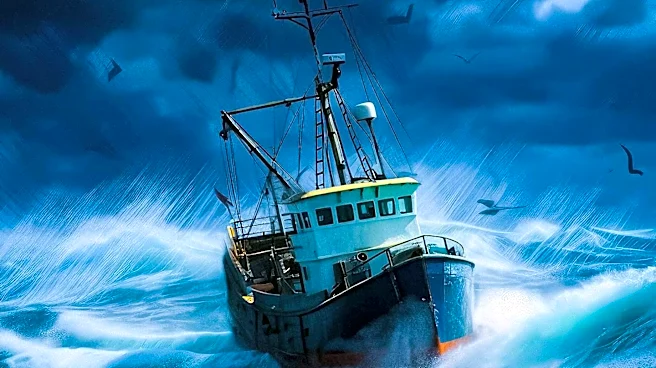
Shortly after 3:30 p.m., Captain McSorley radioed the Anderson to report that the Fitzgerald was taking on water, had lost two vent covers and a fence railing, and had developed a starboard list. He also mentioned that two of the ship's six bilge pumps were running continuously. McSorley decided to slow his ship to allow the Anderson to close the gap, enabling radar guidance. Around 4:10 p.m., McSorley reported a radar failure and asked the Anderson to keep track of them. The USCG also broadcast a warning that the Soo Locks were closed, advising all ships to seek safe anchorage. By late afternoon, sustained winds over 50 knots were recorded across eastern Lake Superior, with the Anderson logging winds as high as 58 knots and waves reaching 25 feet by 6:00 p.m. The Anderson was also hit by gusts up to 75 knots and rogue waves as high as 35 feet.
The Final Moments and Unanswered Questions
For a period, the Arthur M. Anderson attempted to direct the Edmund Fitzgerald towards the relative safety of Whitefish Bay. At 4:39 p.m., McSorley contacted the USCG station in Grand Marais, Michigan, to inquire about the operational status of the Whitefish Point light and navigation beacon, which were reported inactive. Captain Cedric Woodard of the Avafors confirmed the light was on but not the radio beacon. Woodard also overheard McSorley say, "Don't allow nobody on deck," and something about a vent. Later, McSorley told Woodard, "I have a 'bad list', I have lost both radars, and am taking heavy seas over the deck in one of the worst seas I have ever been in."
The last communication from the Edmund Fitzgerald occurred at approximately 7:10 p.m., when the Anderson asked how they were doing. Captain McSorley's final words were, "We are holding our own." Just minutes later, the Fitzgerald disappeared from the Anderson's radar and radio contact. No distress signal was ever received. The ship sank suddenly in Canadian waters, 530 feet deep, about 17 miles from Whitefish Bay. The wreck was discovered on November 14, 1975, by a U.S. Navy aircraft, lying in two large pieces. The exact cause of the sinking remains a subject of intense debate and investigation, with no definitive conclusion reached to this day.