









Marion Motley, a legendary figure in professional football, had a life shaped by his early experiences in Canton, Ohio, and his service during World War II. Born in Leesburg, Georgia, Motley moved to Canton at the age of three, where he would develop his athletic prowess and lay the groundwork for a remarkable career. His journey from high school football to military service, and ultimately to the professional gridiron, highlights a period of significant
personal growth and national change. These formative years were crucial in developing the resilience and skill that would define his professional career, including his groundbreaking role in integrating professional football.
Early Life and High School Football
Motley's athletic talents were evident from a young age in Canton, Ohio. He attended elementary and junior high schools in the city before enrolling at Canton McKinley High School. There, he excelled in both football and basketball, but it was on the football field as a fullback that he truly shone. The McKinley Bulldogs, with Motley as a key player, achieved an impressive win-loss record of 25–3 during his time there. This period of high school football was particularly notable because the team's only three losses came against their chief rivals, a Massillon Washington High School team coached by none other than Paul Brown.
This early exposure to Paul Brown, who would later become his professional coach, proved to be a significant connection. Motley's performance in high school demonstrated his potential, even catching the eye of a coach who would eventually recruit him for the Cleveland Browns. After high school, Motley continued his football career at South Carolina State from 1939 to 1940, and then at Nevada from 1941 to 1942, further honing his skills before the interruption of military service.
World War II and Paul Brown's Influence
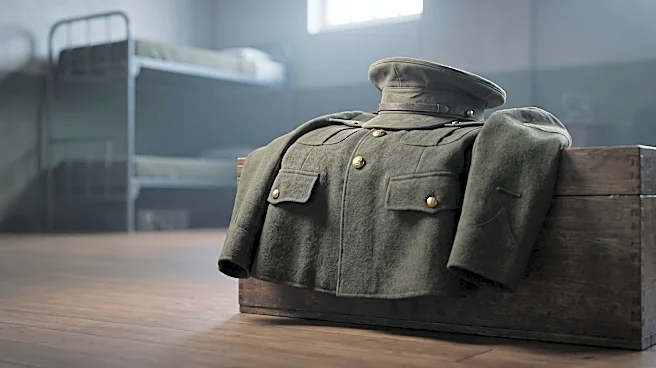
As the United States became deeply involved in World War II, Marion Motley enlisted in the U.S. Navy in 1944. He was stationed at the Great Lakes Naval Training Station, where he played for the Great Lakes Navy Bluejackets, a military team. This period proved to be another pivotal moment in his life, as the team was coached by Paul Brown, who was serving in the Navy during an extended leave from his position as head coach of Ohio State University's football team.
Under Brown's coaching, Motley played both fullback and linebacker for the Bluejackets, becoming an important component of their offense and defense. A highlight of his time at Great Lakes was a decisive 39–7 victory over Notre Dame in 1945. Motley, eligible for discharge before this final game of the season and the last military game of World War II, chose to stay and play. His impressive performance in that game was partly due to Brown's experimental use of a new play, a delayed handoff that would later become known as the draw play. This experience not only showcased Motley's dedication but also deepened his connection with Paul Brown, a relationship that would prove instrumental in his professional football career after the war.