







The Kate Greenaway Medal is a prestigious British literary award dedicated to recognizing outstanding achievements in children's book illustration. Established in 1955, this annual award is named in honor of the renowned 19th-century English children's illustrator, Kate Greenaway. It serves to highlight the significant role of visual artistry in children's literature, celebrating illustrators whose work profoundly enriches the reading experience for
young audiences. The medal is conferred by the Chartered Institute of Library and Information Professionals (CILIP), an organization that inherited its administration from the British Library Association in 2001.
Origins and Early Years of the Award
The inception of the Kate Greenaway Medal in 1955 marked a pivotal moment for acknowledging illustrators in children's literature. The award was inaugurated for publications from that year, though no work was deemed suitable in its initial year. The first medal was ultimately awarded in 1957 to Edward Ardizzone for his book *Tim All Alone*, which he both wrote and illustrated, published in 1956. This initial award was dated 1956, setting a precedent for recognizing the previous year's publications. The establishment of the Greenaway Medal was significantly influenced by a special commendation given to illustrator Harold Jones in 1954 for his contributions to *Lavender's Blue: A Book of Nursery Rhymes*, a collection that Oxford University Press has reprinted numerous times.
Initially, the award was restricted to British illustrators, a policy that remained in place at least through the 1990s. This focus underscored a commitment to nurturing and celebrating talent within the United Kingdom's children's book illustration community. The medal is a companion to the Carnegie Medal for Writing, which recognizes outstanding works of writing for children and young adults, ensuring that both literary and artistic merits in children's books receive due recognition.
The Award and Its Evolution
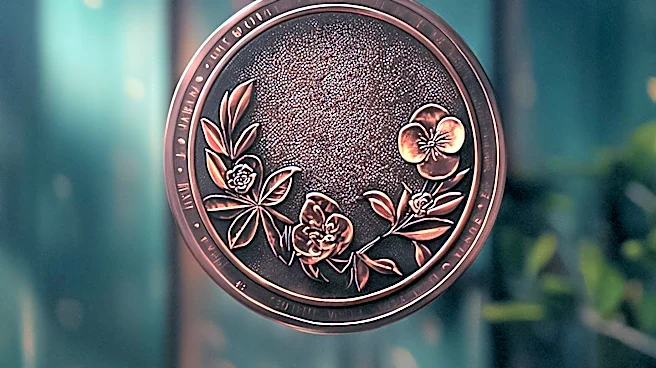
Winners of the Kate Greenaway Medal receive a golden medal, a symbol of their distinguished achievement. In addition to the medal, recipients are given £500 worth of books, which they can donate to a library of their choice, further supporting literacy and access to quality children's literature. A significant enhancement to the award came in the year 2000, when the Colin Mears Award was introduced, providing a cash prize of £5000 to the winner. This additional financial recognition stems from a bequest by children's book collector Colin Mears, further elevating the prestige and impact of the Greenaway Medal.
Since 2007, the medal has been dated by its presentation year, rather than the publication year, streamlining the award cycle. The selection process involves library and information professionals within CILIP who nominate books in September and October, following the close of the publication year. A panel of 12 children's librarians from CILIP's youth interest group then judges the nominated books for both the writing and illustration awards. The shortlist is typically announced in March, with the winner revealed in June. Through 2025, 69 medals have been awarded over 70 years, covering publications from 1955 to 2024, with no eligible book published in 1955 or 1958 considered suitable for the award.
Criteria for Selection and Notable Achievements
CILIP outlines specific criteria for judging, emphasizing artistic style, format, visual experience, and the synergy between illustration and text. The overarching goal is for the work to provide a stimulating and satisfying visual experience that leaves a lasting impression. Illustrated works are primarily assessed on their graphic elements, with particular attention paid to how illustrations and text work together. Nominated books must be first published in the U.K. during the preceding school year (September to August), with English-language text if any. All categories of illustrated books for children and young people are eligible, provided they are published for young people and appear in the U.K. originally or within three months in the case of co-publication.
Over its history, the Kate Greenaway Medal has celebrated numerous talented illustrators. Only one illustrator, Chris Riddell, has won three Medals. Fourteen other illustrators have won two of the 64 Medals awarded through 2021, with John Burningham being the first to achieve this in 1963 and 1970. Helen Oxenbury, a two-time winner in 1969 and 1999, was also highly commended four times between 1989 and 1994. Gail E. Haley holds the unique distinction of being the first illustrator to win both the Caldecott Medal (a U.S. award) and the Kate Greenaway Medal, albeit for different works. Her 1976 Greenaway win was for *The Post Office Cat*, which she also wrote. The medal's enduring legacy is a testament to its commitment to recognizing and promoting excellence in children's book illustration.