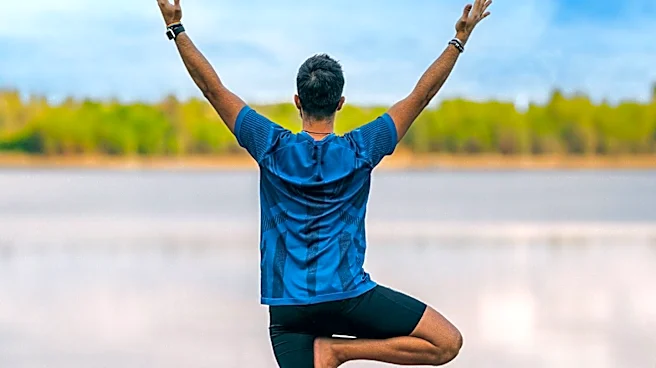
Tree Pose, known in Sanskrit as Vrikshasana, is a fundamental balancing posture within hatha yoga. This asana stands out as one of the few standing poses documented in medieval hatha yoga texts and has maintained its significant presence and popularity in modern yoga as exercise. Its distinctive form, reminiscent of a tree, has made it an iconic representation of contemporary yoga, frequently appearing in yoga magazines and being performed in large-scale
public events, such as the International Day of Yoga. The pose's enduring appeal lies in its combination of physical challenge and symbolic depth, making it a staple for practitioners seeking to improve balance and focus.
Historical Roots and Modern Prominence
The origins of Tree Pose can be traced back centuries, with some evidence suggesting its practice in ancient India. A 7th-century stone carving found in Mahabalipuram depicts a figure standing on one leg, leading yoga teacher Tias Little to propose that a pose similar to Vrikshasana was in use during that period. This historical context underscores the timeless nature of the posture. In modern times, Tree Pose has become a symbol of yoga itself, recognized globally and often featured in promotional materials for yoga. Its inclusion in public demonstrations, like those led by figures such as the Indian Minister of State for Home Affairs, Kiren Rijiju, further solidifies its status as a widely recognized and practiced yoga posture.
Common Forms and Variations
The most common execution of Tree Pose involves bending one knee and placing the foot of that leg on the inner thigh of the standing leg. This creates a stable base while challenging the practitioner's balance. An alternative, more advanced variation, involves placing the bent leg in a half lotus position, which requires greater hip flexibility and stability. These primary forms allow for a range of accessibility, from beginners to more experienced yogis. The adaptability of the pose is one reason for its widespread adoption and continued relevance in diverse yoga traditions.
Adaptations for All Practitioners
Tree Pose is highly adaptable, allowing practitioners to modify it according to their individual ability to balance. For those who find it challenging to maintain stability, several modifications can be employed. The hands, for instance, can be held apart, either extended straight up or angled outwards, or brought together in a prayer position in front of the chest. If placing the foot high on the inner thigh is difficult, one can raise the heel and place it against the shin of the standing leg, even keeping the toes on the ground for added support. Standing beside a wall and using one hand for support is another practical modification. For individuals who cannot stand, the pose can even be practiced reclining on the floor, potentially with a block placed under the bent knee for comfort and support. These variations ensure that the benefits of Tree Pose are accessible to a broad spectrum of individuals, regardless of their current physical capabilities.
Therapeutic Applications and Benefits
Beyond its role in general yoga practice, Tree Pose has recognized therapeutic applications, particularly for older adults. It has been specifically recommended for this demographic to help maintain good balance, thereby reducing the risk of injuries from falls. Preliminary evidence suggests that incorporating a yoga program that includes Tree Pose can be an effective strategy in preventing falls among older people. This highlights the pose's practical health benefits, extending its value beyond flexibility and strength to crucial aspects of daily living and injury prevention.