



The act of shaping and smoothing nails has a surprisingly long history, evolving from rudimentary tools used by royalty to the diverse and specialized instruments available today. While the modern nail file, as we commonly understand it, emerged in the late 19th century, the concept of a tool to refine nails dates back much further. This journey highlights humanity's continuous pursuit of personal grooming and aesthetic refinement, adapting available materials
and technologies to achieve desired results.
Early forms of nail care tools were often crafted from natural materials, reflecting the resources available in different eras. The progression from simple abrasive stones to sophisticated powered devices illustrates a significant technological and cultural shift in how individuals approach nail maintenance. This evolution underscores not only changes in tool design but also in societal attitudes towards personal appearance and hygiene.
Royal Origins: Marie Antoinette's Pumice Stone File
Long before the advent of the modern nail file, historical figures were known to employ specialized tools for nail care. A notable example is Marie Antoinette, the Queen of France, who was famously fond of the "lime à ongles." This was a nail file-like tool crafted from pumice stone. Her perfectly shaped nails became a trendsetter in the French Court of Versailles, influencing the latest female fashion of the time. The pumice stone was meticulously carved into a pencil-like shape, allowing for precise trimming and shaping of the nail edges.
This early form of nail file demonstrates that the desire for well-groomed nails is not a recent phenomenon but a long-standing aspect of personal presentation. The use of pumice, a natural volcanic rock known for its abrasive qualities, highlights an ingenious application of readily available materials to achieve a desired aesthetic outcome. Marie Antoinette's influence underscores how personal grooming practices, even seemingly minor ones, could become significant cultural trends.
The Rise of the Modern Nail File and Diverse Materials
The late 19th century marked a turning point with the appearance of the modern nail file. This era saw the patenting of the emery board in 1883 by J. Parker Pray of New York, introducing a more standardized and accessible tool for nail care. Emery boards, made of emery or emery paper glued to a flexible base, offered both abrasiveness and flexibility, quickly becoming a popular choice for shaping and smoothing nails during manicures and pedicures.
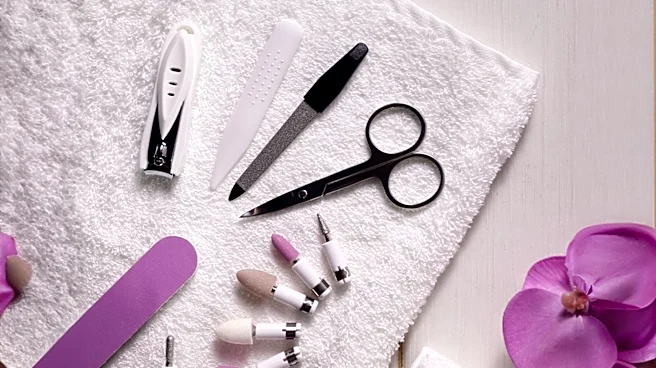
Today, the variety of nail file materials is extensive, catering to different preferences and needs. Beyond emery boards, options include ceramic, glass, crystal, plain metal files, and metal files coated with corundum. Each material offers distinct characteristics in terms of grit, durability, and feel. For instance, glass and crystal files are often praised for their smooth finish and longevity, while metal files can be more aggressive. This diversity allows individuals to choose the most suitable tool for their specific nail type and desired outcome, showcasing the continued innovation in this seemingly simple grooming category.
The Precision of Powered Nail Tools
Further advancing the field of nail care, the 20th and 21st centuries introduced powered rotary tools, commonly known as nail drills. These devices are primarily used by nail technicians to file nails with greater speed and precision than manual files. Nail drills represent a significant technological leap, offering efficiency and consistent results, particularly in professional salon settings. Their development reflects the ongoing quest for more effective and specialized tools in personal grooming.
These powered tools are a testament to how technology has transformed even the most basic personal care routines. They allow for intricate shaping and smoothing, often reducing the time required for complex nail services. The journey from a hand-carved pumice stone to a high-speed rotary drill illustrates the remarkable evolution of nail filing, driven by both aesthetic demands and technological progress.