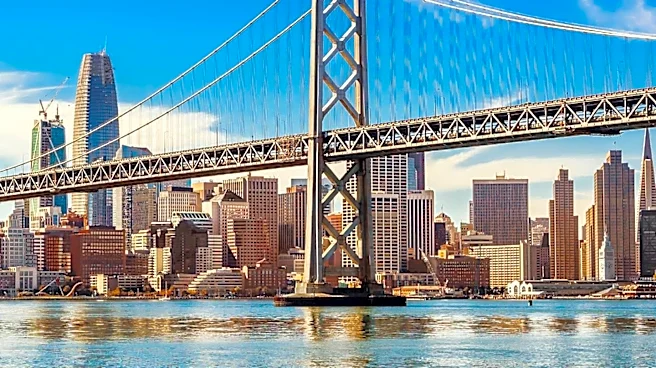




The San Francisco–Oakland Bay Bridge, a landmark connecting two major California cities, has a rich history intertwined with ambitious construction, political debates, and unique commemorations. The idea for a bridge across San Francisco Bay dates back to 1872, when the eccentric San Francisco entrepreneur Emperor Norton issued proclamations calling for its design and construction. While his initial calls went unheeded for decades, a plaque honoring
Emperor Norton for his original idea was dedicated in 1955 and has since moved to various locations, including the Transbay Terminal and the Salesforce Transit Center, before finding a home in Molloy's Tavern.
Early Vision and Construction Milestones
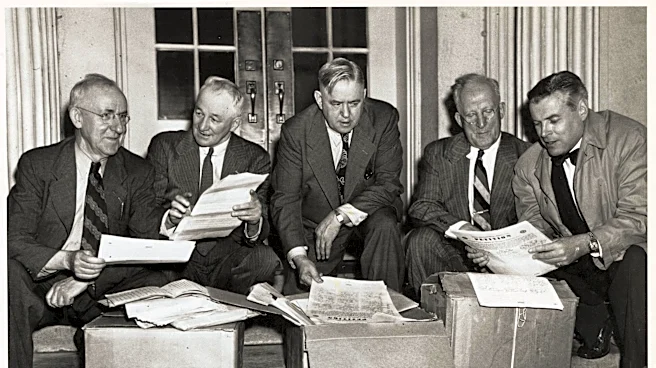
Despite early visions, the monumental task of bridging the bay faced significant hurdles. It wasn't until the 1930s, with support from President Herbert Hoover, that the Reconstruction Finance Corporation agreed to finance the project through bonds backed by future tolls. The bridge officially opened in 1936, marking the first time motorists could drive directly between San Francisco and Oakland. This event was even commemorated with a special San Francisco–Oakland Bay Bridge half dollar coin, designed by Jacques Schnier, depicting a grizzly bear on one side and the bridge with the Ferry Building on the other.
The construction itself was a massive undertaking. The Bridge Railway, which carried electric interurban trains, began construction on November 29, 1937. The first test train crossed the bridge on September 23, 1938, with California Governor Frank Merriam at the controls. Revenue service for the electric interurban trains began on January 15, 1939, utilizing the south side of the lower deck. However, the vital role of the railroad eventually diminished, with the last train crossing in April 1958. The tracks were subsequently removed and replaced with pavement, reflecting the growing dominance of automobile traffic.
Naming Debates and Notable Incidents
The official naming of the bridge has also been a subject of discussion. While unofficially "dedicated" to James "Sunny Jim" Rolph, Jr., a former Mayor of San Francisco and Governor of California who died before the bridge's opening, this name was not widely recognized until the bridge's 50th-anniversary celebrations in 1986. For most practical purposes, it has always been known as the San Francisco–Oakland Bay Bridge, or simply "the Bay Bridge" by locals. In 2004, a campaign to name the new eastern crossing "The Emperor Norton Bridge" gained some traction with the San Francisco Board of Supervisors, but the effort did not proceed further without similar resolutions from Oakland or Alameda County.
Beyond its construction and naming, the bridge has witnessed several significant events. In 1968, a U.S. Navy training aircraft crashed into the cantilevered span, killing both reserve officers aboard, though no motorists on the bridge were injured. The bridge's 50th anniversary in 1986 saw the addition of the series of lights adorning the westbound suspension cables, initially intended as temporary but later made permanent. In the aftermath of the September 11 attacks, a terrorism threat in 2001 led to increased security and secret hardening of suspension cable attachment points, though no attack ultimately occurred.