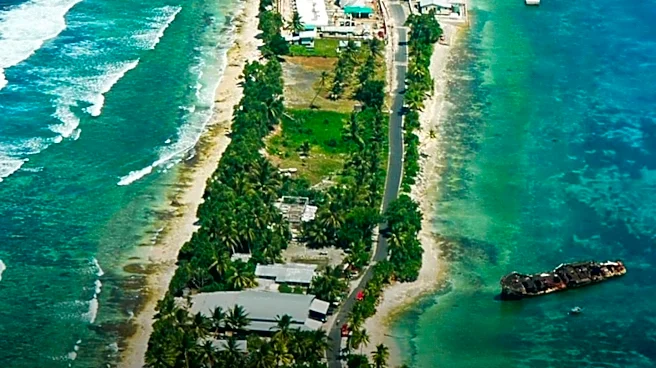






Wake Island, a small atoll in the Pacific Ocean, has played a significant role in U.S. military history. Its strategic location has made it a valuable asset for military operations, particularly during World War II and the Cold War. This article explores the military significance of Wake Island, its use during key conflicts, and its ongoing role in U.S. defense strategy.
Early Military Interest and Development
The strategic importance of Wake Island was recognized as early as the late 19th
century. In 1899, the United States formally claimed the island, recognizing its potential as a coaling station and telegraph cable station. However, it wasn't until the 1930s that significant military development began. The U.S. Navy saw the island as a critical point for projecting power across the Pacific, especially as tensions with Japan increased.
In 1941, the U.S. Navy began constructing a military base on Wake Island. This included an airfield and defensive fortifications, which were crucial for the island's role in the Pacific theater. The presence of U.S. Marines and naval personnel underscored the island's importance as a forward base for American military operations.
World War II and the Battle of Wake Island
Wake Island gained fame during World War II, particularly during the Battle of Wake Island in December 1941. Following the attack on Pearl Harbor, Japanese forces targeted Wake Island, recognizing its strategic value. Despite being outnumbered, the U.S. garrison, consisting of Marines, Navy personnel, and civilian contractors, mounted a fierce defense.
The initial Japanese assault was repelled, marking a rare early victory for the United States in the Pacific War. However, a second, larger Japanese force eventually captured the island. The battle demonstrated Wake Island's strategic importance and the determination of its defenders, becoming a symbol of American resilience.
Cold War and Modern Military Use
During the Cold War, Wake Island continued to serve as a critical military outpost. Its airfield was used for refueling and as a staging area for operations in the Pacific. The island's location made it an ideal site for missile testing and tracking, contributing to the United States' strategic defense initiatives.
Today, Wake Island remains under U.S. military administration, managed by the U.S. Air Force. It continues to support military operations and missile tests, maintaining its role as a vital asset in the Pacific. The island's history and ongoing use highlight its enduring strategic importance to U.S. military strategy.