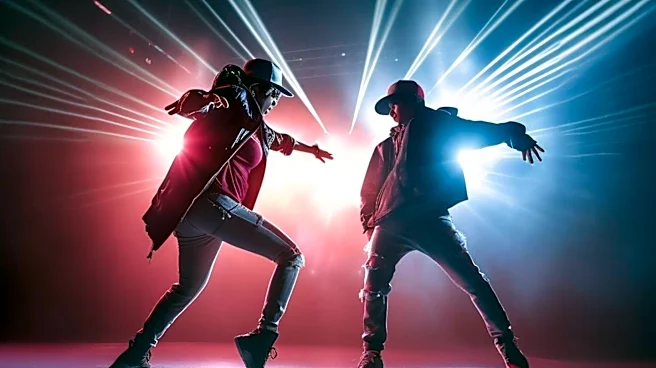







"You Can Dance – Po prostu tańcz!" (which translates to "You Can Dance – Just Dance!") is a prominent Polish televised dance competition that has captivated audiences with its dynamic format and showcase of diverse dance talent. Modeled after the successful American series "So You Think You Can Dance," the show offers aspiring dancers a platform to compete for significant prizes, including PLN 100,000 and, from season 7 onwards, a three-month scholarship
to prestigious dance schools like Broadway Dance Center and International Dance Academy in Los Angeles. The competition has crowned numerous winners over its seasons, each demonstrating exceptional skill across various dance styles.
The Journey to the Live Shows: Auditions and Workshops
The competition begins with open auditions, where expert judges select an initial pool of talented dancers. In the Polish version, typically 36 dancers are chosen to advance to the next stage: advanced multidisciplinary workshops held in various countries abroad. These workshops are akin to the "Vegas Week" or "Boot Camp" phases seen in other "So You Think You Can Dance" franchises, designed to rigorously test the dancers' abilities.
These seven-day workshops are crucial for evaluating overall dance versatility, stamina, and performance under pressure. Dancers are put through a series of intensive lessons covering styles prominent in the competition, such as hip-hop, jazz, ballroom, and contemporary. Judges actively eliminate dancers during these lessons using yellow and red cards, making cuts after performances in each genre. The process culminates in a final choreography round led by a special guest choreographer, often someone connected to the original American show. By the end of the workshops, fewer than 30 competitors remain, from which the final contestants for the live shows are selected. Historically, 16 finalists were chosen for seasons 1-4, while seasons 5 onwards have featured 14 finalists.
The Live Competition: Duets, Solos, and Eliminations
Once the finalists are selected, the show transitions into its regular competition phase, which spans 7-9 weeks. Dancers are typically paired into male-female couples, either randomly or by judges, and these pairings often remain until the final weeks. Each week, these couples perform duets in randomly selected styles, choreographed by professional and often renowned choreographers in their respective genres. Before each duet, a video package is shown, detailing the couple's preparation, offering glimpses into their personalities, and providing insight from the choreographer about the piece's thematic and artistic intentions. Following each performance, the judging panel provides critical feedback.
After every performance episode, the judges select a bottom three couples. The six dancers from these couples are then in danger of elimination and must perform a solo as a final effort to impress the judges and secure their place. At this point, viewers cast their votes for their favorite dancers. The eliminated dancers are then announced and given a brief video montage send-off, marking the end of their journey in the competition.
The Evolution of Judging and Finale Format
The judging panel has consistently featured three permanent judges, with occasional guest judges. Agustin Egurolla serves as the executive judge, holding the power to overrule majority decisions, a power he has exercised on two occasions. The panel has seen some changes over the seasons, with figures like Izabella Miko, Weronika Marczuk-Pazura, Anna Mucha, and former host Kinga Rusin joining at various points, alongside consistent judges like Michał Piróg. More recent seasons have introduced new judges such as Maciej "Gleba" Florek and Ida Nowakowska, and for season 10, Bartosz Porczyk, Mery Spolsky, Michał Danilczuk, and Ryfa Ri.
As the competition progresses, particularly around the "Top Six" phase, format changes occur. The judges relinquish their power to save dancers, and eliminations become solely determined by viewer votes, with judges shifting to an advisory role. The season culminates in a grand finale, typically featuring a Top 2 or Top 3. The final show is often the most elaborately produced, showcasing the remaining dancers performing duets with all fellow finalists, solos, and participating in group numbers. It includes guest dancers, additional group performances, and multiple video packages chronicling the season's events, all leading up to the highly anticipated announcement of the winner.