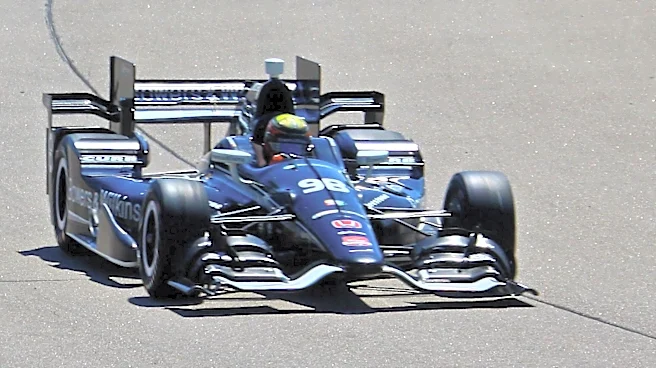







The IndyCar Series stands as a premier auto racing series in North America, established in 1996. This open-wheel racing championship has carved out a significant niche in American motorsport, building on a rich history that dates back to the early 20th century. Its most iconic event, the Indianapolis 500, first held in 1911, is not only a cornerstone of the series but also lends its name to the "IndyCar" moniker. The series is known for its high-speed
oval circuit races, featuring specialized single-seater cars designed for maximum performance.
The Evolution of American Open-Wheel Racing
Historically, open-wheel racing has been one of the most popular forms of motorsport in the United States. The establishment of the Indy Racing League in 1996, which later became the IndyCar Series, marked a significant chapter in this history. This new league was founded by Tony George, then president of the Indianapolis Motor Speedway, with the Indianapolis 500 serving as its flagship event. The series aimed to continue the tradition of American open-wheel racing, focusing on oval tracks and fostering intense competition among drivers and teams.
Over the years, the IndyCar Series has seen various changes and developments, including shifts in its engine formulas and marketing strategies. For instance, the 2023 season was initially slated to be the last for the 2.2-liter V6 twin-turbocharged engine formula that debuted in 2012. Plans for a new 2.4-liter V6 twin-turbocharged hybrid engine were announced, though these were later adjusted to integrate hybrid technology into the existing 2.2-liter engines for 2024. These technical evolutions underscore the series' continuous effort to innovate and maintain its competitive edge.
Championship Structure and Point System
The IndyCar Series employs a detailed point system to determine its champion, rewarding drivers based on their finishing positions in each race. The winner of a race receives 50 points, with subsequent top finishers earning progressively fewer points. For example, the top four drivers are separated by ten, five, and three points respectively, while drivers from fourth to tenth place are separated by two points each. Eleventh through twenty-fifth place finishers each earn one point, and all other drivers who start a race receive five points.
Beyond finishing positions, bonus points are also awarded for specific achievements. One point is given to the driver who secures the pole position in each race, with the exception of the Indianapolis 500. Additionally, any driver who leads at least one lap in a race earns one bonus point, and the driver who leads the most laps in a race receives an extra two points. The Indianapolis 500 has a unique qualifying points system, where all 33 cars are awarded points based on their qualifying speed and position, with a sliding scale for those in the top-nine shootout. While double points were awarded for all finishing positions at the Indianapolis 500 from 2014 to 2022, this practice was discontinued in 2023, meaning the Indy 500 now awards the same points as any other race. In the event of a tie for the championship, the series prioritizes the number of first-place finishes, then second-place, and so on, until a champion is determined.
Marketing and Viewer Engagement
In recent years, the IndyCar Series has actively pursued marketing changes aimed at increasing domestic viewership. The 2023 season, for example, saw several initiatives designed to boost engagement. One notable effort was the announcement of a reality documentary series titled "100 Days to Indy," which premiered in April 2023 on The CW Network. This series, produced by Vice Media, provided behind-the-scenes access to the world of IndyCar racing, with Penske Entertainment receiving monetary compensation for facilitating this access. These marketing efforts highlight the series' commitment to expanding its audience and bringing the excitement of open-wheel racing to a broader public.