





Lucasfilm Ltd. LLC, an American film and television production company, began its remarkable journey on December 10, 1971. Founded by filmmaker George Lucas in Marin County, California, specifically in San Rafael, the company would later relocate its headquarters to San Francisco in 2005. Initially conceived as a vehicle for independent filmmaking, Lucasfilm quickly became synonymous with groundbreaking franchises like *Star Wars* and *Indiana Jones*,
while also leading advancements in special effects, sound, and computer animation for the film industry. Its trajectory from a small independent studio to a global entertainment powerhouse culminated in its acquisition by the Walt Disney Studios in 2012.
The Genesis of an Empire: Early Years and Breakthrough Success
George Lucas established Lucasfilm with a clear vision, and its first production, *American Graffiti* (1973), filmed partly in downtown San Rafael under Lucas's direction, achieved both critical and commercial success. By the mid-1970s, the company's offices had moved to the Universal Studios Lot. It was during the production of *American Graffiti* that pre-production for what would become *Star Wars: Episode IV — A New Hope* (1977) began. Despite initial rejection from Universal for *Star Wars* funding, the success of *American Graffiti* allowed Lucas to successfully pitch the science fiction epic to 20th Century-Fox.
*Star Wars*, Lucasfilm's second production, had a limited release on May 25, 1977, and was met with critical acclaim and significant box-office success. The company officially incorporated as Lucasfilm Ltd. on September 12, 1977. To manage the legal and financial aspects of *A New Hope*, including copyright, sequel, and merchandising rights, Lucas founded the Star Wars Corporation, Inc. as a subsidiary. This subsidiary also produced the 1978 *Star Wars Holiday Special* for 20th Century Fox Television. Lucas's desire to focus on independent films led him to hire real-estate specialist Charles Weber in 1978 to manage the company, with the understanding that Weber would keep his job as long as he generated profit. However, the company grew from five employees to nearly 100, increasing costs and middle management. By 1980, after Weber requested $50 million for investments and suggested selling Skywalker Ranch, Lucas fired him and reduced the Los Angeles staff by half. The corporate subsidiary was discontinued that same year, with its business absorbed into Lucasfilm's various divisions. Also in 1980, the second *Star Wars* film, *Star Wars: Episode V — The Empire Strikes Back*, was released.
Expansion, Innovation, and the Prequel Era
The 1980s and 1990s saw Lucasfilm continue to expand its creative output and technological innovations. Between 1981 and 1989, three *Indiana Jones* films, based on stories by Lucas and directed by Steven Spielberg, were released. During the production of *Star Wars: Episode VI — Return of the Jedi* (1983), Lucas initially decided against making further *Star Wars* films. Despite *Return of the Jedi* achieving classic status, Lucas was dissatisfied with its cinema presentation, leading him to create THX, which was unveiled on May 20, 1983.
Lucasfilm also ventured into animated films with John Korty's *Twice Upon a Time* (1983) and produced other notable films such as Paul Schrader's *Mishima: A Life in Four Chapters* (1985), Jim Henson's *Labyrinth* (1986), and an adaptation of Marvel Comics' *Howard the Duck* (1986). Ron Howard directed the fantasy film *Willow* (1988), based on a story by Lucas, and the children's animated film *The Land Before Time* was also released that year. From 1992 to 1993, *The Young Indiana Jones Chronicles* television series, created by Lucas, was produced. A significant turning point came in 1992 when, after seeing an early computer-generated imagery test by Industrial Light & Magic (ILM) for *Jurassic Park*, Lucas announced his intention to produce a *Star Wars* Prequel Trilogy. Pre-production for the prequel trilogy began in 1995, taking ten years to complete, with the final film, *Star Wars: Episode III – Revenge of the Sith*, released in 2005. Concurrently, Lucas created the Special Editions of the Original Trilogy in 1997, released theatrically and on home video, with further changes made for DVD and Blu-ray releases in 2004 and 2011.
Organizational Shifts and the Disney Acquisition
In 1987, Lucasfilm, which was producing three to five films annually, began making its Northern California production facilities available to other filmmakers. In 1989, Lucasfilm launched Lucasfilm Entertainment Group, later known as LucasArts Entertainment Company, to consolidate its four units: Industrial Light & Magic, Lucasfilm Commercial Productions, Lucasfilm Games, and Sprocket Systems. The company also expanded internationally, opening a new animation studio in Singapore in 2005. That same year, Lucasfilm Animation began production on a 3D animated *Star Wars* television series, *Star Wars: The Clone Wars*, which aired on Cartoon Network from 2008 to 2013 and was well-received.
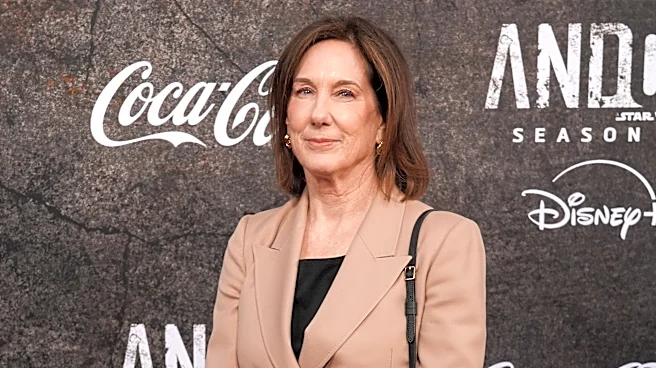
In January 2012, George Lucas announced his retirement from large-scale blockbuster films to focus on smaller, independently budgeted features. In June 2012, Kathleen Kennedy, a long-time collaborator with Steven Spielberg and an executive producer of the *Indiana Jones* films, was appointed co-chair of Lucasfilm. She was slated to work alongside Lucas, who would remain chief executive and co-chair for at least a year, before succeeding him as chairperson in June 2013. On July 8, 2012, Lucasfilm's marketing, online, and licensing units moved to the new Letterman Digital Arts Center in San Francisco, sharing the complex with Industrial Light & Magic. Plans for an expansion at Skywalker Ranch in Marin County were shelved in 2012 due to local opposition, leaving Skywalker Sound as the only Lucasfilm division based there. On September 5, 2012, Micheline Chau, who served as president and COO for two decades, retired. Her departure led to senior executives of Lucasfilm divisions reporting directly to Kathleen Kennedy. Chau was recognized for maintaining the strength of the Lucasfilm and *Star Wars* brands through animation spin-offs and licensing. Later in 2012, Lucasfilm became a subsidiary of the Walt Disney Studios, which also owns Pixar, a former Lucasfilm subsidiary.