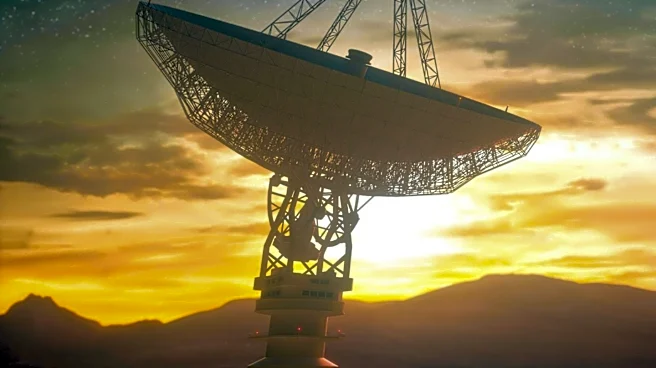






In November 1974, humanity sent a unique message into the cosmos from the Arecibo Telescope in Puerto Rico. This transmission, known as the Arecibo message, was not primarily an attempt to initiate a conversation with extraterrestrial life. Instead, it served as a powerful demonstration of human technological capabilities. Broadcast as frequency-modulated radio waves, the message was a carefully designed binary code intended to be decoded into an image.
This image was packed with fundamental information about Earth and its inhabitants, offering a snapshot of our scientific understanding and biological makeup to any potential recipients across the vastness of space.
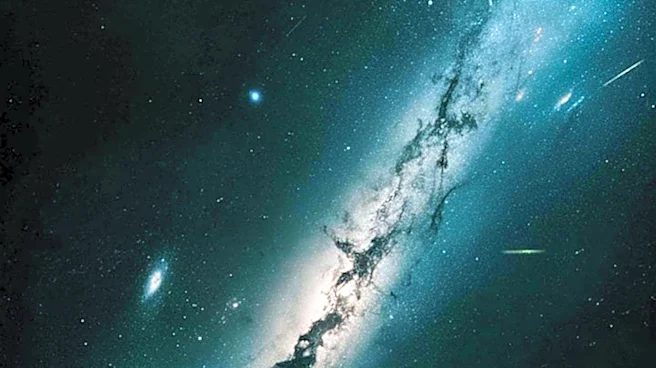
The message was specifically aimed at the globular cluster M13, a dense collection of stars located approximately 25,000 light-years from Earth. Given this immense distance, the message, traveling at the speed of light, would take at least 25,000 years to reach its target. By the time it arrives, the core of M13 will have shifted slightly due to its orbit around the Galactic Center, though its proper motion is small enough that the message is still expected to arrive near the cluster's center. This long travel time underscores that the message's primary intent was not immediate communication, but rather a symbolic gesture of our presence and advancement.
Crafting the Cosmic Postcard
The content of the Arecibo message was meticulously designed by a team of scientists from Cornell University and Arecibo, including notable figures like Frank Drake, known for the Drake equation, James C. G. Walker, Linda M. French, and Richard Isaacman. Carl Sagan and others also contributed to its creation. Their goal was to condense essential information about humanity and Earth into a format that could be universally understood, assuming the recipients possessed a basic grasp of mathematics and physics. The message was broadcast only once, during a ceremony marking the remodeling of the Arecibo Telescope.
The message itself consisted of 1,679 binary digits, which is roughly 210 bytes of data. This specific number, 1,679, was chosen because it is a semiprime number—the product of two prime numbers, 73 and 23. This mathematical property was crucial, as it allowed the binary string to be arranged into a rectangular image of 73 rows by 23 columns. The alternative arrangement, 23 rows by 73 columns, would produce an unintelligible jumble of characters, highlighting the importance of this mathematical clue for decoding.
Decoding the Message: A Universal Language
When correctly translated into graphics, characters, and spaces, the 1,679 bits of data form an image composed of seven distinct parts, each conveying specific information. The message begins with the numbers one to ten, presented in binary format. This serves as a foundational element, establishing a common numerical language. Following this, the message details the atomic numbers of the five key elements that constitute DNA: hydrogen, carbon, nitrogen, oxygen, and phosphorus. These are presented in a purple section of the image.
The next section delves deeper into the building blocks of life, illustrating the formulas for the chemical compounds that make up the nucleotides of DNA. These are shown in green. This is followed by a graphic representation of the double helix structure of DNA, accompanied by the estimated number of DNA nucleotides in the human genome at the time of transmission, which was around 4.3 billion. This value, depicted in white and blue, was believed to be accurate in 1974, though current understanding places the number closer to 3.2 billion base pairs.
Humanity's Self-Portrait and Cosmic Address
The message then presents a self-portrait of humanity. This includes a graphic figure of a human being, colored red, alongside the dimension of an average man's physical height, given as 5 feet 9.4 inches (1.764 meters). This height is encoded as the binary number 14, intended to be multiplied by the message's wavelength of 126 millimeters. Additionally, the message includes the human population of Earth at the time, approximately 4 billion, which coincidentally was very close to the number of DNA base pairs suggested earlier in the message. This population figure is oriented horizontally in the data.
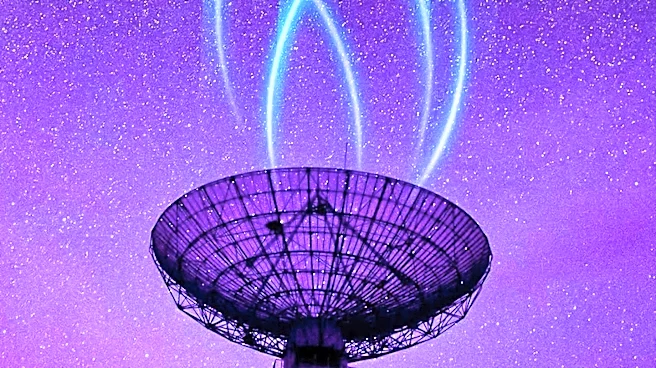
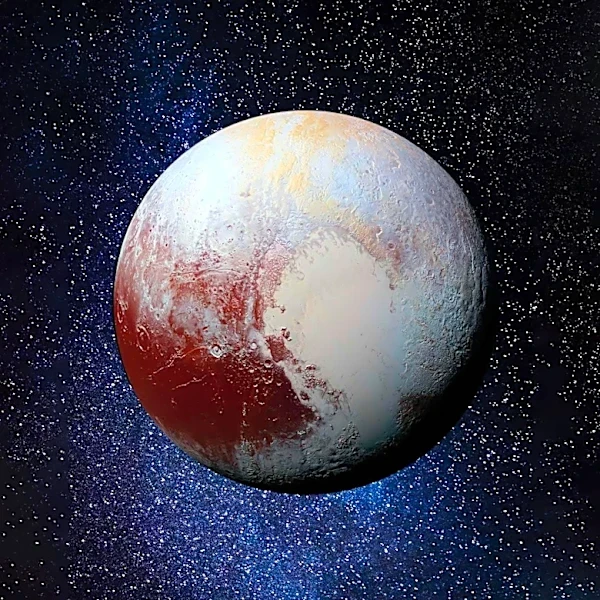
Finally, the Arecibo message provides our cosmic address and a representation of our technological capabilities. A graphic of the Solar System is included, showing the Sun and the nine planets known at the time, including Pluto. Earth, the third planet from the Sun, is highlighted by being shifted upwards, indicating it as the source of the message. The human figure is also positioned just above the Earth graphic. The message concludes with a graphic of the Arecibo radio telescope itself, along with the physical diameter of its transmitting antenna dish, presented in purple, white, and blue. This final section not only identifies the sender but also showcases the instrument used to send this remarkable interstellar greeting.