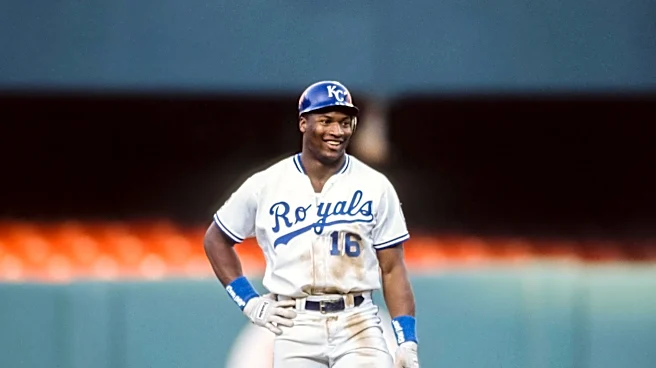

In 1980, George Brett delivered one of the most remarkable individual seasons in baseball history, a performance that saw him flirt with the elusive .400 batting average and ultimately earn him the American
League Most Valuable Player award. This year was a pinnacle for Brett, showcasing his exceptional hitting prowess and leadership as he guided the Kansas City Royals to the World Series. His achievements in 1980 cemented his status as a premier player in Major League Baseball, leaving a lasting mark on the sport's record books.
Chasing the .400 Mark
Brett's 1980 season was defined by his relentless pursuit of a .400 batting average, a feat not achieved in Major League Baseball since Ted Williams hit .406 in 1941. Throughout the season, Brett maintained an extraordinary level of consistency at the plate. His batting average remained above .400 until September 19th, creating significant buzz and anticipation among baseball fans and media alike. While he ultimately finished the season with a .390 average, this figure was still the highest since Williams's legendary 1941 campaign.
His .390 batting average led the American League, demonstrating his dominance as a hitter. Beyond just average, Brett also topped the league in other crucial offensive categories. He achieved a .454 on-base percentage, indicating his ability to consistently reach base, and an impressive .664 slugging percentage, reflecting his power and ability to hit for extra bases. These statistics collectively underscored a season of offensive brilliance that few players have ever matched.
MVP Recognition and Silver Slugger Award
For his outstanding performance, George Brett was deservingly named the American League Most Valuable Player in 1980. This prestigious award recognized his all-around contribution to his team's success and his individual statistical achievements. The MVP award is a testament to a player's impact, and Brett's 1980 season clearly demonstrated his immense value to the Kansas City Royals.
In addition to the MVP, Brett also received the Silver Slugger Award in 1980. This award, which he would win two more times in his career (1985 and 1988), honors the best offensive player at each position in both the American and National Leagues. Winning both the MVP and the Silver Slugger in the same year further highlighted his exceptional offensive capabilities and his standing as one of the league's elite hitters during that period.
World Series Appearance and Postseason Performance
The 1980 season was not just about individual accolades for Brett; it also saw significant team success. He led the Kansas City Royals to the World Series, a culmination of their strong regular season performance. In the American League Championship Series, the Royals successfully eliminated the New York Yankees, securing their spot in the Fall Classic.
However, the Royals ultimately fell short in the World Series, losing to the Philadelphia Phillies in six games (2-4). Despite the team's loss, Brett continued to perform well on the biggest stage. During the World Series, he maintained a strong batting average of .375, collecting 9 hits in 24 at-bats. He also contributed with a home run and three runs batted in, showcasing his ability to deliver in high-pressure situations. This postseason performance, following his historic regular season, solidified his reputation as a clutch player and a formidable opponent.