

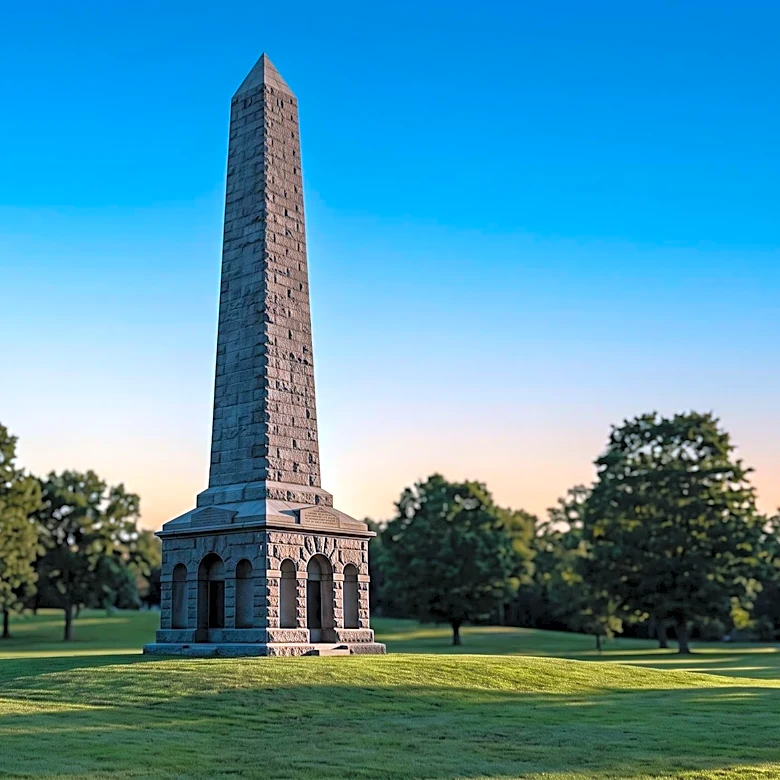

The Battles of Saratoga, fought in September and October of 1777, were pivotal moments in the American Revolutionary War. The first major engagement, known as the Battle of Freeman's Farm, took place on September 19, 1777. This battle, while a tactical victory for the British forces under General John Burgoyne, came at a significant cost in terms of casualties and set the stage for the eventual American triumph in the Saratoga campaign. It demonstrated
the fierce resistance of the American Continental Army and the strategic challenges faced by the British in their efforts to divide the colonies.
Initial British Maneuvers and American Entrenchment
General John Burgoyne's campaign in New York aimed to sever New England from the middle and southern colonies. However, his plans were hampered by the lack of support from other British forces. General William Howe never moved his troops north to meet Burgoyne, and Brigadier General Barry St. Leger's forces, intended to arrive from the west, were turned back. This left Burgoyne's army isolated in upstate New York, approximately 15 miles short of his objective.
Facing an entrenched American position on Bemis Heights, Burgoyne initiated the Battle of Freeman's Farm on September 19 with an attempt to flank the American lines. The American forces were commanded by Generals Horatio Gates and Benedict Arnold. The British strategy involved a flanking maneuver, which led to the initial clashes of the battle. The American forces, despite being attacked, held their ground with determination, making the British advance difficult and costly.
The Fierce Engagement at Freeman's Farm
The fighting at Freeman's Farm was intense and protracted. The British, though ultimately securing the field, paid a heavy price for their tactical success. The battle was characterized by fierce back-and-forth engagements, with both sides suffering significant losses. The American troops, many of whom were from Arnold's command, fought with notable bravery and skill, preventing a decisive British breakthrough.
Despite the British claiming the battlefield at the end of the day, the heavy casualties they sustained were a critical blow to Burgoyne's already strained resources. The battle highlighted the effectiveness of the American defense and the resilience of the Continental Army. It also underscored the strategic dilemma Burgoyne faced: winning battles at such a high cost was unsustainable for an army already isolated and far from its supply lines.
Aftermath and Strategic Implications
Following the Battle of Freeman's Farm, Burgoyne's council debated their next move. They decided to delay further action, hoping for assistance from General Henry Clinton, who commanded the British garrison in New York City. Clinton had indicated he might "make a push at [Fort] Montgomery in about ten days," but his arrival would not be swift enough to relieve Burgoyne's immediate predicament. Burgoyne, running low on men and food, chose to wait, despite his difficult position.
This waiting period allowed the American forces to regroup and strengthen. The American camp saw an influx of militiamen and crucial supplies, including ammunition, which had been severely depleted during the first battle. By the time Burgoyne attacked again on October 7 at the Battle of Bemis Heights, the American army had grown to over 12,000 men. The costly tactical victory at Freeman's Farm ultimately weakened Burgoyne's army and contributed to his eventual defeat and surrender, marking a significant turning point in the American Revolutionary War.