Hasta mudras, or hand mudras, are symbolic or ritual gestures primarily performed with the hands and fingers. These gestures are deeply embedded in various traditions, including Hinduism, Jainism, and Buddhism, and serve diverse purposes from aiding meditation to conveying complex narratives in dance. While some mudras might involve the entire body, the focus on hand gestures highlights their significance in expressing ideas, emotions, and spiritual
concepts.
The Origins and Purpose of Mudras
Mudras are not merely decorative poses; they are integral to spiritual practices and artistic expressions. In yoga, mudras are often used in conjunction with pranayama, or yogic breathing exercises, typically while seated in specific postures like Padmasana or Sukhasana. Their purpose in yoga is to stimulate different parts of the body and mind, and to influence the flow of prana, or life force energy. Beyond yoga, mudras evolved for use in rituals, particularly within tantra, and became iconographical symbols for depicting deities in statues and paintings. They also developed as a sophisticated form of non-verbal storytelling in traditional dance.
Mudras in Indian Classical Dance
Indian classical dance, particularly Bharatanatyam, extensively utilizes hasta mudras to communicate specific ideas, events, actions, or even creatures. Nandikeshvara's Abhinaya Darpa, a descriptive primer for dancers, emphasizes the role of hand gestures in expressing the meaning of a song, alongside facial expressions for feelings and footwork for rhythm. The text famously states, "Where the hand is, the eyes follow; where the eyes go, the mind follows; where the mind is, there is the feeling; where there is feeling, there is mood/flavor, sweetness." This highlights how hasta mudras form a distinct coded language, bringing a unique poetic element to performances. The vastness of human experience and even the universe itself can be conveyed through the subtleties of these hand gestures when combined with abhinaya (facial expressions), pose, and rhythm.
The Five Elements and Hasta Mudras
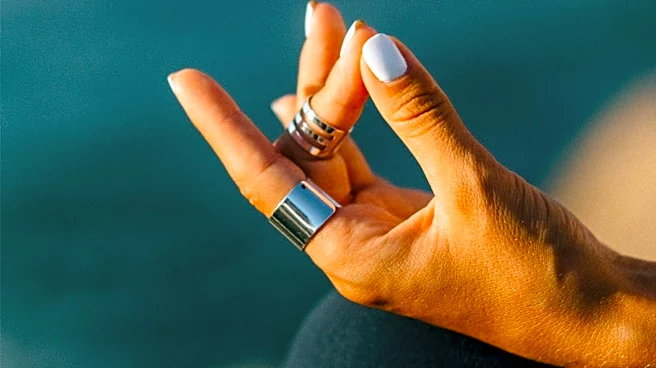
A fundamental concept underlying hasta mudras, particularly in yogic traditions and Ayurveda, is their connection to the Pancha Bhutas, or the five basic elements: Earth (Prithvi), Water (Ap), Fire (Agni), Air (Vayu), and Aether (Akasha). Each of these elements is associated with a specific finger in the human hand. The thumb represents Fire (Agni), the index finger represents Air (Vayu), the middle finger represents Aether (Akasha), the ring finger represents Earth (Prithvi), and the little finger represents Water (Apas). This association forms the basis for many mudras, where specific finger positions are believed to balance these elements within the body. According to Yoga Tattva Mudra Vijnana, different mudras were developed to balance these elements, forming the hasta mudras used in yogic tradition and naturopathy. Any disorder in the human body is often seen as an imbalance of one or more of these elements, which mudras aim to correct.
Examples of Hasta Mudras and Their Meanings
Numerous hasta mudras exist, each with its own specific meaning and application. For instance, Anjali Mudra, a gesture of reverence, involves palms touching with fingers pointing upward, often placed in front of the sternum. Dhyana Mudra, a psychic gesture of meditation, features upturned hands overlapping, usually the right on top of the left, with thumbs touching. Vayu Mudra, for the element air, involves the tip of the index finger on the ball of the thumb, with the thumb over the bent finger and other fingers extended. Shunya Mudra, the gesture of void, has the middle finger bent with the thumb over it. Prithvi Mudra, for the earth element, involves the ring finger bent with the thumb over it. Varuna Mudra, for water, has the little finger bent with the thumb over it. These examples illustrate the intricate system of hasta mudras, where each gesture is designed to evoke a particular state, balance an element, or convey a specific message.