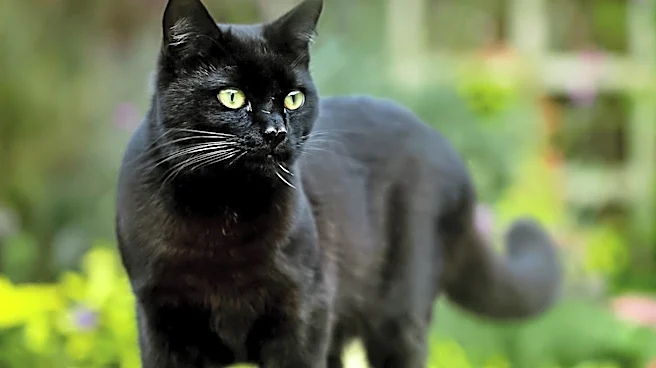

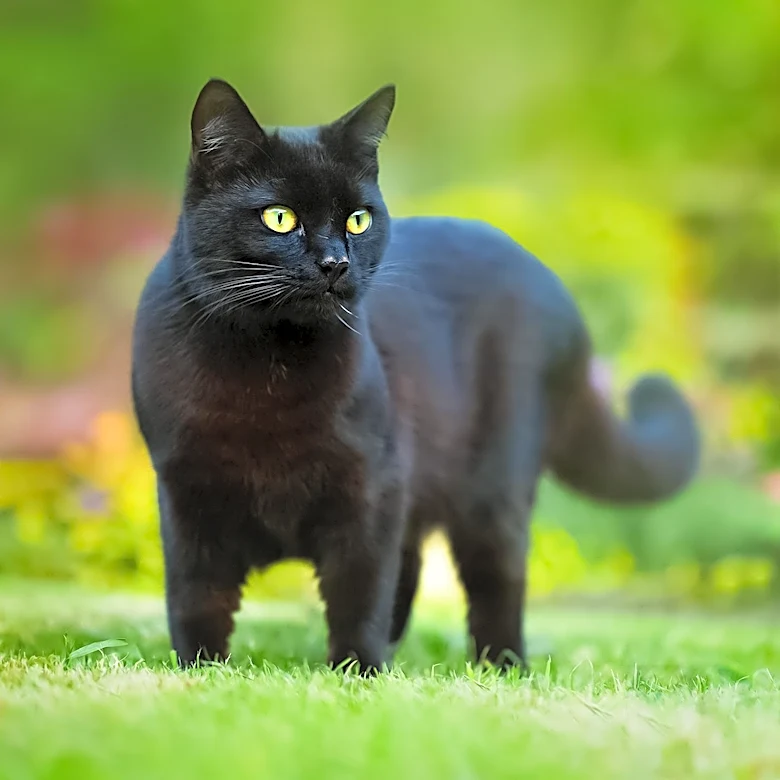







The Bombay cat, a striking short-haired breed known for its glossy black coat and captivating copper-golden eyes, holds a unique place in the world of domestic felines. Its name, inspired by the Indian city of Bombay (now Mumbai), evokes the image of the Indian black leopard, a creature whose miniature likeness breeders aimed to capture. This breed is particularly recognized for its muscular build and its distinctive panther-like appearance, combined
with an affectionate nature that makes it a cherished companion. However, what many might not realize is that the Bombay cat actually has two distinct lineages, developed independently in different parts of the world, each with its own specific breeding history and characteristics.
The American Bombay: Nikki Horner's Vision
The journey to create the American Bombay began in the United States, specifically in Louisville, Kentucky, starting in 1958. The driving force behind this endeavor was Nikki Horner, a dedicated breeder with a clear vision: to develop a domestic cat breed that would resemble a miniature black panther. Her initial attempt to achieve this distinctive look was unsuccessful, but her perseverance paid off with a second, successful breeding program initiated in 1965. This determined effort eventually led to the establishment of the US-type Bombay, a breed that quickly gained recognition for its sleek, dark beauty.
Horner's method involved a careful crossbreeding strategy. She combined sable American Burmese cats with black American Shorthair cats. The goal was to produce a cat that predominantly exhibited the characteristics of the Burmese type, but with the crucial addition of a sleek, panther-like black coat and those signature copper-golden eyes. This specific combination of parent breeds was instrumental in achieving the desired aesthetic and temperament, creating a cat that was both exotic in appearance and gentle in disposition. The success of her breeding program led to the official recognition of the US-type Bombay by the Cat Fanciers' Association (CFA) in 1970, followed by The International Cat Association (TICA) in 1979, solidifying its place among recognized pedigree breeds.
The British Bombay: A European Development
Across the Atlantic, a different lineage of the Bombay cat emerged, known as the British Bombay. This variant is classified as an Asian Self cat within the broader Asian group, a category recognized by the Governing Council of the Cat Fancy (GCCF) in the UK. Unlike its American counterpart, the British Bombay's origins are rooted in a different set of crossbreedings, specifically involving European Burmese cats and chinchilla Persian crosses. This distinct genetic background contributes to its unique characteristics while still maintaining the core black coat and overall elegance associated with the Bombay name.
The British Bombay's development involved a series of "mismatings" between European Burmese cats and black domestic short-haired cats. These initial pairings, though perhaps not always intentional, laid the groundwork for the breed's establishment. The GCCF is the sole registry that officially recognizes the British Bombay, listing it as the Asian Self under the Asian group. This highlights the specific regional development and recognition of this particular type. In 2023, the entire Asian group, which includes the British Bombay, saw only 160 kittens pedigreed with the GCCF, indicating its relative rarity even within its recognized registry. Data specifically for the British Bombay within this group is not separately available, further emphasizing its niche status.
Rarity and Recognition Across Continents
Despite the dedicated efforts of breeders and its striking appearance, the Bombay cat remains a relatively rare breed among pedigree cats in both the US and UK types. This rarity contributes to its mystique and desirability among enthusiasts. The US-type Bombay, recognized by major associations like the CFA and TICA, has a more established presence in North America. However, even with this recognition, it is not a commonly encountered breed. The Fédération Internationale Féline (FIFe) currently grants the Bombay only preliminary recognition status, suggesting that its global acceptance and widespread breeding are still evolving.
The British Bombay, as part of the Asian group, faces similar challenges in terms of popularity. The limited number of pedigreed kittens each year underscores its status as a specialized breed. The distinct breeding programs and recognition pathways in the US and UK illustrate how a shared vision for a "miniature black panther" could lead to two separate, yet equally captivating, feline lineages. Both types, however, share the fundamental characteristic of a glossy black coat and a muscular build, embodying the panther-like ideal that inspired their creation.