







Roll film, a foundational innovation in photography, transformed the art and science of capturing images by offering a more convenient and portable alternative to earlier methods. Its development marked a significant step towards making photography accessible to a broader public. The journey of roll film began with crucial inventions that addressed the practical challenges of handling light-sensitive materials, leading to the diverse formats we recognize
today.
The Genesis of Flexible Roll Film
The concept of flexible roll film was brought to practical realization through the work of inventors like William H. Houston. Originally from Cambria, Wisconsin, Houston patented the first holders for flexible roll film in 1881. This invention was a critical precursor to the widespread adoption of roll film, as it provided a mechanism to manage and expose the film efficiently. Houston's patent was licensed by George Eastman and subsequently used in the iconic Kodak 1888 box camera, a product that democratized photography.
In 1889, Houston sold his 1881 patent and an 1886 revision outright to Eastman for $5000. This acquisition by Eastman Kodak was a strategic move, consolidating key technology that would underpin the company's future success. Houston himself continued to be a prolific inventor, securing 21 patents for cameras or camera parts between 1881 and 1902, further contributing to the evolving landscape of photographic technology. His estate later transferred the remainder of his patents to Eastman in 1912, solidifying his legacy within the industry.
Design and Functionality of Roll Film
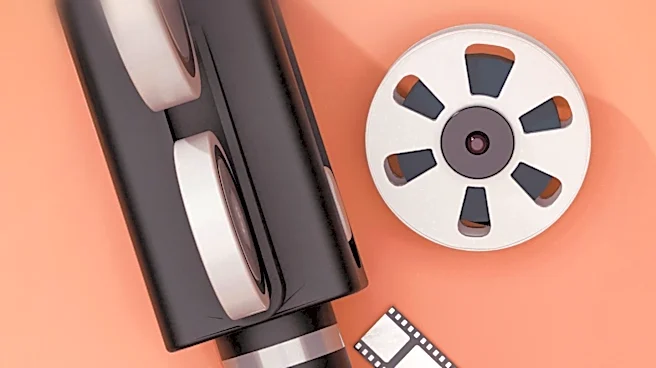
Roll film is characterized by its spool-wound design, where the photographic film is protected from white light exposure by a paper backing. This opaque backing paper is a key feature, allowing the film to be loaded in daylight without being ruined. The term "roll film" itself emerged in contrast to "sheet film," highlighting its distinct form factor. Early on, it was sometimes referred to as "cartridge" film due to its resemblance to a shotgun cartridge.
The practical operation of roll film involves a clever mechanism. Frame number markings are typically printed on the backing paper, visible through a small red window at the rear of the camera. A roll of film is loaded onto one side of the camera and then pulled across to an identical take-up spool on the other side of the shutter as exposures are made. Once the entire roll is exposed, the take-up spool, now holding the exposed film, is removed for processing. The empty spool from which the film was originally wound is then moved to the other side, ready to become the take-up spool for the next roll of film. This design ensured ease of use and protection of the sensitive film material.
Diverse Formats and Enduring Legacy
Over time, various roll film formats emerged to cater to different photographic needs. For instance, 120 film, introduced by Kodak in 1901 for their Brownie No. 2 camera, became a prominent medium format. This format, approximately six centimeters high and 82 cm long, was initially intended for amateur photography but has endured as a choice for professionals and enthusiasts alike. Unlike 35mm film, 120 film allows for various image sizes, such as 6x6, 6x4.5, 6x7, and 6x9, depending on the camera used.
The backing paper of 120 film is longer and slightly wider than the film itself, providing ample protection during loading and unloading in daylight. It also features frame number markings for different standard image formats. The sister format, 220 film, introduced in 1965, is similar in width but twice the length, offering more exposures per roll. However, 220 film lacks the continuous backing paper of 120 film, making it unsuitable for older cameras that rely on the red window for frame numbering. The evolution of roll film, from Houston's initial holders to these specialized formats, underscores its lasting impact on photographic practice.