




Exfoliation in chemistry has undergone significant transformations over the years, evolving from ancient practices to cutting-edge scientific techniques. This process, which involves separating layered materials into nanosheets, has become a cornerstone in the production of nanomaterials. The journey of exfoliation is marked by key discoveries and innovations that have shaped its current status as a widely used method in nanotechnology.
Historical Beginnings
The concept
of exfoliation can be traced back to ancient civilizations, such as the Chinese and Mayans, who utilized it in pottery. However, the scientific exploration of exfoliation began in the 19th century with Thomas H. Webb's production of vermiculite in 1824. Despite this early work, substantial research into the mechanisms of exfoliation did not occur until later.
A pivotal moment came in 1855 when Brodie discovered that certain acids could produce lamellar carbon structures. This finding laid the groundwork for understanding the chemical processes involved in exfoliation. Yet, it wasn't until 1926 that the absorption of alkali metals by graphite provided a solid theoretical framework for further advancements.
Breakthroughs and Innovations
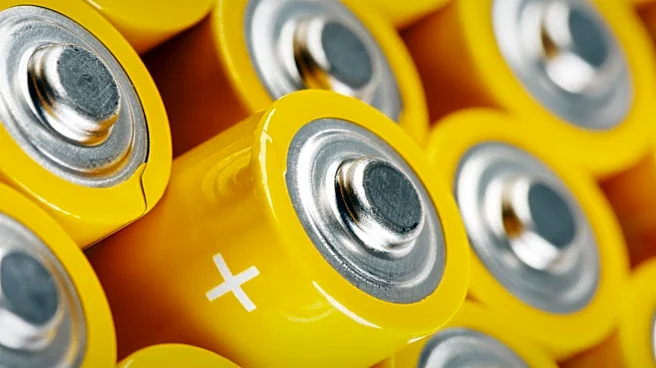
The development of electrochemical exfoliation in 1938 by Rüdorff and Hoffman marked a significant leap forward. This method, based on electrolysis and electrochemical intercalation, attracted widespread interest and established exfoliation as a viable production technique. The invention of commercial lithium carbon fluoride batteries in 1973 further demonstrated the potential of exfoliation for mass production.
The real turning point came in 2004 when Novoselov and Geim isolated graphene using mechanical exfoliation with Scotch tape. This groundbreaking research earned them the Nobel Prize in Physics in 2010 and reignited interest in exfoliation methods. Since then, numerous processes have been developed to enhance precision and yield in nanomaterial production.
Modern Applications and Future Directions
Today, exfoliation is a critical technique in nanotechnology, particularly in the production of graphene and other nanomaterials. Researchers have expanded their focus beyond graphite, exploring different elements to utilize exfoliation for new applications. The discovery of non-van der Waals nanoplatelets has opened up promising industrial uses, demonstrating that exfoliation can occur without relying on weak bonds.
As the field continues to evolve, the scalability and variety of chemical exfoliation methods remain key advantages. Combining chemical, mechanical, and thermal techniques allows for purer results, making exfoliation a versatile and essential process in modern science. The future of exfoliation holds exciting possibilities for further innovation and application across various industries.