





The human body features interossei muscles in both the hands and the feet, serving to control the digits. While they share a common name and general function of controlling movement, there are distinct differences in their number, specific actions, and the anatomical midline they define. Understanding these distinctions provides insight into the specialized functions of the hand for manipulation and the foot for support and locomotion.
In the hand,
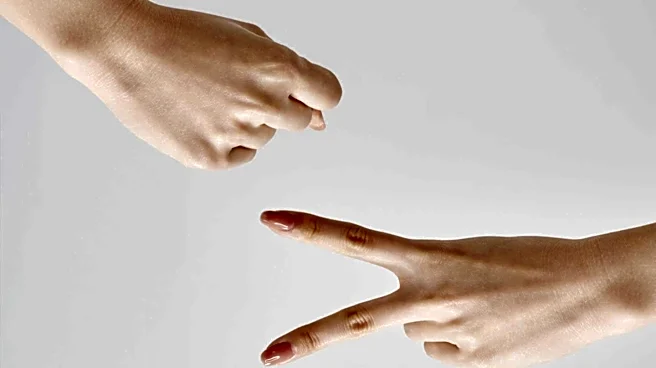
the interosseous muscles are divided into two sets: four dorsal interossei and three palmar interossei. The dorsal interossei in the hand are responsible for abducting the digits, meaning they move the fingers away from the third digit, which serves as the axial line of the hand. These muscles are bipennate. Conversely, the palmar interossei adduct the digits, moving them towards the third digit, and are unipennate. Both sets of hand interossei are innervated by the deep branch of the ulnar nerve.
Distinct Actions and Midlines
The primary action of the dorsal interossei in the hand is to abduct the index, middle, and ring fingers away from the hand's midline. They also assist in flexion at the metacarpophalangeal joints and extension at the interphalangeal joints of these fingers. The hand's midline is defined by the third finger, and the dorsal interossei spread the fingers away from this central axis. This precise control is vital for the dexterity and fine motor skills characteristic of the human hand.
In contrast, the dorsal interossei of the foot primarily abduct the third and fourth toes at the metatarsophalangeal joints. However, abduction in the foot is considered to be of little importance compared to the hand. A key difference lies in the midline: the second toe serves as the midline of the foot. This is because the second toe has a pair of dorsal interossei muscles attached to both its medial and lateral sides, and their simultaneous contraction results in no movement, effectively centering it. This contrasts sharply with the hand's third finger as its midline.
Structural and Functional Variations
There are four dorsal interossei in each hand, arising by two heads from the adjacent sides of the metacarpal bones. They insert into the bases of the proximal phalanges and into the extensor expansion of the corresponding extensor digitorum tendon. In the foot, there are also four dorsal interossei muscles, situated between the metatarsal bones. They originate from the proximal half of the sides of adjacent metatarsal bones and insert on the bases of the second, third, and fourth proximal phalanges and into the aponeurosis of the tendons of the extensor digitorum longus, without attaching to the extensor hoods of the toes.
While both sets of muscles contribute to flexion at the metatarsophalangeal joints, their roles in overall limb function differ. The hand's interossei are critical for intricate movements, whereas the foot's interossei, though small, are powerful muscles that, along with their plantar counterparts, control toe direction during vigorous activity. This allows the long and short flexors of the foot to perform their actions. Additionally, the foot's interossei contribute to maintaining the anterior metatarsal arch and, to a limited extent, the medial and lateral longitudinal arches of the foot, a function not directly mirrored by their hand counterparts.