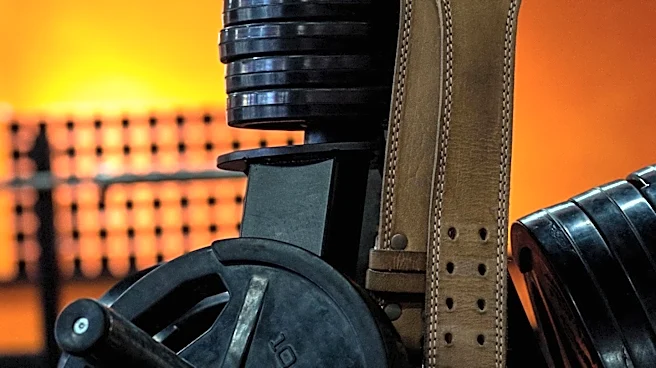








Weightlifting belts are a common sight in gyms and powerlifting competitions, serving as specialized equipment designed to support the lower back during strenuous physical activities. While often associated with elite athletes, these belts are also used in general weight training and strength training. Their primary function is to enhance a lifter's ability to handle heavy loads by providing crucial support to the core and spine, thereby aiming to improve
performance and reduce the risk of injury. Understanding the specific mechanisms through which these belts operate is key to appreciating their role in athletic endeavors.
Core Stabilization and Intra-Abdominal Pressure
One of the fundamental ways a weightlifting belt assists a lifter is by increasing intra-abdominal pressure (IAP). When a lifter wears a belt and braces their core, the belt provides a rigid wall against which the abdominal muscles can push. This action significantly elevates the pressure within the abdominal cavity. This increased IAP acts like an internal pneumatic support system, stiffening the torso and reducing the compressive forces on the spinal column. By creating this stable environment, the belt helps to reduce stress on the lower back muscles, allowing the lifter to safely manage heavier weights during exercises that place a substantial load on the lumbar region.This mechanism is particularly beneficial during compound movements such as squats, deadlifts, and military presses, where the lower back is subjected to considerable strain. The enhanced stability provided by the belt allows the lifter to maintain a more rigid and upright posture throughout the lift. This internal support system is a key factor in enabling athletes to push their limits and achieve maximal lifts, as it provides a foundation of stability that might otherwise be compromised under extreme loads. The ability to generate and maintain high IAP is a critical component of safe and effective heavy lifting, and the belt serves as an external aid in achieving this.
Proprioception and Spinal Protection
Beyond simply increasing intra-abdominal pressure, weightlifting belts also play a role in enhancing a lifter's proprioception. Proprioception refers to the body's ability to sense its position, movement, and action. The physical presence of the belt around the torso provides tactile feedback, making the lifter more aware of their core and lower back position. This heightened awareness can lead to improved body mechanics during lifts.By increasing proprioceptive feedback, the belt may help lifters to consciously or subconsciously maintain a more neutral spine. This can lead to a decrease in undesirable movements such as lumbar hyperextension, where the lower back arches excessively, or other forms of spinal deformation that could potentially lead to injury. The belt acts as a constant reminder to keep the core engaged and the back stable, guiding the lifter into safer and more efficient movement patterns. This protective aspect is crucial for longevity in strength training, as it helps to mitigate risks associated with improper form under heavy loads.
Specialized Designs for Different Lifting Disciplines
Weightlifting belts are not a one-size-fits-all piece of equipment; their design can vary significantly depending on the specific lifting discipline. Classical weightlifting belts, often made of leather, are typically designed with a variable width. The portion of the belt that crosses the small of the back is generally wider, approximately fifteen centimeters (six inches), while the portion crossing the abdomen is narrower. This specific shape is engineered to avoid hindering the complex movements required in Olympic-style exercises, such as the snatch and the clean and jerk, which demand a greater range of motion and flexibility in the torso.In contrast, powerlifting belts are characterized by their fixed width and stiffer construction. Unlike classical belts, powerlifting belts maintain a consistent width around the entire circumference, and they are made from more rigid materials. This design choice reflects the nature of powerlifting, where athletes typically focus on three main lifts: the squat, bench press, and deadlift. Powerlifters generally do not perform the dynamic, Olympic-style exercises, and thus, the stiffer, fixed-width belt provides maximum, unyielding support for the static, heavy lifts that define their sport. The increased stiffness further aids in generating and maintaining high intra-abdominal pressure, which is paramount for powerlifting performance.
Optimizing Performance in Heavy Lifts
The application of weightlifting belts is most commonly seen in exercises where the lower back bears a substantial load. These include foundational strength movements like the squat, the deadlift, and the military press. For experienced athletes, particularly those engaging in maximal lifts, the belt is recommended as a tool to improve performance and reduce spinal stress. By providing external support and facilitating internal pressure, the belt allows lifters to recruit more strength and power from their prime movers, as the stabilizing muscles are less burdened.However, it is important to note that while the belt can enhance performance and reduce stress on the spine, there are mixed reviews regarding its impact on stabilizer muscles. Some perspectives suggest that by providing external support, the belt might decrease the direct stress on these intrinsic stabilizer muscles, potentially leading to them receiving less benefit from the exercise. Despite this, for athletes aiming to lift the heaviest possible weights and minimize acute spinal stress during those peak efforts, the weightlifting belt remains a valuable and widely utilized piece of equipment. It is generally advised for use during maximal lifts rather than for general exercise, emphasizing its role as a performance and safety aid for advanced training.