








The sari, a traditional garment worn by women across South Asia, stands as a testament to enduring cultural heritage and evolving fashion. This unstitched, wrap-around skirt with a shoulder throw is a common sight in countries like India, Sri Lanka, Bangladesh, Nepal, and even parts of Pakistan. Its presence in daily life is widespread, and special occasion saris are also a significant part of celebrations. The way a sari is draped can even indicate
the wearer's origin, showcasing the rich diversity within its tradition. For instance, in Gujarat, the end of the sari hangs forward rather than backward, a distinct regional style.
Anatomy of a Sari: From Fabric to Draping
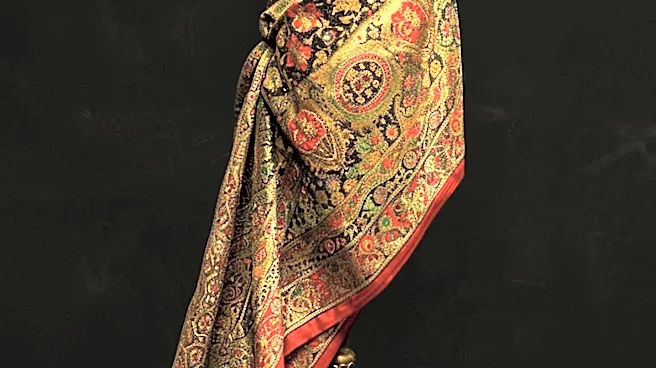
A sari is essentially a rectangular piece of woven cloth, typically measuring about 0.80 to 1.20 meters in width and 5 to 6 meters in length, though some can extend up to 9 meters. This fabric is notably seamless. It often features decorative borders of a different color along its sides or ends. The cloth can be broadly divided into three main zones: the Paluv (or Pallu), which is the most decoratively designed part, usually draped over the left shoulder; the main body or 'skirt' of the sari, which can be plain or highly embellished; and a finishing decorative border at the hem.In earlier times, this fabric, often made of white cotton, was the sole garment worn by women. However, modern practices have introduced additional components. Today, it is common to wear a petticoat underneath the sari. The upper body is covered by a fitted, often short-sleeved and midriff-baring blouse called a Choli, which buttons in the front. These additions, the petticoat and Choli, are largely modern traditions. While a few early Indian examples exist, their widespread adoption is likely influenced by Arab and, more significantly, European, particularly British, customs or directives. For some semi-transparent festive saris, especially since the late 20th century, the Choli might be significantly smaller or replaced by a bra, which is naturally shoulder-free.
Historical Roots and Evolution of Sari Components
The origins of the sari can be traced back to the Indus Valley Civilization, which flourished between 2800 and 1800 BC. While the exact genesis of the 5 to 9-meter fabric garment remains somewhat unclear due to a lack of written records, the ancient Indians were renowned for their sophisticated weaving techniques, producing intricate patterns and vibrant colors that have captivated generations. Cotton was first cultivated and woven in the Indian subcontinent around the 5th millennium BC. Dyes used during this period, such as indigo, lac, madder, and turmeric, are still in use today. Silk weaving also emerged between 2400 BC and 2000 BC.The word "sari" itself is derived from the Hindi word 'sari,' which comes from the Sanskrit 'śāṭī,' meaning 'strip of cloth.' It is also related to 'śāṭikā,' a feminine garment mentioned in ancient Hindu literature. The sari, or śāṭikā, evolved from a three-piece ensemble. This ensemble included an 'antarīya,' an lower garment; an 'uttarīya,' a veil worn over the shoulder or head; and a 'stanapaṭṭa,' a band of cloth covering the chest, similar to the Greco-Roman strophium or fascia pectoralis. This three-piece attire is documented in Sanskrit and Pāli Buddhist literature from the 6th century BC.
Regional Styles and Modern Adaptations
The ancient antarīya closely resembled the dhoti's 'fishtail' drape, which passed between the legs, covering them loosely, and then fanned out into long decorative pleats at the front. This garment later evolved into the bhairnivasani skirt, now known as ghagri and lehenga. The uttarīya, a shawl-like veil worn over the shoulder or head, is considered a possible precursor to modern dupattas and ghoonghats. Similarly, the stanapaṭṭa transformed into the choli by the 1st century AD. These historical developments highlight the dynamic nature of the sari, which has continuously adapted while retaining its fundamental essence as a draped garment.Today, the sari continues to evolve, with various draping styles reflecting regional customs and contemporary trends. The ability to recognize a wearer's origin by their sari drape underscores its deep cultural integration. While traditional materials like cotton and silk remain popular, synthetic fabrics are increasingly used due to their affordability and ability to mimic the appearance of silk. This blend of ancient tradition and modern practicality ensures the sari's continued relevance as a cherished garment in South Asia.