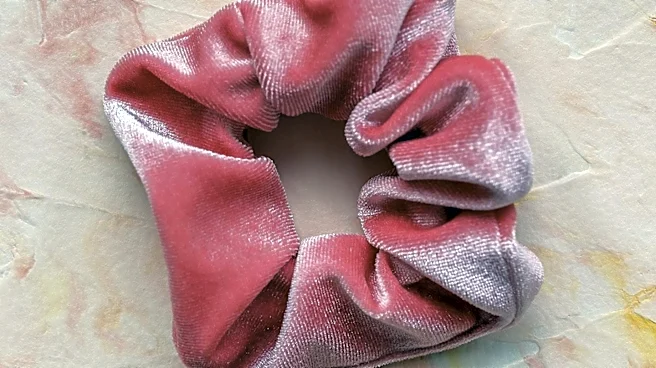


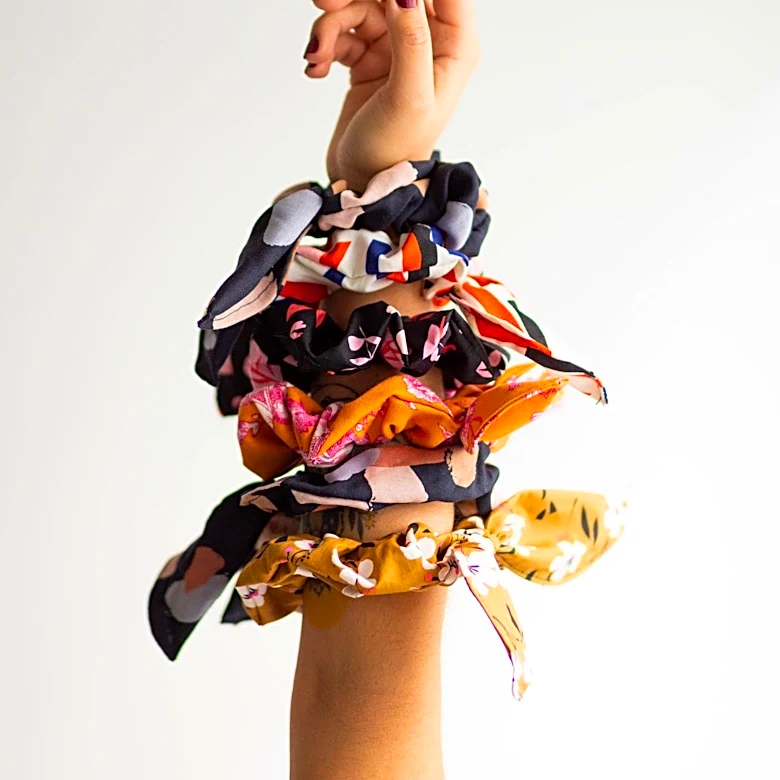


The scrunchie, a seemingly simple hair accessory, holds a unique place in fashion history, characterized by its distinctive design and cyclical popularity. Essentially a fabric-covered elastic hair tie, its primary function is to secure medium to long hair. However, its appeal extends beyond mere utility, largely due to its aesthetic qualities and the comfort it offers compared to traditional hair ties. The loose fabric encasing the elastic creates
a ruffled effect when wrapped around a ponytail, contributing to its soft, decorative appearance. This design allows for a wide variety of styles, from large and elaborate to small and unassuming, available in countless colors, fabrics, and patterns.
A Gentler Alternative: The Design Innovation
The core innovation behind the scrunchie was its gentle nature. Rommy Hunt Revson, who patented the scrunchie in 1987, developed the first prototype specifically because she sought a softer alternative to the metal hair ties commonly used at the time. These metal ties could often pull or damage hair, making a fabric-covered option a welcome change. Revson's inspiration for the design came from the elastic waistband of her sweatpants, demonstrating how everyday observations can lead to significant product development.
This focus on comfort and hair health was a key factor in the scrunchie's initial success. By encasing the elastic in fabric, the scrunchie reduced friction and tension on the hair, making it a more comfortable and less damaging option for securing ponytails, braids, and other hairstyles. This practical advantage, combined with its decorative potential, allowed it to quickly gain traction in the market.
From "Scunci" to a Genericized Trademark
Initially named "Scunci" by its inventor, Rommy Hunt Revson, after her pet toy poodle, the accessory's name soon evolved to "scrunchie." This change reflected the visual characteristic of the fabric, which "scrunched" up when the elastic was gathered. The term "scrunchie" became so ubiquitous that it eventually became a genericized trademark, a common phenomenon where a brand name becomes the common term for a product type. This indicates the profound impact the scrunchie had on popular culture and language.
Today, the brand Scünci is owned by Conair, a company that continues to produce a range of hair accessories, including "The Original Scrunchie." The journey from a specific brand name to a generic term underscores the scrunchie's widespread adoption and its integration into everyday vocabulary, solidifying its status as a household item.
Cycles of Popularity: The Scrunchie's Resurgence
The scrunchie's popularity has not been linear but rather cyclical, demonstrating its enduring appeal across generations. It achieved significant fame in the 1980s and 1990s, becoming a quintessential accessory of those decades. During this period, larger and more elaborate versions were particularly fashionable, often matching outfits or serving as a prominent style statement. Its presence in popular culture during these years cemented its image as a fun and versatile accessory.
After a period of reduced visibility, the scrunchie experienced a notable resurgence in the mid-2010s. This return to popularity highlighted its timeless design and its ability to adapt to contemporary fashion trends. The scrunchie's ability to re-emerge as a fashionable item speaks to its fundamental design strengths—combining practicality, comfort, and decorative flair—making it a beloved accessory that continues to find new audiences.