




Electric power transmission has undergone significant changes since its inception in the late 19th century. Initially, the challenge was to transmit electricity over long distances efficiently. Early systems faced limitations due to the need for different voltages for various applications, such as street lighting and industrial motors. Over time, technological advancements have led to the development of high-voltage transmission systems that can efficiently deliver
electricity over vast distances.
Early Developments in Electric Power Transmission
In the late 19th century, electric power transmission was in its infancy. The primary challenge was to transmit electricity over long distances without significant losses. Early systems used direct current (DC), which could not easily be transformed to different voltages. This limitation meant that different applications, such as street lighting and industrial motors, required separate lines and generators. For example, streetcars in the late 19th century typically used 500 V direct current, while arc lamp systems required up to 10 kV.
The introduction of alternating current (AC) systems marked a significant milestone in electric power transmission. AC systems allowed for the use of transformers, which could efficiently change voltages, making it possible to transmit electricity over longer distances. This development paved the way for the widespread adoption of electric power transmission systems.
The Rise of High-Voltage Transmission
The need for high-voltage transmission became apparent as cities grew and the demand for electricity increased. High voltage was of particular interest to researchers working on long-distance transmission. They understood that by increasing the voltage, they could reduce the current and, consequently, the power lost as heat in the transmission lines. This principle was demonstrated at the Paris Exposition of 1878, where electric arc lighting was installed using high-voltage Yablochkov arc lamps.
By the end of the 19th century, many cities had central power plants that provided electricity to multiple customers via transmission lines. These systems were in direct competition with the dominant gaslight utilities of the period. The Brush Electric Company's central power plant in New York, which began operation in December 1880, is an example of an early high-voltage transmission system.
Modern High-Voltage Transmission Systems
The development of high-voltage direct current (HVDC) systems further revolutionized electric power transmission. HVDC systems are particularly efficient for long-distance transmission, as they reduce power losses compared to AC systems. The first 380 kV transmission occurred in Germany in 1957, marking a significant milestone in the evolution of high-voltage transmission.
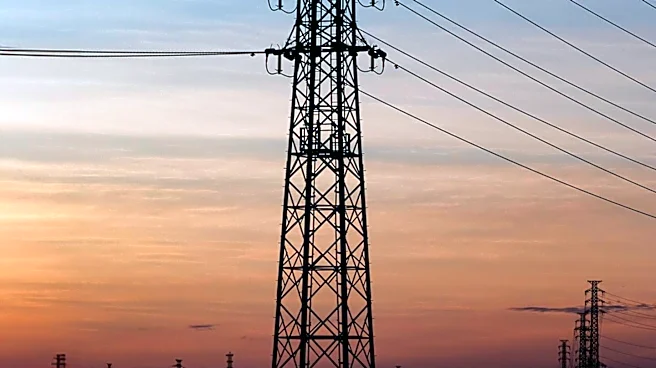
Today, high-voltage transmission systems are an integral part of the global electric power infrastructure. They enable the efficient delivery of electricity from power plants to consumers, supporting the growing demand for energy in modern society. As technology continues to advance, high-voltage transmission systems will likely play an even more critical role in meeting the world's energy needs.