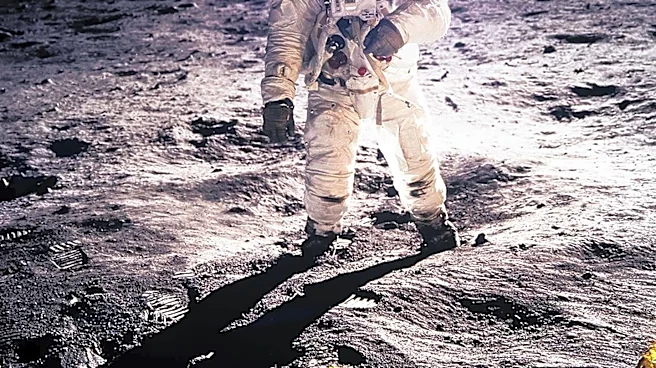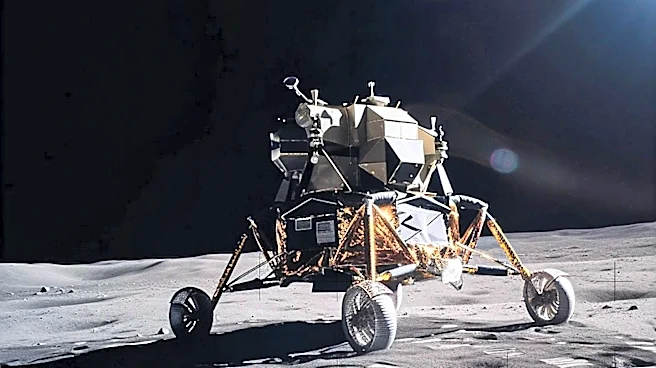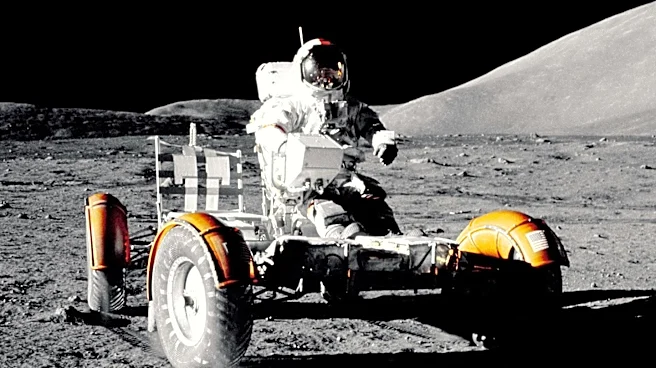





Apollo 15, NASA's fourth manned Moon landing, was a mission of firsts and challenges. Launched on July 26, 1971, it was the first mission to use the Lunar Roving Vehicle and had a greater focus on scientific exploration. However, the mission was not without its difficulties and controversies, which have become an integral part of its legacy.
Technical and Personal Challenges
The Apollo 15 mission faced several technical challenges, particularly with the spacecraft and its instruments.
The command and service module, named Endeavour, was equipped with a scientific instrument module (SIM) bay that housed various instruments for lunar observation. However, the instruments faced mechanical issues, as they were designed to operate in space but had to be tested on Earth. For instance, the mass spectrometer boom did not always fully retract, causing complications during the mission.
Personal challenges also marked the mission. The demands of training strained the marriages of Command Module Pilot Alfred Worden and Lunar Module Pilot James Irwin. Both astronauts feared that personal issues might jeopardize their positions on the mission. Although Irwin overcame his marital difficulties, Worden's marriage ended in divorce before the mission. These personal struggles added an emotional layer to the already demanding mission.
The Postal Covers Controversy
A significant controversy arose after the mission when it was revealed that the Apollo 15 crew had carried unauthorized postal covers to the lunar surface. These covers were later sold by a West German stamp dealer, leading to public outcry and negative publicity for NASA. The crew members were reprimanded for their poor judgment, and as a result, none of them flew in space again.
This controversy highlighted the ethical and procedural challenges faced by astronauts and NASA during the Apollo program. It underscored the importance of maintaining strict protocols and transparency in space missions, as public trust and support were crucial for the continuation of the space program.
Overcoming Adversity
Despite these challenges and controversies, Apollo 15 was a successful mission that achieved its scientific and exploratory goals. The mission's accomplishments, such as the collection of the Genesis Rock and the validation of Galileo's theory, demonstrated the resilience and determination of the astronauts and NASA.
The challenges and controversies of Apollo 15 serve as a reminder of the complexities involved in space exploration. They highlight the human element of space missions, where technical achievements are often accompanied by personal and ethical dilemmas. These experiences have informed subsequent missions, contributing to the evolution of space exploration.