

The hip hinge is a fundamental movement pattern that plays a crucial role in various exercises, particularly those targeting the posterior chain. This movement is characterized by hinging at the hips rather than bending at the knees, making it essential for exercises like kettlebell swings. Understanding the mechanics and benefits of the hip hinge can enhance your workout routine and improve overall strength and power.
Understanding the Hip Hinge
The hip hinge is a movement that
involves bending at the hips while keeping the spine neutral and the knees slightly bent. This movement pattern is essential for exercises that require power generation from the hips, such as kettlebell swings. By focusing on the hips rather than the knees, the hip hinge allows for a more effective transfer of energy, which is crucial for explosive movements.
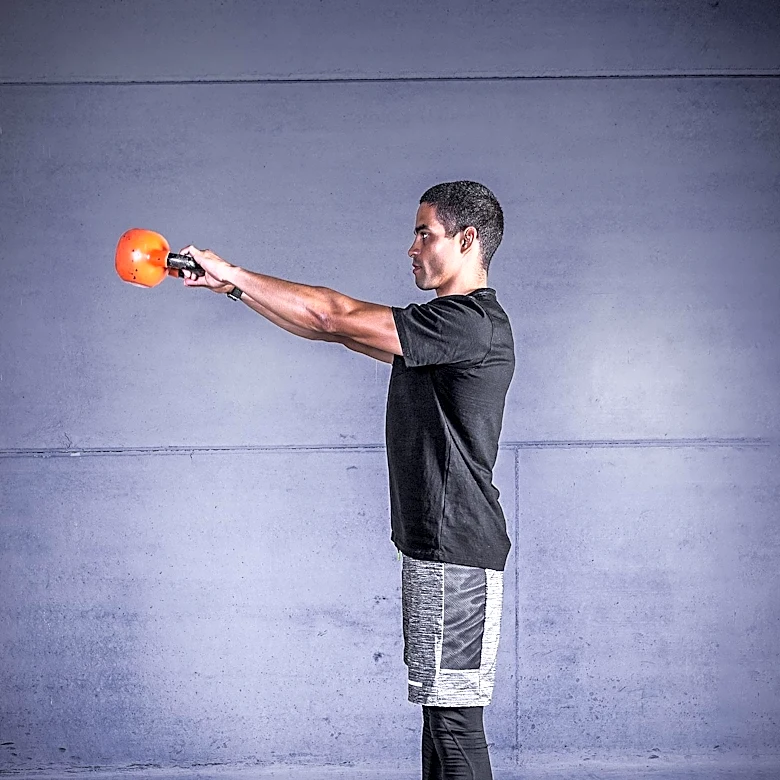
In exercises like the kettlebell swing, the hip hinge is used to generate momentum and power. The movement starts with the kettlebell positioned between the legs, and as the hips thrust forward, the kettlebell is propelled upward. This action engages the muscles of the posterior chain, including the glutes, hamstrings, and lower back, making it an effective exercise for building strength and endurance.
Benefits of the Hip Hinge
Incorporating the hip hinge into your exercise routine offers several benefits. Firstly, it helps in developing the posterior chain, which is vital for overall strength and stability. The muscles involved in the hip hinge are crucial for maintaining proper posture and preventing injuries, especially in the lower back.
Moreover, the hip hinge is a functional movement that mimics real-life activities, such as lifting objects from the ground. By practicing this movement, individuals can improve their ability to perform daily tasks with ease and reduce the risk of injury. Additionally, the hip hinge enhances athletic performance by increasing power and explosiveness, which are essential for sports that require quick and dynamic movements.
Incorporating the Hip Hinge into Workouts
To effectively incorporate the hip hinge into your workouts, start with exercises like the kettlebell swing. Focus on maintaining a neutral spine and engaging the core throughout the movement. It's important to practice the hip hinge with proper form to maximize its benefits and prevent injuries.
As you become more comfortable with the hip hinge, you can progress to more advanced exercises that utilize this movement pattern. Deadlifts and Romanian deadlifts are excellent options for further developing the posterior chain. These exercises require a strong hip hinge to lift the weight efficiently and safely.
In conclusion, the hip hinge is a fundamental movement pattern that is essential for various exercises, particularly those targeting the posterior chain. By understanding and practicing the hip hinge, individuals can enhance their strength, power, and overall athletic performance.