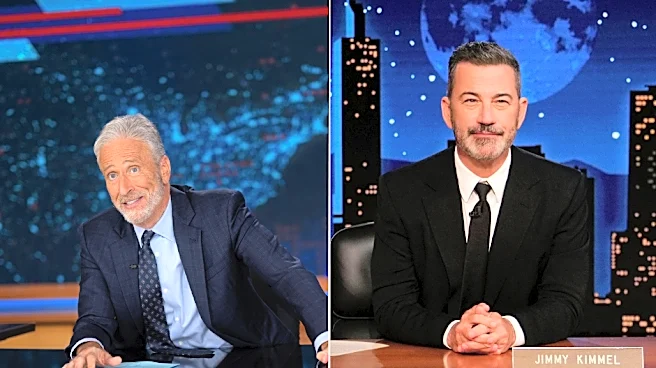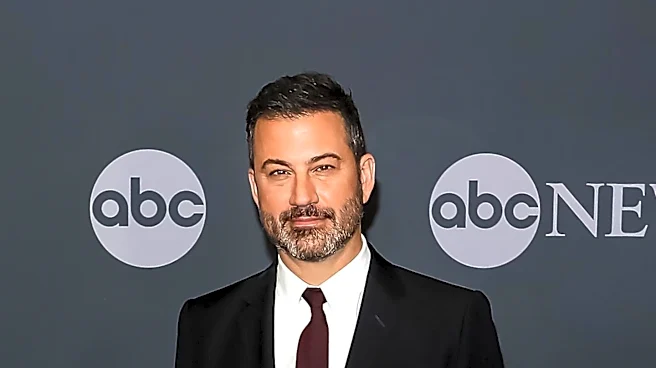




The suspension of *Jimmy Kimmel Live!* by ABC in September 2025 ignited a fervent national debate about the state of freedom of speech in the United States. The controversy stemmed from Jimmy Kimmel's monologue comments regarding the assassination of conservative activist Charlie Kirk and the subsequent reactions from President Donald Trump's supporters. This event quickly transcended a typical media dispute, becoming a flashpoint for discussions
on censorship, political pressure on broadcasters, and the potential erosion of fundamental constitutional rights. The incident drew sharp lines between those who saw Kimmel's remarks as inappropriate and those who viewed the network's response as a dangerous precedent for free expression.
Kimmel's initial comments, made on September 15, 2025, criticized what he perceived as attempts by the "MAGA gang" to politicize Kirk's death. He suggested they were trying to distance themselves from the shooter while simultaneously scoring political points. These remarks, made before the FBI had released details about the shooter's motives or political leanings, were immediately met with outrage from conservative circles. This outrage quickly translated into public pressure and, notably, intervention from Trump administration officials. The FCC chair, Brendan Carr, publicly commented on Kimmel's remarks, describing them as "one of the most unhealthy behaviors possible" and hinting at potential retaliatory actions against ABC and Disney. This direct governmental suggestion of punitive measures against a media outlet for speech was a significant factor in escalating the debate over free speech.
Political Pressure and Media Response
The pressure from conservative groups and the Trump administration had a tangible impact on the broadcasting landscape. Nexstar Media Group and Sinclair Broadcast Group, major owners of ABC-affiliated stations, preemptively pulled *Jimmy Kimmel Live!* from their schedules. This move by affiliate stations directly preceded ABC's decision to suspend the program indefinitely on September 17. The network's action, while framed by Disney as an attempt to "avoid further inflaming a tense situation," was widely interpreted by many as a capitulation to political pressure and a form of censorship. President Trump himself weighed in on Truth Social, praising the suspension and calling for similar actions against other late-night hosts, further highlighting the political dimensions of the situation.
This sequence of events sparked widespread alarm among political leaders, commentators, entertainers, entertainment industry unions, and constitutional scholars. Many viewed the suspension as a direct attack on the First Amendment. Boycotts were organized against Disney, ABC, Nexstar, and Sinclair, demonstrating public disapproval of what was perceived as an infringement on free expression. The incident was frequently cited as evidence of "encroaching authoritarianism" under the Trump administration, with critics arguing that the government was weaponizing its power to silence dissenting voices or critical commentary.
Contradictions and the Defense of Satire
Adding another layer to the freedom of speech debate were the past statements of FCC Chair Brendan Carr. Social media users and former FCC officials quickly unearthed previous comments by Carr that appeared to contradict his stance on Kimmel's suspension. In earlier remarks, Carr had argued against government intervention in regulating non-obscene broadcast material and against restricting access to content based on ideological views. He had explicitly referred to free speech as the "bedrock of democracy" and described political censorship as a "tool that those in power use to suppress any challenge to their positions or orthodoxy." In 2019, he stated, "The FCC does not have a roving mandate to police speech in the name of the 'public interest.'" Furthermore, in 2022, Carr had championed political satire as "one of the oldest and most important forms of free speech," noting that it "challenges those in power while using humor to draw more into the discussion." These past statements were used to highlight a perceived hypocrisy, fueling arguments that the actions taken against Kimmel were politically motivated rather than based on consistent principles of broadcast regulation.
Numerous late-night hosts, including Stephen Colbert, Jimmy Fallon, Seth Meyers, Jon Stewart, and David Letterman, publicly expressed their support for Kimmel. Hollywood unions, such as the International Alliance of Theatrical Stage Employees (IATSE) and the Screen Actors Guild – American Federation of Television and Radio Artists (SAG-AFTRA), issued a joint statement supporting Kimmel and expressing concern for freedom of expression. Over 400 creative artists signed an open letter launched by the American Civil Liberties Union (ACLU) defending the right to free speech. Even former President Barack Obama criticized the administration for pushing "cancel culture" to a new level. These widespread reactions underscored the deep concern within the entertainment industry and broader society about the implications of the *Jimmy Kimmel Live!* suspension for the future of free speech in America.