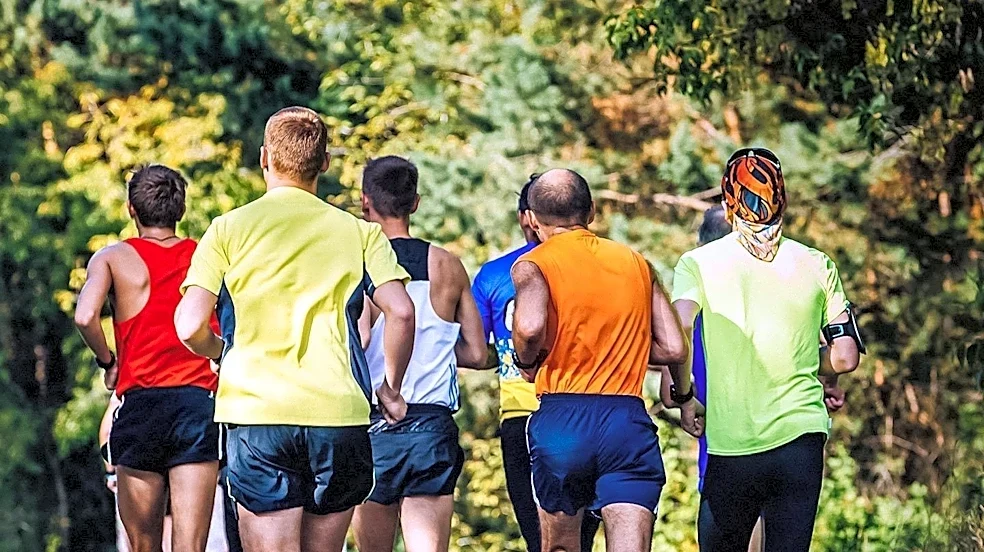



Bill Rodgers' journey to becoming one of America's most celebrated marathoners was a gradual evolution, marked by early athletic pursuits, collegiate development, and a determined return to competitive running. From his initial forays into cross country in high school to his eventual dominance on the world marathon stage, Rodgers' career illustrates a persistent dedication to the sport. His path was not without its challenges, including early setbacks,
but these experiences ultimately forged a resilient athlete who would redefine American long-distance running in the 1970s.
Formative Years and Collegiate Athletics
Born in Hartford, Connecticut, Bill Rodgers moved to Newington, Connecticut, around the age of five. His early athletic interests were diverse, including hockey and baseball, which he played alongside his older brother, Charlie, at Newington High School. A pivotal moment came in the fall of 1963 when Newington High School introduced cross country as a sport. Rodgers, then a sophomore, decided to join, marking the beginning of his running career. Under the guidance of coach Frank O'Rourke, he quickly showed promise, running the mile in 4:28.8, securing the 1965 Connecticut state cross country title, and achieving a seventh-place finish in the New England Cross Country Championships. His first experience in a road race was the Manchester Thanksgiving Day 4.78-mile race in 1965.
In 1966, Rodgers matriculated at Wesleyan University, where he continued to hone his skills in cross country and track. He graduated in 1970 with a B.A. in sociology. His time at Wesleyan was significant, as he trained alongside future running luminaries such as Amby Burfoot, who famously won the 1968 Boston Marathon while still a student, and Jeff Galloway, who would go on to become an Olympian. After completing his undergraduate studies, Rodgers pursued further education, enrolling at Boston College to earn his M.S. in special education. Following a period away from competitive running, he made a crucial return in 1973, joining the newly formed Greater Boston Track Club, an elite training group established by coach Bill Squires at Boston College.
Overcoming Setbacks and Finding His Stride
Rodgers' initial foray into marathon running was not immediately successful. In April 1973, he entered his first Boston Marathon but dropped out at the 20-mile mark. This experience led him to take a three-month break from running. However, his passion for the sport soon drew him back to training. His perseverance began to yield results later that year when he won the Bay State Marathon in October 1973 with a time of 2:28. The following year, he returned to the Boston Marathon, improving significantly to finish 14th. In October 1974, he ran his first New York City Marathon, placing fifth, and a month later, he secured a victory at the Philadelphia Marathon in 2:21.
His true breakthrough came in 1975 at the Boston Marathon, where he burst onto the national scene with a winning time of 2:09:55, establishing a new American record. This victory was a turning point, signaling his arrival as a major force in long-distance running. This period marked the beginning of his remarkable dominance in the sport, as he consistently performed at an elite level.
Peak Performance and Global Recognition
Between 1975 and 1980, Bill Rodgers achieved unparalleled success, winning both the New York City Marathon and the Boston Marathon four times each. He further cemented his legacy by breaking his own American record at Boston in 1979 with a time of 2:09:27. His international standing was confirmed in 1977 when he won the Fukuoka Marathon, making him the only runner to simultaneously hold the championships of these three major marathons. His talent also earned him a spot on the 1976 U.S. Olympic team, where he competed in the marathon at the Montreal Olympics, finishing 40th. Although he was a favorite for the 1980 Moscow Olympics, the U.S. boycott prevented his participation.
Beyond marathons, Rodgers demonstrated his versatility and speed. In 1975, he earned a bronze medal at the IAAF World Cross Country Championships, a significant achievement for an American runner. The year 1978 stands out as particularly exceptional, with Rodgers winning 27 of the 30 races he entered, including the Pepsi 10 km nationals with a world road 10 km best time of 28:36.3, the Falmouth Road Race, and both the Boston and New York City marathons. He also set a world record for 25 kilometers on the track in 1979 with a time of 1:14:11.8. His consistent excellence led Track & Field News to rank him as the world's number one marathoner in 1975, 1977, and 1979, solidifying his status as a true champion.