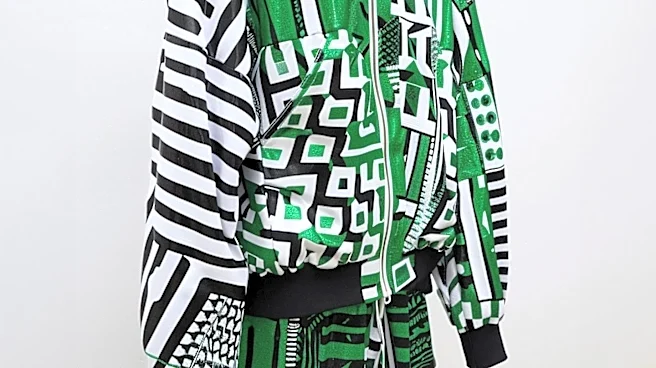









The tracksuit, a simple two-piece garment, has transcended its original athletic purpose to become a powerful symbol of identity across diverse cultural landscapes. From its early association with sports teams to its adoption by youth movements, hip-hop artists, and even high fashion, the tracksuit's journey is a testament to its versatility and its capacity to convey belonging, rebellion, and style. This exploration delves into how different groups
have embraced the tracksuit, imbuing it with meanings that extend far beyond its functional design.
Sporting Identity and Team Spirit
Initially, the tracksuit, also known as a warm-up suit, was fundamentally linked to athletic identity. Its primary purpose was to keep athletes warm before, during breaks, and after competition. This practical function made it an indispensable part of sports culture. In almost all cases, sports teams would wear tracksuits made from fabrics that matched their official team, school, or country colors. This practice not only served a functional role but also fostered a strong sense of team spirit and collective identity. Athletes wearing matching tracksuits represented unity and their affiliation with a particular group, making the garment an immediate visual cue of their sporting allegiance.
Youth Culture and Pop Culture Influence
The tracksuit's cultural significance began to broaden in the late 1960s. Following Adidas's collaboration with German footballer Franz Beckenbauer in 1967, the tracksuit started appearing in pop culture. Iconic figures like Bruce Lee were depicted wearing tracksuits in films such as "Longstreet" and "Game of Death." These appearances helped associate tracksuits with the youth culture of the time, particularly hippies and university students. For these groups, the tracksuit represented a departure from more formal attire, embodying a relaxed, comfortable, and perhaps counter-cultural aesthetic. It became a uniform for a generation seeking ease and a distinct visual identity.
Hip-Hop and Urban Expression
Hip-hop culture played a pivotal role in cementing the tracksuit's place as a symbol of urban identity and style. In 1986, the influential group Run DMC released their song