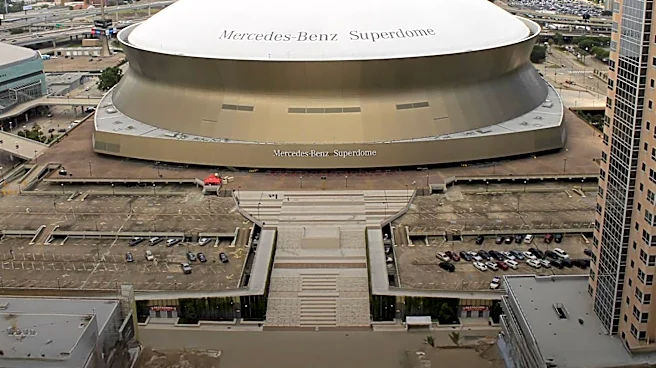









The Caesars Superdome, located in New Orleans, Louisiana, is a testament to modern architectural ingenuity. Originally known as the Louisiana Superdome, this iconic structure has been a central part of the city's landscape since its opening in 1975. Designed by the New Orleans architectural firm Curtis and Davis, the Superdome stands out not only for its size but also for its innovative design.
Design and Construction
The idea for the Superdome was conceived in 1967, with
the goal of creating a multi-purpose stadium that could host a variety of events. The architectural firm Curtis and Davis took on the challenge, designing a structure that would become the largest fixed domed building in the world. The dome itself is a marvel, with a diameter of 680 feet and a height of 273 feet, covering a 13-acre expanse. This lamellar multi-ringed frame is a feat of engineering, showcasing the capabilities of modern construction techniques.
Construction of the Superdome began in 1971 and was completed in 1975. The building's steel frame and innovative design allowed it to accommodate a wide range of events, from football games to concerts. The dome's design not only provided a large, unobstructed interior space but also contributed to the building's resilience, a feature that would prove crucial in the years to come.
Resilience and Renovations
The Superdome's design was put to the test in 2005 when Hurricane Katrina struck New Orleans. The building served as a refuge for thousands of residents, despite suffering significant damage. The storm caused parts of the roof to peel away, and the interior was heavily impacted. However, the Superdome's robust construction allowed it to withstand the storm's fury, and it was able to reopen after extensive repairs.
Following the hurricane, the Superdome underwent a series of renovations to restore and improve the facility. These renovations included updates to the seating, the installation of new turf, and enhancements to the building's exterior. The resilience of the Superdome's design, combined with these improvements, has ensured its continued use as a premier venue in New Orleans.
A Lasting Legacy
The architectural significance of the Caesars Superdome extends beyond its physical structure. It has become a symbol of New Orleans' resilience and ability to overcome adversity. The Superdome has hosted numerous significant events, including multiple Super Bowls, and continues to be a central part of the city's cultural and sporting life.
The design and construction of the Caesars Superdome stand as a testament to the vision and skill of its creators. As a landmark of modern architecture, it continues to inspire awe and admiration, serving as a reminder of the power of innovative design and engineering.