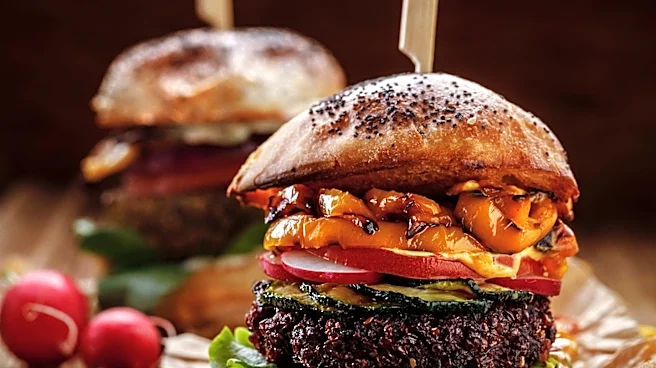








The cheeseburger, a staple of American cuisine, is essentially a hamburger with melted cheese draped over its meat patty, typically added towards the end of the cooking process. While its core components are simple—ground beef, cheese, and a bun—its history is marked by various claims of invention and a steady evolution into a versatile dish enjoyed worldwide. The addition of cheese to hamburgers gained popularity in the 1920s, setting the stage for
this iconic food item to become a culinary phenomenon.
Early Claims of Invention
The exact origin of the cheeseburger is a subject of some debate, with several individuals and establishments laying claim to its creation. One of the earliest and most frequently cited claims attributes the invention to Lionel Sternberger in 1924. At just 16 years old, Sternberger was working as a fry cook at his father's sandwich shop, "The Rite Spot," in Pasadena, California. The story goes that he "experimentally dropped a slab of American cheese on a sizzling hamburger," thus creating what many consider the first cheeseburger. This early innovation highlights the experimental spirit that often drives culinary advancements.Another significant early appearance of the cheeseburger on a menu dates back to 1928. The Los Angeles restaurant O'Dell's featured a cheeseburger smothered with chili, priced at 25 cents. Adjusting for inflation, this would be approximately $4.70 in 2025, indicating that the cheeseburger was already a recognized item, perhaps even a specialty, in some dining establishments during that era. These early mentions suggest that the concept of combining cheese with a hamburger was gaining traction in different parts of the United States.
Expanding Popularity and Trademark Battles
Beyond Sternberger and O'Dell's, other restaurants also assert their role in the cheeseburger's genesis. Kaelin's Restaurant in Louisville, Kentucky, for instance, claims to have invented the cheeseburger in 1934. Just a year later, in 1935, the term "cheeseburger" itself became the subject of a trademark. Louis Ballast of the Humpty Dumpty Drive-In in Denver, Colorado, was awarded this trademark, further solidifying the name's place in American culinary lexicon. The Steak 'n Shake restaurant chain also has historical records indicating that its founder, Gus Belt, applied for a trademark on the word in the 1930s, underscoring the growing commercial interest in this new food item.Innovations and Variations
The evolution of the cheeseburger didn't stop with its initial creation. New variations continued to emerge, expanding its appeal. Dale Mulder, the owner of an A&W Restaurants franchise in Lansing, Michigan, is credited with inventing the bacon cheeseburger in 1963. He added it to his menu after persistent requests from a customer, a story that was later featured in a 2014 ad campaign for the A&W chain. However, even earlier examples of bacon cheeseburgers exist, such as one found on a Harrisburg, Pennsylvania, restaurant menu from 1941, suggesting that the idea of adding bacon to a cheeseburger was explored by various cooks over time.Another unique regional variation is the steamed cheeseburger, almost exclusively found in central Connecticut. This particular style is believed to have originated at Jack's Lunch in Middletown, Connecticut, in the 1930s. Unlike traditional cheeseburgers that are fried or grilled, the steamed cheeseburger is cooked in a stainless-steel cabinet, with the meat patty and cheese steamed separately. This method is said to melt away fats from the meat, resulting in a moist and juicy burger, which is then placed on a bun and topped with the melted cheese. These diverse claims and regional specialties illustrate the dynamic history and widespread adoption of the cheeseburger across the United States.