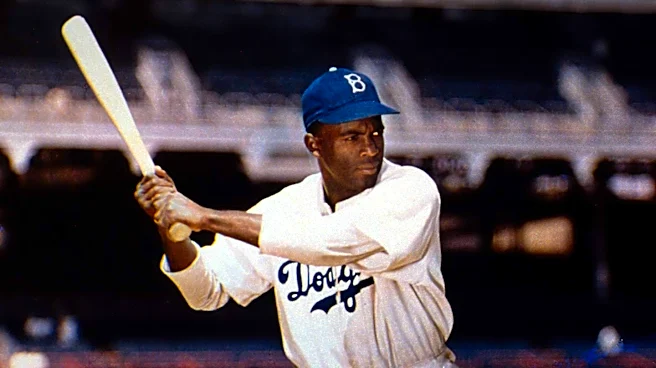








Jackie Robinson is widely celebrated for breaking the color barrier in Major League Baseball, but his influence extended far beyond the baseball field. Born Jack Roosevelt Robinson on January 31, 1919, he became the first black Major League Baseball player of the modern era when he debuted with the Brooklyn Dodgers in 1947. While his athletic prowess was undeniable, Robinson also made significant strides as a pioneer in various other fields, challenging
racial segregation and contributing to the civil rights movement through his actions and character both on and off the field. His life demonstrated a commitment to progress that transcended sports.
A Trailblazer in Media and Business
After his illustrious baseball career, Jackie Robinson continued to break barriers, becoming the first black television analyst in Major League Baseball. This role allowed him to maintain a public presence and influence the perception of African Americans in professional sports and media. His transition into broadcasting was another step in dismantling racial segregation in prominent American institutions.
Beyond media, Robinson also made history in the corporate world. He became the first black vice-president of a major American corporation, a significant achievement that opened doors for future generations. This position demonstrated his capabilities beyond sports and highlighted his commitment to advancing opportunities for African Americans in business. His involvement in such high-profile roles showcased his multifaceted talents and his dedication to social change.
Championing Economic Empowerment
In the 1960s, Jackie Robinson played a crucial role in establishing the Freedom National Bank. This institution was an African-American-owned financial entity based in Harlem, New York. His efforts in co-founding such a bank were instrumental in promoting economic empowerment within the black community, providing access to financial services that might have been otherwise limited due to systemic discrimination.
The Freedom National Bank represented a tangible effort by Robinson to create lasting change and foster self-sufficiency. It was a practical extension of his broader civil rights advocacy, recognizing that economic independence was a vital component of true equality. His leadership in this venture underscored his belief in community building and the importance of creating institutions that served the needs of underserved populations.
Enduring Legacy and National Recognition
Robinson's contributions were recognized with some of the nation's highest honors. Posthumously, he was awarded the Presidential Medal of Freedom and the Congressional Gold Medal, acknowledging his profound impact on American society. These awards celebrated not only his athletic achievements but also his unwavering commitment to civil rights and his pioneering efforts in various professional spheres.
His legacy is also cemented in baseball history, with his uniform number, 42, universally retired across all major league teams in 1997, making him the first professional athlete in any sport to receive such an honor. Major League Baseball also established "Jackie Robinson Day," an annual tradition where all players wear number 42, further cementing his status as a national icon whose influence extended far beyond the game he played.