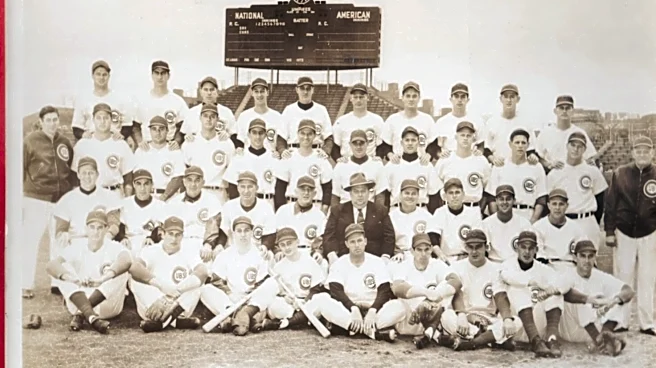


The 1943 Philadelphia Phillies season, the 61st in the franchise's history, was a period marked by significant changes in ownership, a notable improvement in team performance, and a scandal that ultimately led to the banishment of its new owner. This season saw the team emerge from a prolonged period of struggle, offering a glimmer of hope to its long-suffering fanbase, only for that hope to be tempered by the controversial actions of its leader.
The events of 1943 set the stage for future developments within the organization, highlighting the impact of leadership on both on-field success and organizational integrity.
A New Owner and a Name Reinstated
At the beginning of 1943, the Philadelphia Phillies were acquired by lumber baron William D. Cox. The purchase, made on March 15, 1943, involved $190,000 and a $50,000 note. Cox, who also served as the team's president, took over a franchise that had been mired in the lower echelons of the National League for decades. One of his first actions, announced on March 9, was to officially reinstate the team's name as the "Phillies." This came after former-President Gerald Nugent had renamed them the "Phils" prior to the 1942 season, reportedly due to an objection from the Bayuk Cigar Company, which produced "Phillies" cigars.Cox's arrival brought a new sense of ambition to the team. He was determined to lift the Phillies out of their perennial last-place finishes. He significantly increased the team's payroll and invested in player development, including the farm system, which was a novel approach for the franchise at the time. To manage the team, Cox hired Bucky Harris, a respected figure in baseball who had previously led the Washington Senators to two pennants and a World Series title. These initial steps suggested a promising future for the Phillies under their new, young owner.
On-Field Improvement and Fan Response
Under the new leadership and with Bucky Harris at the helm, the 1943 Phillies showed a marked improvement. The team rose out of the standings cellar for the first time in five years, a significant achievement for a franchise that had struggled for so long. By July 27, the team had played .424 baseball, with a record of 39–53, which was just three fewer victories than they had accumulated in the entire 1942 season. This improvement was a welcome change for the long-beleaguered Phillies fans, who responded with an increase in attendance. The team attracted over 466,000 fans, more than double their 1942 gate and their best attendance since 1916.Despite the positive trajectory, internal conflicts arose. Cox, a very hands-on owner, frequently interfered with team operations and even participated in workouts. This behavior led to friction with manager Bucky Harris. When Harris protested Cox's constant interference, Cox fired him on July 27, 1943. The players, in a show of support for Harris, threatened to strike, but Harris persuaded them to reconsider after Cox threatened legal action. Even with the managerial change mid-season, the Phillies finished the year with a record of 64–90, a healthy 22-game improvement over their 1942 performance.
The Betting Scandal and Aftermath
The positive developments of the 1943 season were ultimately overshadowed by a major scandal involving William D. Cox. The day after his firing, Bucky Harris revealed that he had evidence of Cox betting on his own team. This revelation prompted an immediate investigation by Commissioner Kenesaw Mountain Landis. Initially, Cox denied the allegations, but he later admitted to making "sentimental" bets on the Phillies, claiming he was unaware it was against the rules. Landis, however, did not accept this explanation.On November 23, 1943, Landis suspended Cox indefinitely. Cox resigned as team president but appealed the decision. During a hearing on December 4, Harris testified about Cox's betting activities, including an instance where Cox's secretary inquired about game odds. Based on the evidence, Landis banned Cox for life from professional baseball. This made Cox the first non-player to be banned by Landis and the last owner to receive a lifetime ban as of 2025. The team was subsequently sold to R. R. M. Carpenter in November 1943, marking the end of Cox's brief and controversial tenure.