


Brands Hatch, a renowned motor racing circuit located in West Kingsdown, Kent, England, boasts a rich history that traces its origins from a humble grasstrack motorcycle circuit on farmland. This transformation into a premier racing venue, capable of hosting major international events, marks a significant chapter in motorsport. The circuit's journey began with early races in 1926 on its original grasstrack layout, eventually leading to its establishment
as England's first purpose-built post-war racing circuit in 1950. This evolution highlights the dedication and vision that shaped Brands Hatch into the iconic track it is today.
Early Beginnings and Post-War Development
The story of Brands Hatch as a motor racing venue officially began on April 16, 1950, with the scheduled opening meeting for England's first purpose-built post-war racing circuit. This approval from the RAC followed a demonstration by a handful of 500cc cars in February, showcasing the potential of the site. Before this, the land was primarily used for grasstrack motorcycle racing on farmland, indicating a gradual shift towards more formalized motorsport activities.
In the early years, the circuit quickly gained prominence, particularly in Formula 3 racing. The 1950 season saw Parker win the Autosport Formula 3 Championship, securing seven victories at Brands Hatch on his path to the title. This early success cemented Brands Hatch's reputation as a significant venue for emerging racing talent and laid the groundwork for its future as a major international circuit.
Hosting Formula One and Grand Prix Layouts
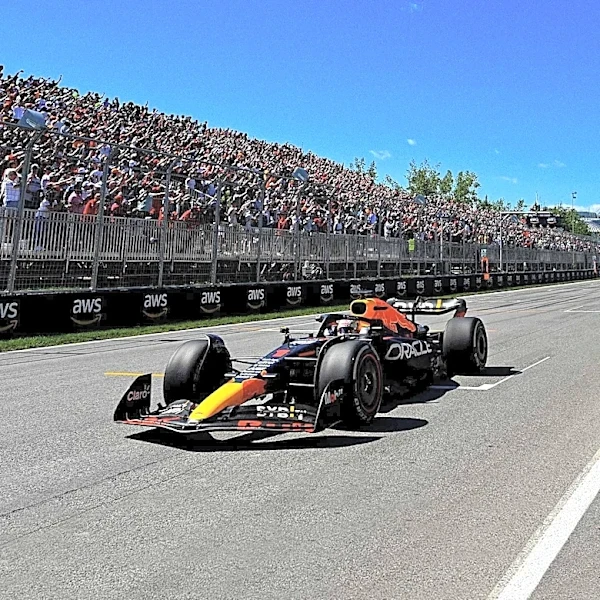
Brands Hatch became a significant fixture on the Formula One calendar, hosting 12 runnings of the British Grand Prix intermittently between 1964 and 1986. The 2.433-mile (3.916 km) "Grand Prix" layout was the stage for several memorable Formula One moments, including Jo Siffert's duel with Chris Amon in 1968 and Nigel Mansell's first win in 1985. The circuit also hosted the European Grand Prix in 1983 and 1985, further solidifying its international standing.
However, the use of the extended Grand Prix circuit is subject to certain limitations. Noise restrictions and its proximity to local residents mean that the number of race meetings held on this longer configuration is limited to just a few per year. These events are typically reserved for higher-profile series such as the British Touring Car Championship (BTCC) and the British Superbike Championship (BSB), ensuring that the circuit continues to host elite motorsport despite these constraints.
Circuit Configurations and Notable Features
Brands Hatch offers two primary layout configurations: the 1.198-mile (1.928 km) "Indy Circuit" and the longer "Grand Prix" layout. The Indy Circuit is entirely contained within a natural amphitheater, providing spectators with views of almost all of the shorter configuration from various vantage points. This design enhances the spectator experience, making it a popular choice for many events.
The full Grand Prix circuit is known for its challenging and dynamic characteristics. It begins on the Brabham Straight, an off-camber, slightly curved stretch, before plunging into the right-hander at Paddock Hill Bend, which features gradients of 8%. Despite its difficulty, Paddock Hill Bend is one of the track's few overtaking spots due to the preceding straight. Other notable sections include Druids, a hairpin bend after an uphill braking zone at Hailwood Hill, and the downhill, off-camber Graham Hill Bend. The circuit also features significant elevation changes at Pilgrim's Drop and Hawthorn Hill, leading into Hawthorn Bend, with some parts approaching 7% gradients. These features contribute to Brands Hatch's reputation as a technically demanding and exciting circuit for drivers.