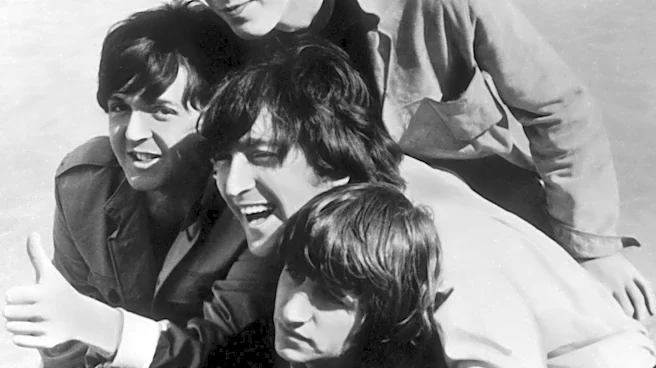





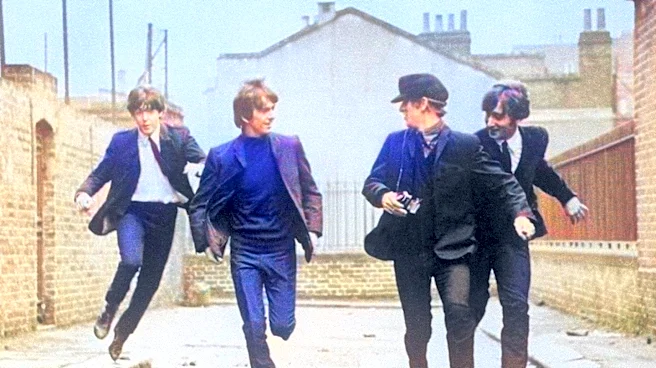


The breakup of The Beatles, a band that defined a generation, was not solely a result of musical differences or personal conflicts. A significant, often overlooked, factor was the complex web of business difficulties that entangled the group, particularly in the years leading up to their official split. The death of their manager, Brian Epstein, in 1967, marked a critical turning point, leaving the band disoriented and ill-equipped to navigate the intricate
financial landscape of their burgeoning empire. This lack of strong managerial leadership, combined with internal disagreements over business decisions, ultimately played a crucial role in the band's disintegration.
The Void Left by Epstein's Death
Brian Epstein, who managed The Beatles from 1961, had a management style that allowed the group to pursue their musical ambitions while he mediated conflicts. His influence, particularly over their interpersonal relations and finances, remained strong even after they stopped touring in 1966. In mid-1967, under Epstein's guidance, a tax shelter endeavor was initiated, involving a revised legal partnership for the four Beatles and the creation of Apple Corps, a corporation designed to handle most of the band's revenue. However, Epstein's sudden death from a drug overdose on August 27, 1967, plunged the band into an unexpectedly chaotic venture. The Beatles, inexperienced as businessmen, found themselves under immense stress as they grappled with the consequences of his absence.
McCartney, recognizing the need for direction, attempted to initiate projects for the group. However, his bandmates grew perturbed by his increasing dominance in both musical and other group ventures. Lennon later acknowledged McCartney's efforts as vital for the band's survival, yet he also believed McCartney's desire to help stemmed from his own uncertainties about pursuing a solo career. McCartney himself felt that the band's evolution from musicians to businessmen was central to their eventual breakup. The crucial role of a band manager was never adequately filled after Epstein, and this absence of strong leadership significantly contributed to the group's unraveling.
The Klein-Eastman Divide and Northern Songs
By early 1969, Apple Corps was plagued by mismanagement and was losing money. This financial turmoil led to a critical divergence in the band's business representation. In January, John Lennon and Yoko Ono met with Allen Klein, the founder of ABKCO Records, seeking managerial advice. Lennon subsequently requested that Klein represent his business interests within the band. Paul McCartney, however, chose to be represented by American entertainment lawyers Lee and John Eastman, the father and brother of his then-girlfriend, Linda Eastman, whom he married in March.
After a series of contentious meetings between Klein, the Eastmans, and The Beatles, Klein was appointed as the band's business manager on an interim basis in April, with the Eastmans serving as their lawyers. The existing quarrels and disharmony over musical matters soon extended into their business discussions. Further complicating matters, Dick James, the managing director of Northern Songs, which published the Lennon–McCartney song catalog, became concerned by the band's dissension. He and Northern Songs' chairman Emmanuel Silver accepted a bid from Associated Television (ATV) to sell their 32% stake in the company, recommending other shareholders do the same, which would give ATV a controlling interest. Lennon and McCartney, who together owned 26% of the stock, attempted to gain a controlling interest but were unsuccessful.
The Final Business Severance
The adversarial relationship between the Eastmans and Klein intensified due to their conflicting advice. A missed opportunity to purchase Epstein's NEMS Enterprises, which still collected 25% of The Beatles' income, arose from this disagreement, leading to the Epstein family selling their 90% stake to Triumph Investment Trust. Faced with a choice, Harrison and Starr sided with Klein, leading to the dismissal of the Eastmans as The Beatles' legal representation. On May 8, Lennon, Harrison, and Starr signed a contract with Klein to be the band's business manager, a decision that further exacerbated the underlying mistrust and antipathy within the group. Rob Sheffield, a music critic, noted that while Klein might be less famous than Yoko Ono, Linda Eastman, or Phil Spector, he arguably played the most significant role in the band's demise.
The subsequent negotiations for McCartney's freedom from The Beatles and Apple were lengthy. McCartney's own advisors echoed Klein's warnings about potential tax liabilities. The other Beatles eventually doubted Klein's ability to negotiate a successful settlement with McCartney, given their ongoing animosity. They also grew disillusioned with Klein's mismanagement of Harrison's Bangladesh aid project, and Lennon felt betrayed by Klein's lack of support for his and Ono's increasingly political music. Lennon, Harrison, and Starr formally severed ties with Klein in March 1973, initiating a wave of lawsuits. These cases were settled out of court in January 1977, with Apple paying Klein over $5 million. With Klein no longer managing Apple, the four former bandmates were able to work cooperatively towards a settlement, known as "The Beatles Agreement," signed in December 1974. The formal dissolution of the partnership took place on January 9, 1975, marking the end of an era shaped as much by business dealings as by musical genius.