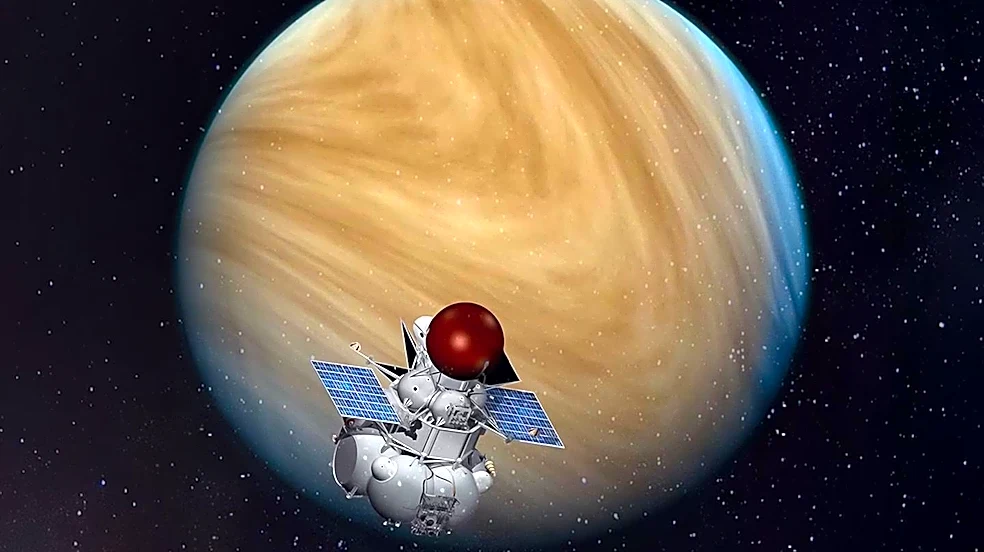



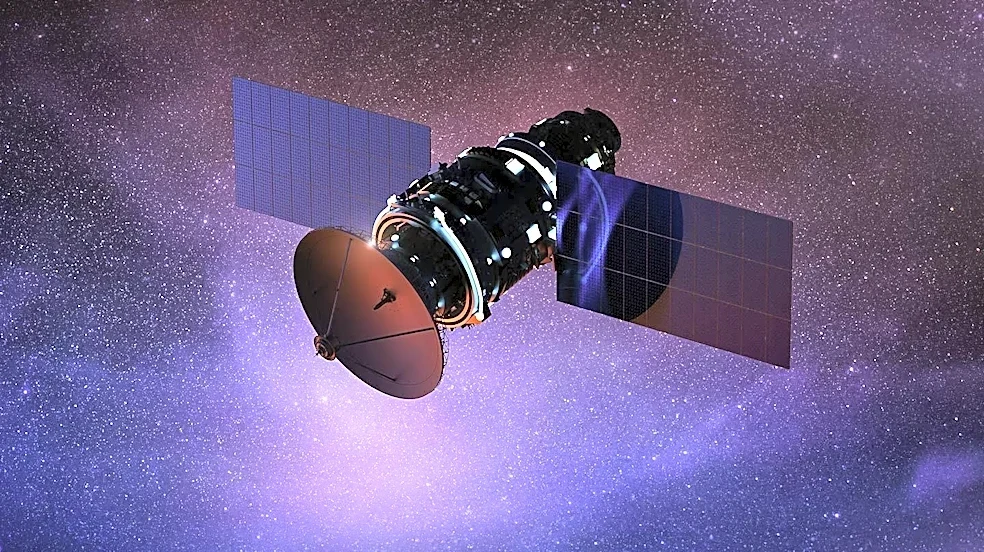

The Venera 9 mission marked a significant milestone in space exploration, specifically in humanity's quest to understand Venus. Launched on June 8, 1975, by the Soviet Union, this uncrewed space mission consisted of both an orbiter and a lander. While the orbiter became the first spacecraft to successfully orbit Venus, it was the lander that achieved an even more remarkable feat: transmitting the first images directly from the surface of another planet.
This mission provided unprecedented insights into the Venusian environment, challenging previous assumptions and laying the groundwork for future planetary explorations.
The lander's journey to the surface was a complex and carefully orchestrated event. On October 20, 1975, the lander spacecraft separated from its orbiter. Two days later, on October 22, it made its landing at 05:13 UTC. The landing site was located within a 150-kilometer radius of 31.01°N, 291.64°E, near a region known as Beta Regio. This area was characterized by a steep, 20-degree slope covered with boulders, which scientists suspected might be part of the Aikhylu Chasma, a tectonic rift valley. The entry sphere, designed to protect the lander during its fiery descent, weighed 1,560 kilograms, while the scientific payload on the surface was 660 kilograms.
Engineering for Survival: The Descent and Landing
Surviving the harsh Venusian atmosphere and making a soft landing required innovative engineering. The lander was initially encased in a spherical shell, providing crucial protection from the intense heat during entry as it decelerated from 10.7 kilometers per second to 150 meters per second. After this initial phase, explosive bolts separated the sphere, and a three-domed parachute deployed, further slowing the lander to 50 meters per second at an altitude of 63 kilometers above the planet's surface.
The descent through the thick cloud layer took approximately 20 minutes. During this critical period, the lander diligently collected atmospheric measurements and relayed this vital information back to the orbiter. To mitigate damage from the scorching atmosphere, the parachute was released at an altitude of 50 kilometers. A ring-shaped aerodynamic shield then took over, providing additional braking. The extreme density of the Venusian atmosphere near the surface was so significant that this shield alone was sufficient to reduce the descent rate to a mere 7 meters per second as the lander finally touched down. The landing device itself, a hollow ring surrounding the lower part of the lander, was designed to be partly crushed upon impact, absorbing most of the landing force and protecting the delicate instruments within.
First Glimpses and Scientific Discoveries
Immediately upon touchdown, many of the lander's instruments sprang into action, with the cameras becoming operational just two minutes later. This rapid deployment allowed Venera 9 to capture and transmit the first-ever images from the surface of another planet. These black and white television pictures revealed a smooth surface dotted with numerous stones. The lander measured a light level of 14,000 lux, which is comparable to Earth's full daylight, though without direct sunshine, suggesting a heavily overcast environment. Notably, the images showed no shadows and no apparent dust in the air, with rocks ranging from 30 to 40 centimeters that appeared uneroded.
The lander was equipped with a sophisticated system of circulating fluid and pre-cooling to manage the extreme heat, allowing it to operate for 53 minutes after landing. Radio contact with the orbiter was eventually lost as the orbiter moved out of range. During its operational time, Venera 9 made several groundbreaking measurements. It detected cloud layers that were 30 to 40 kilometers thick, with bases at an altitude of 30 to 35 kilometers. It also identified atmospheric chemicals such as hydrochloric acid, hydrofluoric acid, bromine, and iodine. Other crucial data included a surface pressure of approximately 9,100 kilopascals (90 atmospheres) and a blistering temperature of 485°C (905°F). The surface light levels were found to be similar to those experienced at Earth's mid-latitudes on a cloudy summer day. Unfortunately, a planned 360-degree panoramic picture could not be completed because one of the two camera lens covers failed to detach, limiting the images to a 180-degree view, a problem that would recur with the subsequent Venera 10 mission.