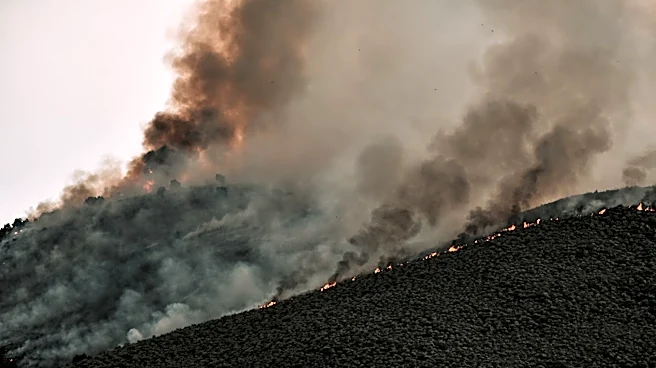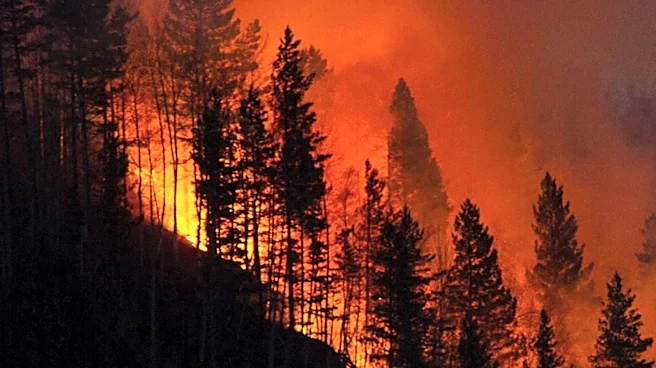







The Great Fire of 1910, a monumental conflagration that swept across the American West, was a disaster of immense scale, burning from August 20 to 21. This devastating event consumed an astonishing three million acres across Idaho, Montana, Washington, and even parts of British Columbia. The fire's rapid and destructive progression was not merely a random occurrence but the culmination of severe environmental conditions and numerous ignition sources,
creating a perfect storm for one of the largest wildfires in U.S. history.
The Preconditions: Extreme Drought and Abundant Fuel
Before the inferno erupted, the region had been grappling with extreme drought conditions. This prolonged lack of moisture turned vast expanses of forest into tinderboxes, priming the landscape for a catastrophic fire. The dry vegetation, from underbrush to towering trees, provided an unprecedented amount of fuel, ready to ignite and spread with terrifying speed. This environmental vulnerability was a critical factor in the fire's ability to grow to such an immense size and intensity.
The drought meant that even small sparks could quickly escalate into significant blazes. The forests, already stressed by the lack of water, offered little resistance once the fires took hold. This created a feedback loop where the dry conditions not only made ignition easier but also ensured that once a fire started, it would be incredibly difficult to control, setting the stage for the widespread destruction that followed.
Numerous Ignition Sources and Rapid Spread
The sheer number of ignition sources played a crucial role in the fire's progression. While the exact origins of every blaze are complex, the combination of human activity and natural phenomena likely contributed to the multitude of starting points. Once ignited, these fires were fueled by the extremely dry conditions, allowing them to merge and expand rapidly across the vast forested areas.
The fire's progression was characterized by its relentless and swift movement. The dry fuels, coupled with what were likely strong winds, enabled the flames to jump across natural barriers and consume vast tracts of land in a short period. This rapid spread overwhelmed early firefighting efforts and contributed to the immense scale of the disaster, making it a defining moment in the history of wildfire management in the United States.
Devastating Impact and Human Cost
The immediate impact of the Great Fire of 1910 was catastrophic, leading to the deaths of 87 individuals. This human toll underscores the ferocity and unpredictability of the blaze. The fire's progression was so swift and intense that many people, including firefighters and civilians, were caught in its path, unable to escape the rapidly advancing flames.
Beyond the immediate loss of life, the fire left an indelible mark on the landscape and the communities within its reach. The destruction of three million acres of forest had long-lasting ecological consequences, altering ecosystems and habitats. The sheer scale of the burn area, spanning multiple states and even into Canada, highlights the immense power of natural forces when combined with vulnerable environmental conditions.