








Havana, the capital city of Cuba, is renowned for its rich architectural heritage that spans several centuries. From the castles of the 16th century to modernist high-rise buildings, Havana's architecture tells the story of its historical and cultural evolution. This article delves into the diverse architectural styles found in Havana, highlighting key developments and influences that have shaped the city's unique skyline.
Neoclassical Influence
Neoclassicism made its way
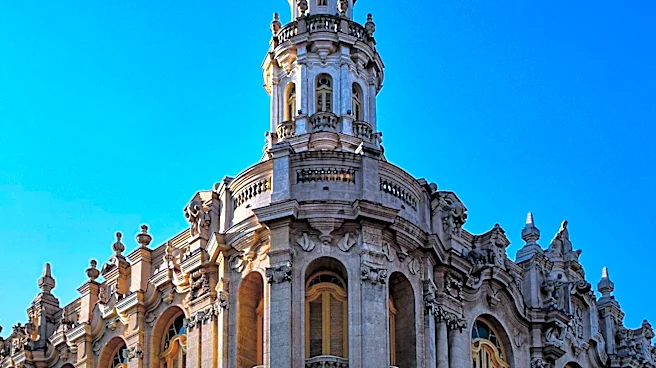
into Havana in the 1840s, marking a significant shift in the city's architectural landscape. This style was characterized by the introduction of gas public lighting in 1848 and the railroad in 1837, which facilitated rapid urban development. The sugar and coffee industries played a crucial role in this transformation, as they fueled economic growth and inspired wealthy Habaneros to adopt French architectural influences. The Aldama Palace, built in 1844, stands as a testament to this era, showcasing neoclassical columns and open courtyards that typify the design of upper-class residences.
During the early 20th century, Havana experienced a period of rapid expansion, driven by great wealth and international architectural influences. The Vedado district, begun in 1859, exemplifies the peak of Neoclassicism with its well-proportioned buildings and classical forms. The Palacio de Villalba, constructed in 1875, further illustrates the neoclassical style, blending Roman and Renaissance elements to create a harmonious aesthetic.
Art Deco and Modernism
The early decades of the 20th century saw the rise of Art Deco in Havana, a style that was popular internationally. The Bacardi Building, completed in 1930, is a landmark of this era, designed by architects Esteban Rodríguez-Castells and Rafael Fernández Ruenes. It served as the headquarters for the Bacardi Rum Company and is regarded as one of the finest Art Deco buildings in Latin America.
Another notable example is the López Serrano Building, designed by Ricardo Mira in 1929. It was the tallest residential building in Cuba until the construction of the FOCSA Building in 1956. These structures reflect the influence of international architectural trends and the city's adaptation to modernist styles.
Challenges and Preservation
Despite its architectural grandeur, Havana faces challenges in preserving its historical buildings. Many structures have deteriorated since 1959 due to a lack of maintenance, leading to building collapses and loss of heritage. The demolition of the Plaza del Vapor in 1959 by the revolutionary government is a stark reminder of the city's struggle to maintain its architectural legacy.
Efforts to restore and preserve Havana's architecture continue, with projects like the restoration of the Bacardi Building in 2001. These initiatives aim to safeguard the city's unique architectural identity while adapting to modern needs. As Havana evolves, its architectural heritage remains a vital part of its cultural and historical narrative.