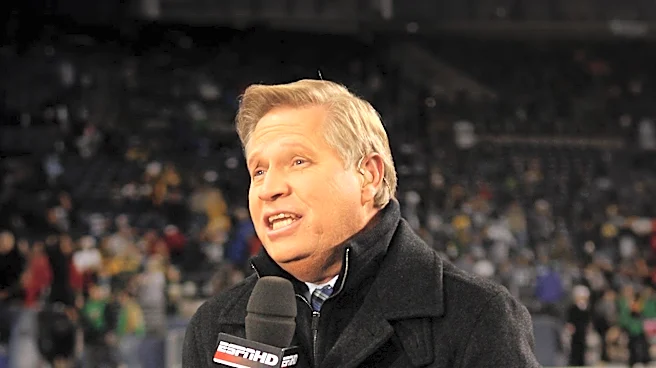









ESPN, a global sports network, began its journey not as a sprawling media empire, but as a focused idea for local Connecticut sports coverage. Founded by Bill Rasmussen, his son Scott Rasmussen, and eye doctor Ed Eagan, the initial concept was modest. Bill Rasmussen, having been fired from his position as communications manager for the New England Whalers in 1978, found a new direction when Eagan, who had an interest in television, approached him.
Eagan's original proposal was for a monthly cable television program dedicated to Connecticut sports, with the Whalers as a potential main feature. This humble beginning would soon evolve into a much grander vision, fundamentally changing how sports content was delivered to American homes.
From Local Vision to National Ambition
Bill Rasmussen's initial idea expanded beyond Eagan's proposal; he envisioned a cable television network that would cover all sporting events within Connecticut, including teams like the Whalers, the Bristol Red Sox, and the Connecticut Huskies. At the time, cable television was not widespread, with less than 20% of homes receiving it, making the task of creating such a network quite challenging. In the summer of 1978, the Rasmussens, along with Eagan and his associate Bob Beyus, who owned a video production company, began seeking support from cable operators and potential investors for their proposed network, which they named the Entertainment and Sports Programming Network (ESP).
Their initial pitch on June 26, 1978, to twelve representatives from local cable operators was met with skepticism. Only five representatives attended, and they expressed doubts about the practicality and cost-effectiveness of such a venture, believing it too risky. A subsequent press conference, attended by only four out of 35 invited reporters, also failed to generate enthusiasm, leading Beyus to depart, feeling the future of ESP was uncertain. Despite these early setbacks, ESP was officially incorporated on July 13, 1978, for a fee of $91, demonstrating the founders' persistence.
The Satellite Revolution and Redefining the Scope
Facing the challenge of broadcasting their new sports channel, the trio researched at United Cable, where they learned about satellite communication, a new means of television distribution. They were directed to RCA, a company with experience in satellite technology, having launched Satcom into orbit and frequently using it in Europe. While new to the United States for full-time television broadcasts (HBO first used it in September 1975), the concept was not immediately embraced. Al Parinello, hired by RCA to promote this new technology, received a call from Rasmussen, leading to a pivotal meeting.
At this meeting, Rasmussen explained their interest in regional sports broadcasting. Parinello, however, revealed that with satellite communication, their channel could be broadcast across the entire country. This revelation was a game-changer, especially when they discovered that buying a continuous 24-hour satellite feed was less expensive than transmitting the signal across Connecticut via traditional landlines. This cost-efficiency and expanded reach convinced them to purchase a transponder for the satellite. With the prospect of a wider audience, they began to retool their original concept. On August 16, 1978, Bill and Scott Rasmussen agreed that the channel would show all types of sports 24 hours a day, feature a half-hour sports show nightly, hire sportscasters, and acquire a fleet of trucks to cover various sporting events nationwide. They pooled $30,000 from family members and associates to secure the transponder.
Securing a Home and Early Financial Backing
The next step was to find a suitable location for their headquarters. Their initial search in Plainville was thwarted by an ordinance prohibiting satellite dishes. Instead, they purchased a parcel of land in Bristol for $18,000. This site, built on a former dump, proved ideal as the satellite signal was unaffected in the area. This decision cemented Bristol as the home of the nascent sports network.
While the Rasmussens received interim financial aid from J. B. Doherty and K. S. Sweet Associates, they sought permanent investors. Doherty approached Stuart Evey, a Getty Oil Company executive and vice president of non-oil operations. Evey was immediately interested and brought the venture to Getty's finance manager, George Conner. Despite some initial caution, Getty Oil decided to invest in the project by February 1979. This crucial financial backing provided the necessary capital to move forward with the ambitious plans for the Entertainment and Sports Programming Network, setting the stage for its eventual launch and transformation into ESPN.