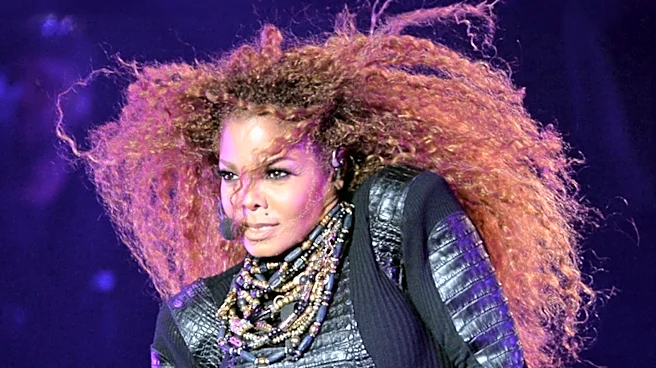







Janet Jackson's fourth studio album, "Rhythm Nation 1814," released in 1989, stands as a significant work not only for its musical innovation but also for its profound social commentary. The album and its accompanying film delve into a range of serious issues, including racism, poverty, and substance abuse, reflecting a desire by Jackson to address various tragedies reported in the news at the time. This ambitious project aimed to use music as a platform
for social awareness and empowerment, envisioning a unified, colorblind world.
The Genesis of a Concept Album
The inspiration for "Rhythm Nation 1814" stemmed from Janet Jackson's observations of contemporary society and media. Producer Jimmy Jam noted that Jackson, along with the production team, were avid television watchers, frequently switching between music videos on MTV and news reports on CNN. This constant exposure to both entertainment and the often-disturbing realities of the world, filled with "bad news," sparked the album's socially conscious direction. Jackson was particularly moved by the Stockton playground murders, an event that directly influenced the song "Livin' in a World (They Didn't Make)." This initial song then encouraged her to explore additional tracks with similar themes, blending political standpoints with energetic dance music.
Jackson's vision for the album was to create a "national anthem for the Nineties," drawing a parallel to the year "The Star-Spangled Banner" was written, 1814. She saw music, and rhythm specifically, as a unifying tool that could bring diverse groups together. She realized that among her own friends, there was a distinct "nation" that shared common interests in music and dance, but also a commitment to social change, rather than drugs or drinking. This observation led to the idea of creating a metaphorical nation with a positive message that anyone could join, asserting a common identity and bond among youth.
Addressing Societal Challenges Through Music
Jackson's primary goal with "Rhythm Nation 1814" was to reach a teenage audience, many of whom might not have been aware of or engaged with socially conscious themes. She believed that by creating music that was highly danceable, she could capture their attention and deliver a message directly to them. This approach was a deliberate strategy: "How can I get through to the kids with this?" she questioned. She was encouraged by artists like Marvin Gaye, Bob Dylan, and Joni Mitchell, who had previously used their music to address social issues and whose work had awakened her to the responsibility of music.
Despite potential ridicule or skepticism about whether dance music could effect real change, Jackson remained committed. She acknowledged that a song or an album alone couldn't change the world, but she saw value in spreading a positive message and nudging individuals toward a better path. She stated that if she could just touch one person and inspire them to change for the better, that would be an accomplishment. This commitment to philanthropy extended beyond the music itself, with Jackson establishing the "Rhythm Nation Scholarship" to assist students and receiving the Chairman's Award at the NAACP Awards for her work on issues like illiteracy, drug abuse, violence, and high school dropout prevention. The album's legacy is marked by its innovative production and its powerful exhortation for social change, using rhythm as a unifying force.