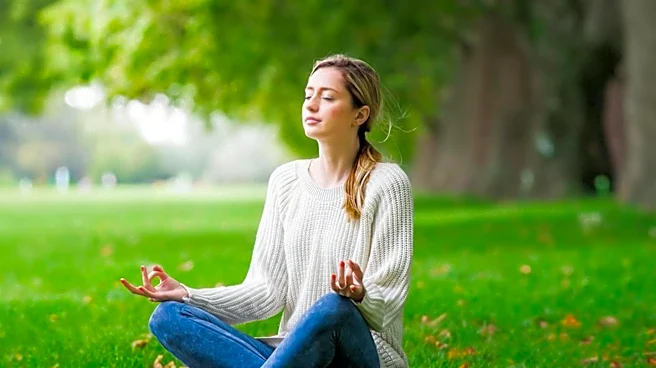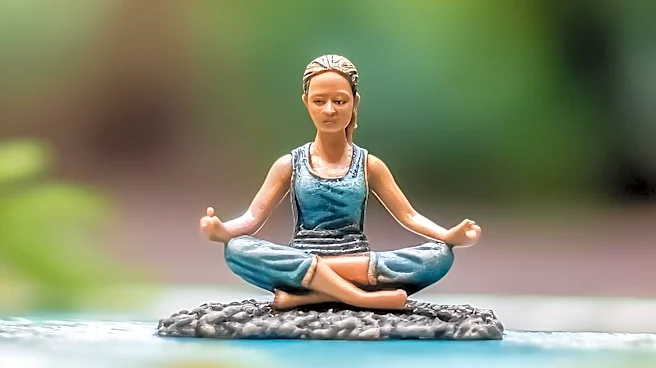

While the lotus position is widely recognized as a quintessential meditative posture, the world of meditation encompasses a rich diversity of body positions, each with its own history, cultural significance,
and practical application. These postures, or asanas, are not merely physical arrangements but are integral to the meditative practices of various traditions, particularly in Buddhism and Hinduism. They are designed to create a stable and comfortable foundation that supports the meditator's journey toward inner focus and tranquility.
A Spectrum of Sitting and Kneeling Postures
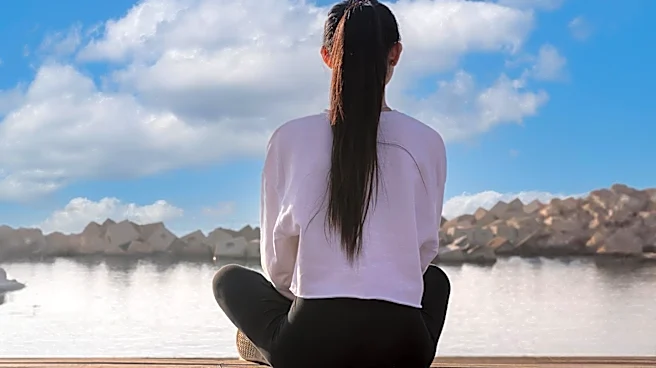
Beyond the full lotus (Padmasana), several other cross-legged positions offer varying degrees of accessibility and comfort. The half lotus (Ardha Padmasana) is a common variation, often more manageable for those with less hip flexibility. Siddhasana or Muktasana, sometimes referred to as the Burmese posture, involves sitting with the knees on the ground and the feet tucked close to the body, providing a stable base. Sukhasana, or the easy cross-legged position, is perhaps the most adaptable, allowing practitioners to find a comfortable, simple cross-legged seat.
Kneeling postures also play a significant role. Virasana, where one sits between the heels, and Vajrasana or Seiza, sitting directly on the heels, are traditional options that can help maintain an upright spine. Another notable posture is Baddha Konasana, or Cobbler's Pose, which involves sitting with the feet together and knees on the ground. B. K. S. Iyengar suggested that meditating in this position often includes holding the palms in a prayer position over the chest, a practice that requires a degree of balance. These diverse postures illustrate a spectrum of physical approaches to achieving a stable and conducive meditative state.
The Importance of Comfort and Stability
Regardless of the specific posture chosen, the underlying principles remain consistent: stability and comfort are paramount. As Anne Cushman, a yoga and meditation teacher, points out, meditation is not inherently tied to any single posture, but a formal method is beneficial. The chosen asana must be stable and comfortable, allowing the practitioner to remain still for extended periods without undue physical strain. This aligns with the Yoga Sutras' emphasis on a posture that is both steady and easeful.
The goal is to create a physical state where the spinal column is erect and in balance, enabling the back muscles to relax. This relaxation is crucial for allowing attention to be focused on the breath rather than on physical discomfort. Cushman highlights that while strenuous postures are unsuitable for prolonged meditation, overly restful ones might lead to sleep. The cross-legged postures, in general, are favored for their simplicity, stability, and ability to keep the practitioner awake and alert. To aid in achieving this, traditional supports like the zafu cushion are used to elevate the hips, ensuring the spine remains straight and upright, especially for those with stiff hips. Modern adaptations also include chairs and meditation benches, offering alternatives that prioritize comfort and proper spinal alignment for a wider range of practitioners.