

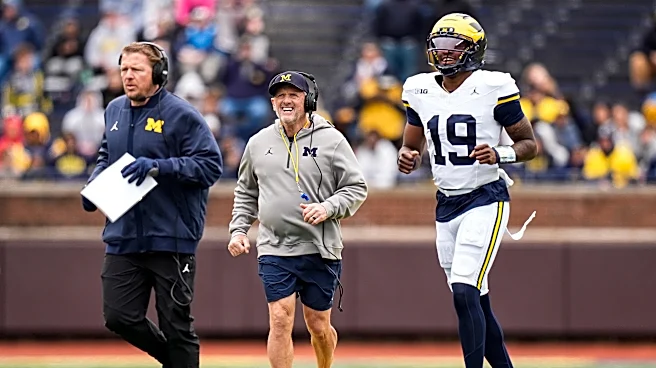
The 2007 college football game between the Appalachian State Mountaineers and the Michigan Wolverines was more than just a single contest; it was a seismic event that sent shockwaves through the sport, leading to significant media attention, policy changes, and a re-evaluation of the dynamics between Football Bowl Subdivision (FBS) and Football Championship Subdivision (FCS) teams. The Mountaineers' improbable 34–32 victory over the No. 5 ranked Wolverines,
a team that had never before faced an FCS opponent, transcended the typical narrative of an upset, becoming a touchstone moment in college football history.
Media Frenzy and Policy Shifts
The immediate aftermath of the game saw an explosion of media coverage. The upset was the lead story on ESPN's SportsCenter and graced the cover of Sports Illustrated the following week, cementing its place in popular sports culture. Analysts and fans alike hailed it as one of the greatest upsets in college football history, a testament to the unexpected nature of the outcome. This widespread attention highlighted the inherent drama and unpredictability that college football could offer, even in matchups previously considered foregone conclusions.
One of the most tangible consequences of the game was a direct change in policy by the Associated Press. Prior to this game, the AP poll, a significant ranking system in college football, was exclusively limited to FBS teams. However, in the wake of Appalachian State's victory, the Associated Press amended its polling policy to make FCS teams eligible for the AP poll. This change acknowledged the potential for FCS teams to compete at a high level and recognized the need for a more inclusive ranking system. Appalachian State itself became the first FCS team to receive votes in the final AP poll that season, tying with South Florida for 34th overall, a clear indicator of the game's impact on how FCS teams were perceived.
Unprecedented Rankings Impact and Team Trajectories
The game also had an immediate and dramatic effect on Michigan's standing in the national polls. As a direct result of the loss, Michigan dropped entirely out of the top 25 of the AP poll. This marked the first time in the history of the poll that a team ranked in the top five had fallen completely out of the rankings due to a single game. This unprecedented plunge underscored the severity of the upset and the high stakes involved in early-season matchups, even against seemingly inferior opponents.
Despite the shocking loss, both teams went on to have successful seasons. Appalachian State, fueled by their historic victory, continued their dominant run in the FCS, ultimately winning their third consecutive FCS national championship. They finished the season with an impressive 13–2 record. Michigan, after their initial stumble, regrouped and finished their season with a 9–4 record, culminating in a victory in the Capital One Bowl. They ended the season ranked No. 18 in the final AP poll, demonstrating resilience after such a high-profile defeat. The game also set the stage for a rematch in 2014, where Michigan decisively won 52–14, a game that marked Appalachian State's first as an FBS school, illustrating the long-term evolution of both programs in the years following their iconic 2007 encounter.